RWA Tokenization Hub: Real-World Assets on the Blockchain — Where to Start
Your guide to real-world asset (RWA) tokenization — how it works, why it matters, and which child guide to explore first. Tokenized gold, Bitcoin ETFs, stocks, and AI agents covered.

Last updated
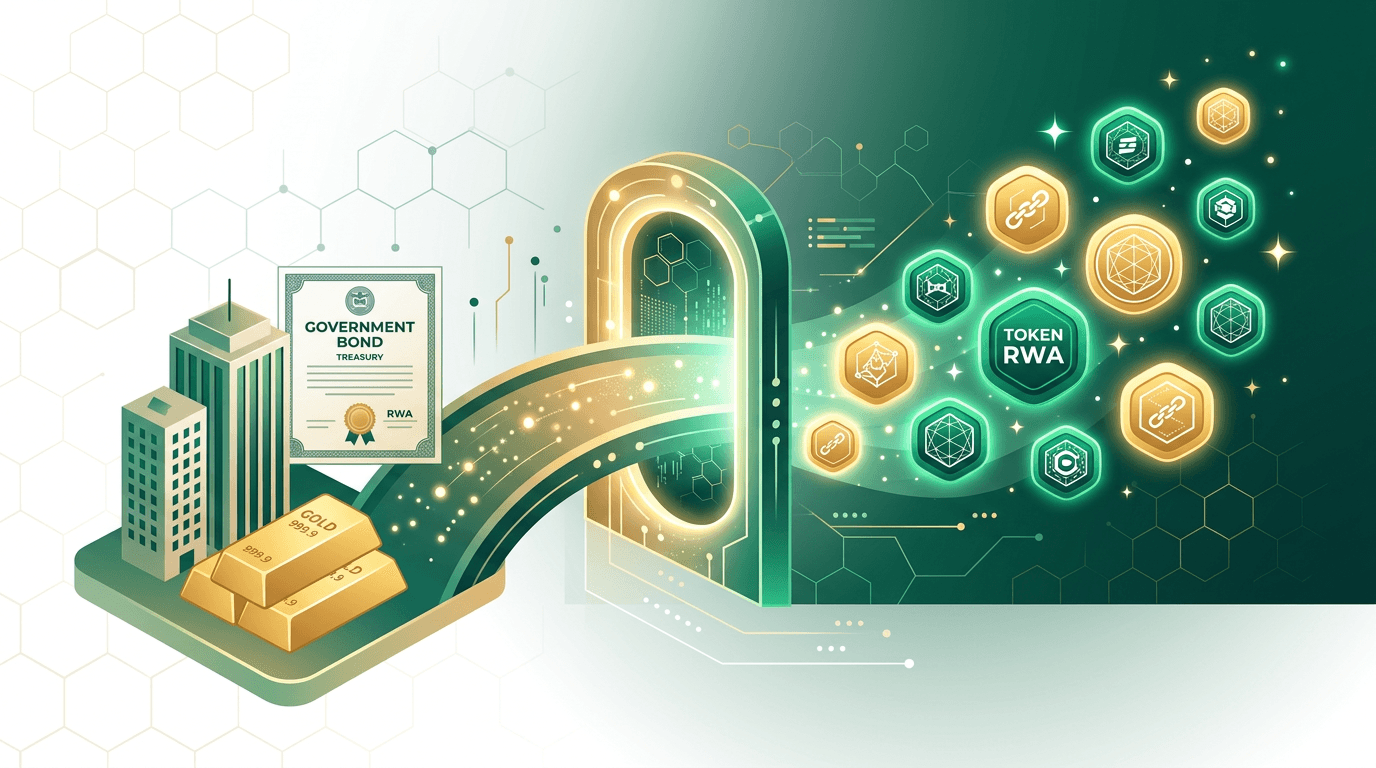
You've probably seen the headlines: BlackRock is on Ethereum, banks are quietly building blockchain rails, and a $25 billion market has emerged in just over a year. But if you've searched "RWA tokenization" and come back more confused than when you started — you're not alone.
This hub is your starting point. It explains what real-world asset (RWA) tokenization actually is, why traditional finance is paying attention right now, and — most importantly — where to go next depending on what you're curious about.
This guide is for informational purposes only and is not financial advice. RWA investments carry real risks including regulatory uncertainty, smart contract bugs, and custodian failure. Always do your own research (DYOR) and invest only what you can afford to lose.
What Is RWA Tokenization, in Plain Terms?
Think of it like this: imagine a $1 million government bond cut into 10,000 digital tokens, each worth $100. Every token lives on the blockchain, trades around the clock, and automatically pays out interest to whoever holds it — no broker, no two-day settlement, no $100,000 minimum buy-in.
That's RWA tokenization. Real-world assets — bonds, gold, real estate, equities, private credit — get a blockchain-native representation. The token records ownership; the underlying asset sits with a legal custodian in the real world.
The real power isn't just fractional ownership (though that matters). It's programmability: smart contracts can automate yield distribution, enforce compliance rules, and make these assets plug directly into DeFi protocols — things traditional financial plumbing was never designed to do.
Why This Is Getting So Much Attention Right Now
As of March 2026, the RWA tokenization market had crossed $25 billion in on-chain value — roughly four times its size a year earlier. Tokenized U.S. Treasuries alone account for over $11 billion of that.
What makes this wave different from previous crypto cycles:
- Institutions are leading, not following. BlackRock's BUIDL fund holds $2.9 billion in tokenized Treasuries on Ethereum. Franklin Templeton runs on-chain money market funds. Morgan Stanley and Citi are building blockchain custody and trading infrastructure.
- Regulation is actively catching up. The EU's MiCA framework entered full force in 2026. The US CLARITY Act passed the House 294–134 and heads to the Senate. South Korea is moving toward STO (security token offering) implementation.
- Real yield is replacing inflated yield. Early DeFi rewarded liquidity with newly minted tokens that often collapsed in value. RWA brings actual economic yield — Treasury interest, rental income, loan repayments — directly on-chain.
Long-term projections range from $2 trillion (McKinsey) to $16–20 trillion (BCG-Ripple) by 2030. Those are analyst projections, not guarantees — and projections about a fast-moving, regulatory-sensitive space carry significant uncertainty. Treat them as context for what institutions are betting on, not a thesis for your own portfolio.
The RWA Cluster: Your Reading Map
The assets-rwa cluster is organized around four specific topics. Here's where each guide fits and who it's most useful for — pick the one that matches your starting interest.
Tokenized Gold: The Oldest Store of Value, Now On-Chain
Gold has served as a hedge against inflation and geopolitical risk for centuries. Tokenized gold brings that to the blockchain — 24/7 trading, no storage or assay costs, and fractional ownership from small amounts.
By March 2026, the tokenized gold market had surpassed $6 billion, driven heavily by safe-haven demand amid geopolitical uncertainty. Paxos PAXG (each token backed 1:1 by one troy ounce in London vaults) and Tether XAUT are the leading projects. A newer category of yield-bearing gold tokens is also emerging.
→ Tokenized Gold Guide: PAXG, XAUT, and How Gold Moves On-Chain
Best for: anyone considering gold as a portfolio component, or wondering whether a tokenized gold token is actually safer than holding physical gold (hint: different risk, not necessarily safer).
Bitcoin ETFs: Traditional Finance Meets Crypto's Reserve Asset
Bitcoin ETFs let investors gain exposure to BTC through a regular brokerage account — without managing a wallet, a seed phrase, or an exchange account. Since the US approved spot Bitcoin ETFs, billions have flowed in from retirement accounts and wealth management firms.
This guide covers how Bitcoin ETFs are structured, the differences between spot and futures ETFs, the fees to watch for, and why some longtime crypto holders still prefer self-custody even with ETF products available.
→ Bitcoin ETF Guide: How They Work and What to Consider
Best for: investors comfortable with stocks and ETFs who want Bitcoin exposure, or anyone trying to understand what actually differs between owning a Bitcoin ETF versus holding BTC directly.
Multi-Token Crypto ETPs: One Share, Several Digital Assets
An actively managed multi-token ETP puts several eligible crypto assets behind one exchange-traded share. The convenience is straightforward, but the structure adds manager selection, custody, fees, market-price-to-NAV gaps, and regulatory dependencies.
→ Multi-Token Crypto ETF Explained: How Active Allocation Works
Best for: brokerage users comparing a managed crypto basket with direct ownership or a single-asset Bitcoin ETF.
Tokenized Stocks: Equities Without Borders, Markets Without Hours
Stock exchanges close at 4pm and exclude investors who lack the right broker or local residency. Tokenized stocks — on-chain representations of equities like Apple, Tesla, or market ETFs — can trade continuously and are potentially accessible from anywhere.
The guide covers how tokenized equities work legally (SPV structures, KYC requirements), which platforms offer them, and the real regulatory friction that makes this category significantly more complex than tokenized bonds or gold. Honest about where it works well and where it doesn't.
→ Tokenized Stocks Guide: How On-Chain Equities Work (and Where They Don't)
Best for: anyone who has wondered whether they can own Apple stock via a DeFi protocol — and wants a straight answer.
AI Agents in Crypto: The Automation Layer on Top of Everything
This guide is different from the three asset guides above — it covers how AI agents are being used to interact with on-chain assets: managing portfolios, executing strategies, automating yield optimization, and even conducting autonomous on-chain transactions.
It explains what on-chain AI agents actually are under the hood, what risks their autonomy introduces (including no-undo transactions and bugs in agent logic), and how to think clearly about the underlying technology versus the speculative tokens that tend to cluster around it.
→ AI Agents and Crypto: What They Are, How They Work, and What to Watch Out For
Best for: anyone following the AI-crypto intersection, or trying to understand what "autonomous on-chain agents" actually means beyond the hype.
Tokenized Deposits vs Stablecoins: The Payment Leg Behind Tokenized Assets
Tokenized assets still need a form of money for settlement. Tokenized bank deposits and stablecoins can both move on programmable ledgers, but they package different claims: one is generally a bank liability, while the other depends on a separate issuer, reserve assets, and redemption terms.
This comparison follows the money from issuance through transfer and redemption, then shows how access, settlement finality, legal protections, and technical risk differ.
→ Tokenized Deposits vs Stablecoins: How Digital Bank Money Differs
Best for: readers evaluating the cash side of tokenized securities or wondering why two dollar-like tokens can carry different risks.
The Big Picture: Risks and Regulation That Apply Across All RWA
Before going deeper into any specific asset class, here are the systemic risks that cut across the entire RWA category. Each child guide covers asset-specific risks in more detail, but these apply everywhere.
Regulatory fragmentation. A token that is legal in Switzerland may be treated as an unregistered security in the United States or prohibited outright in another jurisdiction. This is RWA's biggest structural challenge right now — the legal status of tokenized assets varies dramatically across borders, and regulations are still in flux. "Legal somewhere" does not mean "legal for you."
Oracle dependency. RWA tokens rely on oracles — external data feeds — to relay the price and status of off-chain assets onto the blockchain. A faulty or manipulated oracle feed can directly affect token valuations. This is a single point of failure that the blockchain itself cannot protect against.
Warning
Always verify which oracle provider a project uses and whether that feed has been independently audited. A single oracle failure can affect the entire protocol's calculations.
Custody risk. The token is on-chain; the underlying asset is not. Custodian insolvency, fraud, or regulatory seizure affects the real-world asset in ways that blockchain technology fundamentally cannot prevent. Reputation and insurance coverage of the custodian matter as much as the smart contract quality.
Smart contract risk. Bugs in the contracts governing token issuance, transfer restrictions, or yield distribution can lead to real losses. Look for multiple independent audits from recognized firms and an active bug bounty program — a single internal review is not sufficient due diligence.
Liquidity risk. Secondary markets for most RWA tokens are thin compared to traditional financial markets. In a stress scenario — a broad market sell-off, a regulatory announcement — you may be unable to exit at your intended price or within a reasonable time.
Tip
These risks compound. A regulatory freeze can lock an asset at the same time a liquidity crisis makes exiting impossible. Understand the specific risk stack of any project before committing capital.
Where to Start
If you're new to RWA and want a concrete next step rather than another pile of tabs to read:
-
Start with the asset class you already understand. If you already know gold, start with the tokenized gold guide. If you follow stocks, start with tokenized stocks. Familiarity with the underlying asset makes it much easier to spot what the tokenization layer actually adds — and what it doesn't.
-
Treat an initial position as tuition, not a strategy. RWA tokens are not equivalent to directly holding the underlying asset. They carry additional layers of risk (smart contracts, custodians, oracles). Until you understand those layers in practice, keep any exposure small enough that losing it doesn't hurt.
-
Check custody and audits before anything else. Before looking at yield or price appreciation, find out: who holds the underlying asset, and has the smart contract been audited by a reputable, independent firm with a published report?
-
Know your jurisdiction's rules. Some RWA products are restricted to accredited investors or residents of certain countries. Confirm eligibility before spending time evaluating a platform you may not even be able to use.
FAQ
What's the difference between an RWA token and a regular cryptocurrency? A regular cryptocurrency (like ETH or SOL) derives its value from the network it supports and the activity on it. An RWA token is supposed to derive its value from a specific off-chain asset — a bond, a gold bar, a real estate property — and comes with legal structures (SPVs, regulated custodians) that tie the two together. That legal layer is both what makes RWA tokens more comparable to traditional assets and what introduces the custody and regulatory risks.
Do I need to be an accredited investor to buy RWA tokens? It depends on the token type and jurisdiction. Tokenized securities — stocks, bonds — typically require KYC/AML verification and often require accredited-investor status under local securities law. Tokenized commodities like gold tokens may have fewer eligibility restrictions. Check the specific project's terms directly before assuming you qualify.
Is RWA the same as DeFi? No, but they're increasingly intertwined. DeFi (Decentralized Finance) is the broader ecosystem of on-chain financial applications. RWA tokenization describes a specific type of asset that can plug into DeFi protocols — for example, tokenized Treasuries used as collateral in an on-chain lending protocol. RWA is a type of input; DeFi is the infrastructure it runs on.
How is a tokenized Treasury different from a Treasury ETF? Both give exposure to U.S. government bonds, but the mechanics are different. A Treasury ETF trades on a stock exchange during market hours and settles in one to two business days through the traditional clearing system. A tokenized Treasury trades on-chain 24/7, can settle in seconds, and can be used as collateral or composable with DeFi protocols. The trade-off: tokenized Treasuries carry smart contract risk and often have thinner secondary markets.
Can I get RWA exposure without going into DeFi? Yes. Bitcoin ETFs are the clearest example — regulated financial products that give exposure to a crypto-native asset through a traditional brokerage account, with none of the wallet or DeFi complexity. Some tokenized bond funds also operate within traditional financial frameworks, with on-chain settlement added as a layer on top of conventional fund structures.
Closing
RWA tokenization is one of the more grounded intersections of crypto and traditional finance — not because the technology is fully mature, but because the demand is real on both sides. Institutions want programmable, 24/7-composable assets. Retail investors want access to asset classes that were previously gated behind high minimums, geography, or accreditation requirements.
The guides in this cluster are designed to give you a ground-level understanding of each specific area, without overpromising what RWA technology currently delivers. Pick the guide that matches your interest, verify the risks specific to what you're considering, and treat every investment as money you can afford to lose.
This article is for informational purposes only and does not constitute financial or investment advice. RWA token investments carry regulatory, liquidity, custody, and smart contract risks that vary significantly by asset type and jurisdiction. Always conduct your own research and consult qualified professionals before investing. NFA / DYOR.
Everything in this guide
Tokenized Deposits vs Stablecoins: How Digital Bank Money Differs
Tokenized deposits and stablecoins both move on programmable ledgers, but their issuers, legal claims, settlement, access, and risks differ.
 GOMTU9 min read
Multi-Token Crypto ETF Explained: How an Active Crypto ETP Works
Multi-token crypto ETFs bundle several digital assets in one exchange-traded product. Learn how active allocation, custody, fees, and risks work.
GOMTU7 min read
Tokenized Real Estate Explained: Fractional Property Ownership On-Chain (2026)
Tokenized real estate lets you own a slice of a rental property for as little as $50. How it works, the SPV structure, the yields, and the real risks.
GOMTU6 min read
Tokenized Treasuries Explained: On-Chain T-Bills, BUIDL, and Real Yield (2026)
Tokenized treasuries let you hold U.S. T-bill yield on-chain, 24/7. How they work, who the big players are, and the layered risks the headline yields skip.
GOMTU7 min read
Tokenized Stocks Guide 2026: How xStocks, Robinhood & Onchain Equities Work
Tokenized stocks let you hold Apple, Nvidia, and Tesla as blockchain tokens trading 24/7. Learn how xStocks, Robinhood, and Backed work, the four real risks, and where regulation stands in 2026.
GOMTU7 min read
Tokenized Gold Explained: What It Is, How It Works, and What to Watch Out For
Tokenized gold lets you hold real gold in a crypto wallet, earn yield on it, and use it in DeFi — 24/7. This guide covers how it works, PAXG vs XAUT, yield-bearing options like thGOLD and GLDY, and the real risks to know before investing.
GOMTU9 min read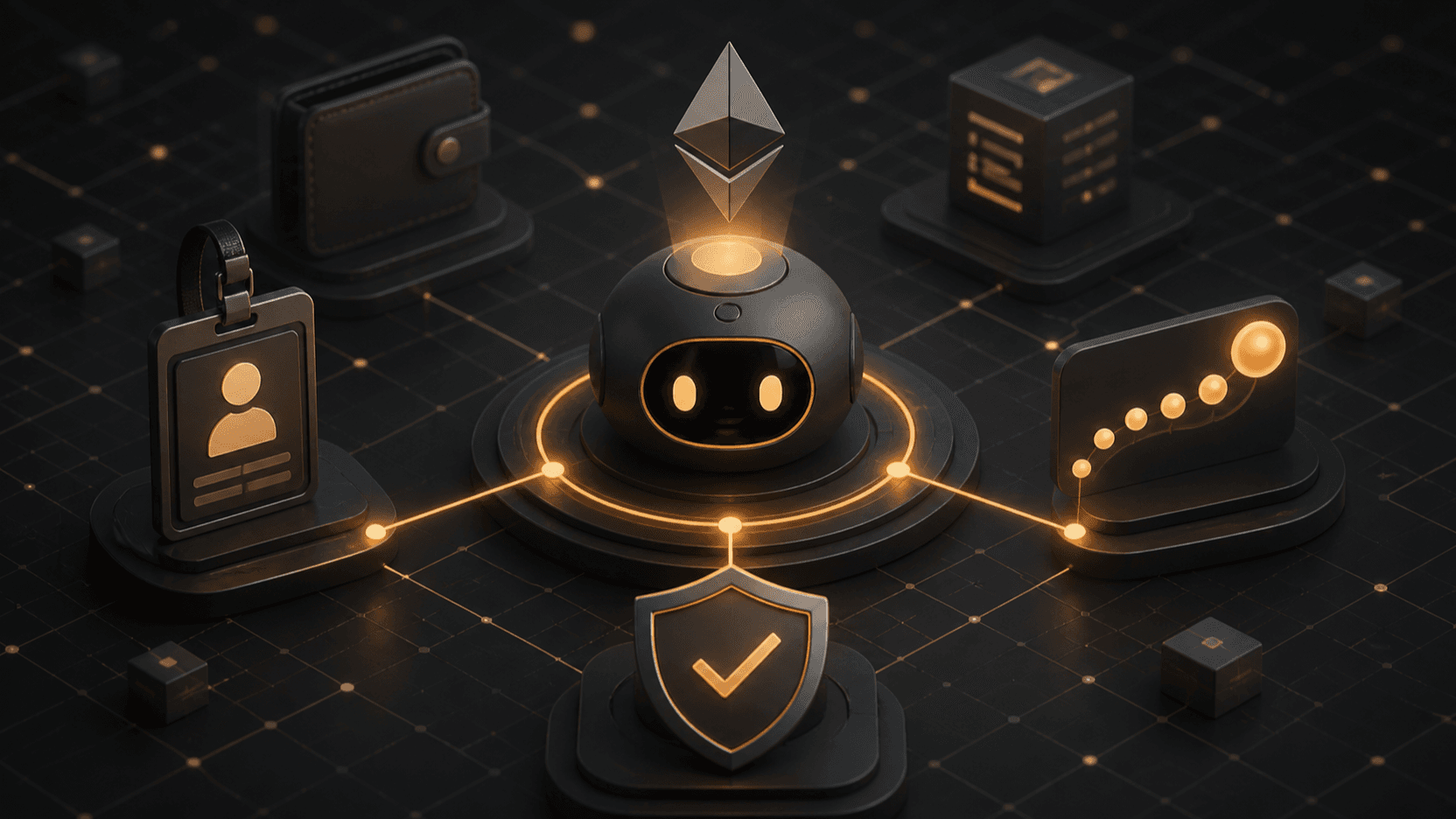
Crypto AI Agents Explained: Wallets, ERC-8004, and Real Risks
Learn how crypto AI agents use wallets and smart contracts, how ERC-8004 adds identity and trust signals, and which risks still require human controls.
GOMTU6 min read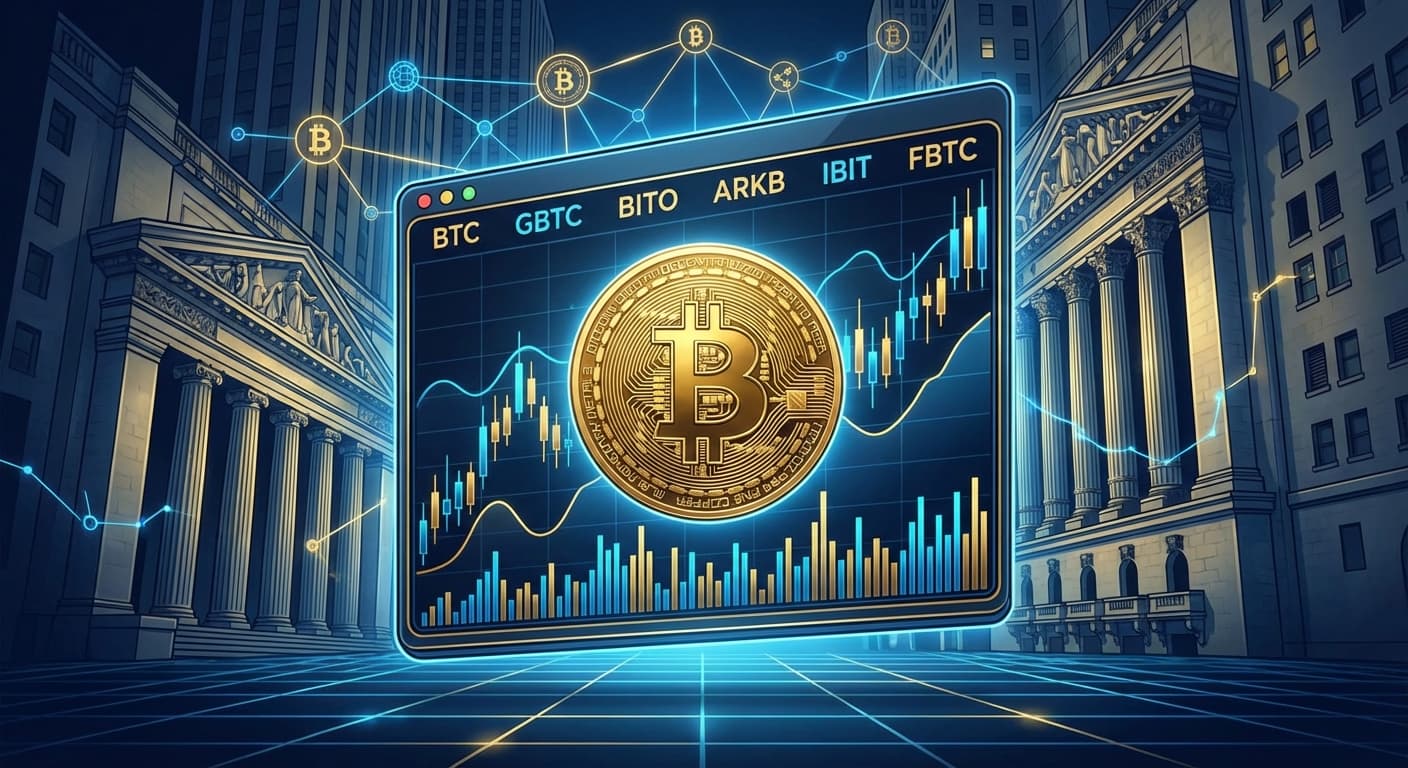
Bitcoin ETF Explained: What It Is, How It Works, and What to Know Before Investing
Spot vs futures Bitcoin ETFs explained, top funds compared (IBIT, FBTC, BITB), how they work, and the real risks — a plain-English guide for 2026.
GOMTU7 min read