Crypto Market News Hub: Reading the Market Without the Noise
Your anchor for 2026 crypto market stories — Bitcoin milestones, Ethereum upgrades, and how to read market news with context instead of FOMO.

Last updated
Every morning the notifications arrive: another all-time high, another "critical upgrade," another token "set to explode." Crypto news moves at a pace that is genuinely exhausting — and worse, most of it is designed to trigger a reaction, not to inform a decision.
This hub is different. Here we track the structural stories — the protocol upgrades, the supply mechanic shifts, the on-chain observations that actually help you understand what is happening in the market. Not what price is going to do next week. Not the next guaranteed winner. Just what is actually changing and why it might matter.
If you have ever felt overwhelmed by the sheer volume of crypto headlines, you are already asking exactly the right question.
How to Read Crypto Market News
Before diving into specific stories, it is worth slowing down to talk about the frame itself: how you read crypto market news matters as much as what you read.
Observation vs. Prediction
Most crypto content falls into one of two categories.
Prediction content tells you what price is going to do. It uses confident language — "Bitcoin will hit X by Q4," "this altcoin is a 10x," "the bull run starts now." It is designed to feel urgent and certain.
Observation content shows you what is actually changing. It explains what a protocol upgrade does, what on-chain data shows about supply and demand, what historical cycles have looked like — and where the uncertainty still lives. It treats you like someone capable of forming your own view.
We write observation content. Not because predictions are never interesting, but because they are genuinely unreliable — and because understanding what is changing is far more durable knowledge than any price call.
Context Is the Actual Product
A data point without context is almost useless. "Bitcoin just hit a new high" is a sentence. "Bitcoin just hit a new high three months after its fourth halving, with spot ETF inflows running at record pace and long-term holder supply near a decade high" — that is something you can actually think about.
Every story we cover comes with the surrounding context: what led up to it, what mechanisms are at play, and where the genuine uncertainty remains. That last part is non-negotiable. If a piece is not honest about where it might be wrong, that is a signal worth noticing.
The On-Chain Lens
Price is the most visible signal in crypto markets — and often the least useful in isolation. The signals that tend to carry more information include:
- Active addresses and transaction volume — is the network actually being used more, or just priced higher?
- Exchange reserves — are long-term holders moving coins toward exchanges (historically associated with distribution) or away from them?
- Fee revenue — does the network generate enough economic activity to sustain itself long-term?
- Developer activity — is the ecosystem building or coasting?
None of these tell you what happens to price tomorrow. All of them give you a clearer picture of what is happening in the underlying networks.
2026 Market Stories We Are Tracking
Here are the three major structural stories we have been covering this year. Each links to a dedicated deep-dive.
Bitcoin: On-Chain After the Fourth Halving
Bitcoin's $20 Million Milestone: What the On-Chain Data Actually Shows
The fourth Bitcoin halving passed in April 2024, cutting the block subsidy from 3.125 BTC to 1.5625 BTC. Historically, halvings have been followed by major market moves — but the timing varies, the magnitude varies, and historical cycles do not guarantee future ones.
What we can observe: post-halving supply compression, the structural shift in demand from spot ETFs, and how institutional accumulation patterns in 2025–2026 differ from previous cycles. This is a story about supply mechanics and demand composition — not a price target.
Crypto markets are highly volatile. Past halving cycles do not guarantee future results. Only invest what you can afford to lose, and always do your own research (DYOR).
Ethereum: What Glamsterdam Actually Changes
Ethereum Glamsterdam Upgrade: What Changes and What Does Not
Ethereum's upgrade cadence has been relentless. Glamsterdam — the latest named hard fork — bundles several EIPs affecting gas cost structures, validator economics, and Layer 2 interoperability. The changes sound technical, but they have real implications for anyone using DeFi protocols or staking on Ethereum.
We break down which parts of the upgrade matter to everyday users, what developers need to adjust, and what the real-world effects look like once the changes settle in.
Polkadot: Halving and the New Tokenomics
Polkadot Halving and Tokenomics 2026: A Closer Look at the Supply Shift
Polkadot's 2026 tokenomics changes represent one of the more underappreciated structural shifts in the Layer 1 landscape. Changes to staking reward rates, treasury allocation, and the coretime auction model are reshaping the DOT supply and demand equation — and the implications go beyond short-term price action.
Understanding how a network sustains itself economically long-term is more useful than any individual price call. That is what this deep-dive is about.
The FOMO Problem in Crypto Media
Let us be direct: a significant portion of crypto media is optimized for engagement over accuracy. Headlines are designed to make you feel like you are missing something important if you do not click — and then act immediately.
The patterns are recognizable. "Last chance before the breakout." "My source says this token is next." "You missed Bitcoin at $10K, do not miss this." These are emotional triggers, not information. The feeling of urgency they generate is the product being sold.
A more useful frame: the best time to research a project is before it trends. The best time to understand a protocol upgrade is before it ships and the market is already pricing it in. If you are rushing because of a headline, you are probably the last one in.
What Is Worth Paying Attention To
Instead of chasing headlines, focus on the categories of change that carry structural meaning:
- Protocol-level changes: Upgrades, forks, tokenomics redesigns, consensus changes. These alter how networks function at a fundamental level — and the effects play out over months, not hours.
- Macro context: Interest rate environments, regulatory clarity or crackdowns, institutional adoption milestones. Crypto does not exist in a vacuum.
- Network health metrics: Fee revenue, activity levels, developer output. The difference between a project that is growing and one that is merely priced as if it were growing.
- Supply dynamics: Halving schedules, token unlock calendars, treasury movements. Supply changes are often visible in advance, even when the market has not priced them in yet.
A Note on Risk
Crypto markets carry substantial, asymmetric risk. Drawdowns of 50–90% are part of the historical record — not edge cases. Protocols can fail. Tokens can go to zero. Regulatory environments can shift suddenly and without warning.
We do not tell you what to buy, when to buy, or how to size a position. What we try to do is provide clear context so you can make informed decisions with your own money — and only with what you can genuinely afford to lose.
DYOR — Do Your Own Research — is not a disclaimer. It is the actual advice.
FAQ
Is this page investment advice?
No. Nothing published on this site constitutes financial advice. All content is for informational and educational purposes only. Crypto markets are highly volatile and most market participants experience significant losses. Always consult a qualified financial professional before making investment decisions.
How is observation content different from analysis that helps me invest?
Observation content gives you the factual and structural picture of what is happening. What you do with that information — whether and how you invest — is your decision, based on your own research, risk tolerance, and financial situation. Good information is an input to a decision, not the decision itself.
How often are the deep-dive articles updated?
We update articles when meaningful changes occur — when a protocol upgrade ships, when on-chain conditions shift significantly, or when prior information needs correcting. Each article shows its updatedAt date so you know how fresh the information is.
How do I know which facts are verified?
We distinguish clearly between confirmed protocol changes (verifiable on-chain or in official documentation) and projected timelines or announced-but-not-yet-shipped features. When something is uncertain or subject to change, we say so explicitly.
What if I see something that looks outdated?
Crypto moves fast. Cross-reference time-sensitive data with official project documentation, block explorers, and protocol governance forums. On-chain reality always takes precedence over anything written here.
Wrapping Up
Reading crypto market news well is a skill — and like most skills, it gets better with deliberate practice. The core of it is this: separate what is changing structurally from what is moving emotionally. Understand the mechanisms before you assess the implications. Keep your uncertainty honest.
The three deep-dives above — Bitcoin's post-halving supply picture, Ethereum's Glamsterdam fork, and Polkadot's tokenomics redesign — represent the kind of structural stories that hold up even when the market mood shifts. Read them, form your own views, and do your own research.
Not financial advice. This hub and all linked articles are published for informational and educational purposes only. Cryptocurrency markets are highly volatile. Only invest what you can afford to lose, and always conduct your own due diligence (DYOR) before making any investment decision.
Everything in this guide

Bitcoin Treasury Companies Explained: The 2026 DAT Shakeout
Public companies loaded up on Bitcoin as a treasury — now the premium era is unwinding. What digital asset treasuries are, and why the mNAV flywheel stalled.
 GOMTU6 min read
GENIUS Act Stablecoin Rules: What the 2026 Proposals Actually Change
The GENIUS Act is law, but implementation is still underway. Understand the 2026 OCC and customer-ID proposals, effective dates, protections, and risks.
GOMTU8 min read
Ethereum Glamsterdam Upgrade: ePBS, BALs, and What Is Actually Planned
Ethereum Glamsterdam is expected in Q4 2026. Learn its frozen scope, Sepolia milestone, ePBS, block-level access lists, and remaining uncertainties.
GOMTU7 min read
Polkadot Halving 2026: DOT Supply Cap, 53.6% Emission Cut Explained
Polkadot undergoes its first-ever tokenomics overhaul on March 14, 2026 — a 2.1B DOT supply cap, 53.6% emission cut, and staking redesign. Here is what the changes actually mean.
GOMTU8 min read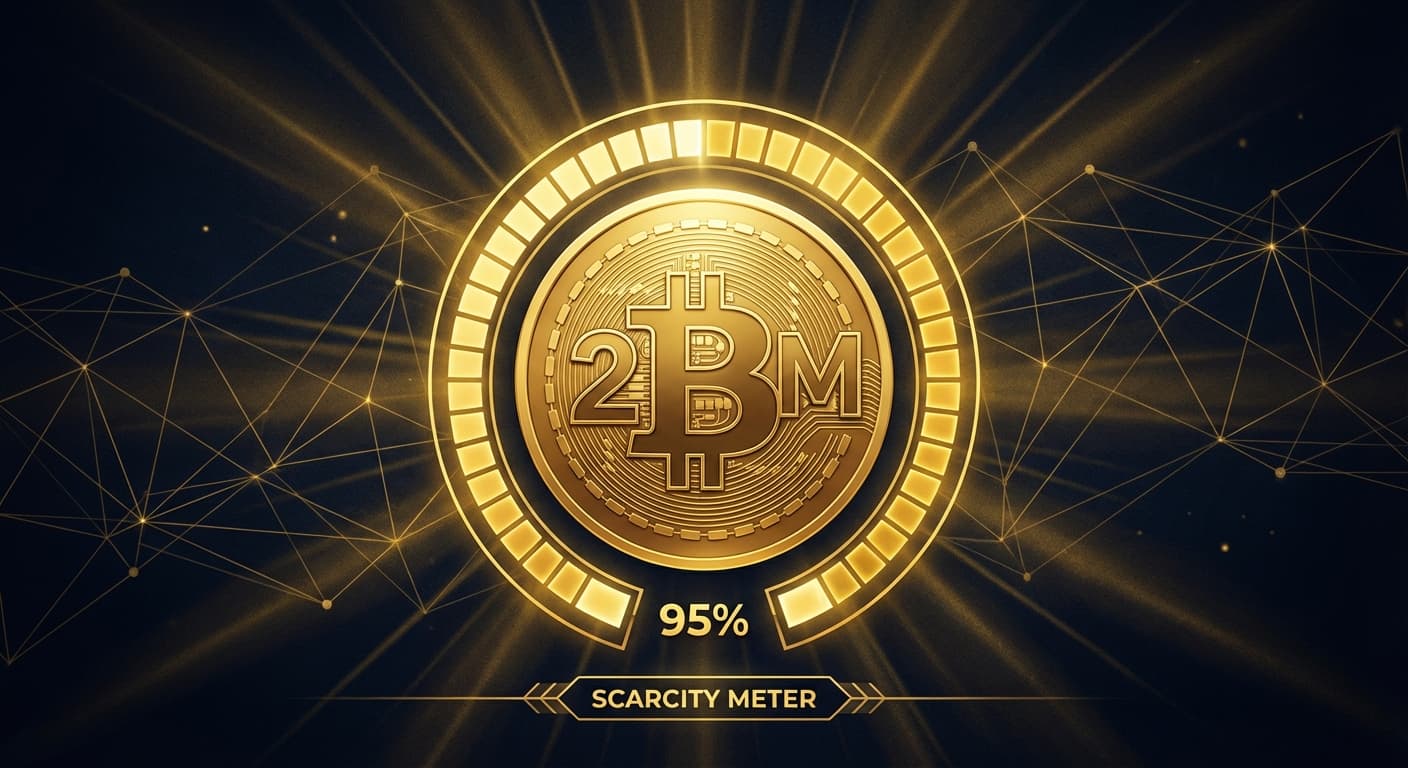
Bitcoin Hits 20 Million Coins Mined: What the Scarcity Milestone Tells Us
On March 9, 2026, Bitcoin mined its 20 millionth coin — 95.2% of all supply is now in circulation. A look at the supply architecture, halving schedule, and observable patterns from past cycles. Not financial advice.
GOMTU8 min read