DEX vs CEX: A Practical Comparison for Crypto Users
Centralized or decentralized exchange — which one fits you? Compare security, fees, custody, and use cases to find out what actually matters for your situation.

Last updated
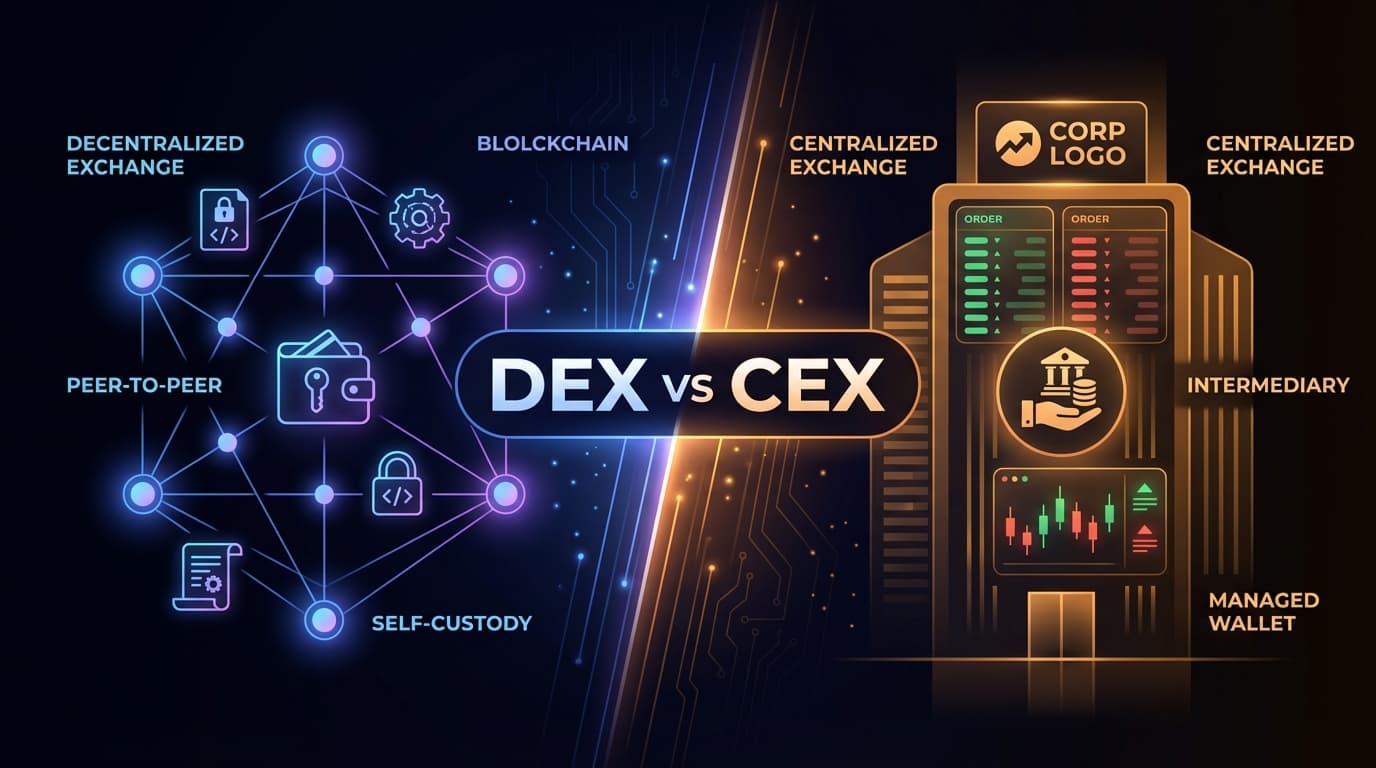
You bought your first crypto on an exchange — signed up, verified your ID, and made the trade. That was a CEX (Centralized Exchange).
Then somewhere along the way, you heard about Uniswap. No signup, no KYC, just connect a wallet and go. That's a DEX (Decentralized Exchange).
They're both called "exchanges," but they operate in completely different ways. Understanding the difference isn't just trivia — it determines who holds your assets, what risks you're taking on, and which doors open or close to you in crypto. This comparison breaks it down across four dimensions: security, convenience, cost, and use case.
Nothing here is financial advice. CEX vs DEX is a structural choice, not an investment call — your situation determines the answer. DYOR.
What Are We Comparing?
Two fundamentally different philosophies about how a crypto exchange should work:
- CEX (Centralized Exchange) — run by a company, like a digital brokerage or bank branch. Familiar, fast, and user-friendly, but you're trusting someone else with your assets.
- DEX (Decentralized Exchange) — run by code, no company involved. A core piece of DeFi (Decentralized Finance) infrastructure where trades execute automatically via smart contracts on a blockchain.
The goal isn't to declare a winner. It's to give you the framework to pick the right tool — or the right combination — for your needs.
What Is a CEX?
Think of a CEX as a bank branch for crypto.
You walk in (create an account), hand over your ID (KYC), and deposit your assets. In exchange, you get fast service, customer support, and the ability to buy crypto directly with dollars, euros, or other currencies. The trade-off is custody: the exchange holds your private keys, which means your crypto sits in their wallets, not yours.
When you see a balance on a CEX, you're looking at an IOU recorded on the exchange's internal ledger — not coins in a wallet you control.
Popular CEXs: Binance, Coinbase, OKX, Kraken, Bybit
Key features:
- Account registration + KYC required
- Fiat on-ramps (buy crypto with bank transfer or card)
- Fast order matching with deep liquidity
- Customer support and dispute resolution
- Advanced features: futures, margin, staking, copy trading
What Is a DEX?
Now imagine a vending machine built from math.
There's no manager, no headquarters, no customer service number. A smart contract — pre-written code on a blockchain — defines all the rules. When conditions are met, the swap executes automatically. You connect your own wallet, the trade happens, and the result lands back in your wallet. No one takes possession of your funds in between.
Automated market makers (AMMs) and liquidity pools power the engine under the hood. Because there's no company in the middle, your private keys stay in your hands throughout.
Popular DEXs: Uniswap, PancakeSwap, Curve, Raydium, Jupiter
Key features:
- Connect your wallet — no account or KYC needed
- Non-custodial: your keys stay with you
- Permissionless token listings — any token can be traded
- 24/7 uptime, no maintenance windows
- Gateway to DeFi: yield farming, airdrops, liquidity provision
CEX vs DEX: Side-by-Side Comparison
| CEX | DEX | |
|---|---|---|
| Security model | Trust the exchange | Trust the code (and yourself) |
| Asset custody | Exchange holds your keys | You hold your keys |
| Registration | Required (KYC) | Not required (wallet only) |
| Fiat support | Yes | No |
| Convenience | High — intuitive UI, support desk | Moderate — learning curve |
| Trading fees | ~0.1–0.25% per trade | ~0.3% swap fee + gas |
| Gas fees | None | Required (varies by chain) |
| Liquidity | Deep for major pairs | Varies by pool and chain |
| Token selection | Curated (reviewed listings) | Permissionless (anything goes) |
| Hack surface | Exchange hot wallets | Smart contract exploits |
| Customer support | Available | None |
| Best for | Beginners, fiat entry, high volume | New tokens, DeFi, self-custody |
The Core Difference: Custody
If there's one concept that defines the CEX vs DEX choice, it's custody — specifically, who controls your private keys.
"Not your keys, not your coins."
On a CEX, the exchange holds your private keys. You have a balance on their platform, but the exchange technically controls the underlying assets. If the exchange freezes withdrawals, gets hacked, or becomes insolvent — as happened in several high-profile cases over the years — your funds can be at risk.
On a DEX, you trade directly from your own wallet. The smart contract executes the swap atomically and never holds your funds in escrow. No one can freeze your wallet or deny your withdrawal. The catch: there's no support line if you send to the wrong address, fall for a phishing site, or lose your seed phrase. Recovery is permanently impossible.
Both models require trust — just in different parties. CEX: you trust the company. DEX: you trust the code (and your own practices).
Who Should Use Which?
A CEX makes more sense if you:
- Are new to crypto and want a guided, intuitive starting point
- Need to buy crypto with fiat (bank transfer, debit/credit card)
- Want to trade large volumes with tight spreads and deep liquidity
- Need advanced features like futures, margin, or copy trading
- Require clean transaction records for tax reporting
A DEX makes more sense if you:
- Want to trade tokens not yet listed on any CEX
- Prefer to keep full custody of your own assets
- Are participating in DeFi activities — yield farming, liquidity providing, airdrop farming
- Want to swap quickly without identity verification
- Value pseudonymity
The combination approach many experienced users follow:
- Buy stablecoins like USDT or USDC on a CEX with fiat
- Withdraw to your own non-custodial wallet
- Swap to the tokens you want on a DEX
- Send back to CEX when you're ready to convert to fiat
This lets you use fiat on-ramps (CEX strength) and access permissionless token markets (DEX strength) without keeping large amounts on either indefinitely.
Risks You Should Understand
Neither option is risk-free. Here's an honest look at what can go wrong on each side.
CEX risks:
- Exchange hacks — centralized pools of user funds are high-value targets. Multiple large hacks have resulted in billions in user losses across the industry's history
- Withdrawal freezes — exchanges have suspended withdrawals during market stress events
- Insolvency — if an exchange becomes insolvent, user funds may not be recoverable (not insured like bank deposits in most jurisdictions)
- KYC data breaches — your identity information is stored and potentially exposed in security incidents
- Counterparty risk — ultimately, you're trusting a single company
DEX risks:
- Smart contract bugs — code vulnerabilities have led to hundreds of millions in losses across the DeFi ecosystem
- Rug pulls — any token can be listed on a DEX, including tokens created specifically to defraud
- Malicious token approvals — granting unlimited spend approval to a bad contract can drain your wallet entirely
- Phishing sites — fake DEX interfaces that look identical to official ones
- No recovery — wrong address, lost seed phrase, or a confirmed scam means permanent loss, no exceptions
- Impermanent loss — relevant if you provide liquidity to a DEX pool, not just swap
Practical minimums before using a DEX: verify the official URL independently, limit token approvals to the amount you're actually trading, and research any unfamiliar token before swapping.
FAQ
Q: Can I use a DEX without a crypto wallet?
No — a DEX requires a non-custodial wallet (MetaMask for Ethereum/EVM chains, Phantom for Solana). The DEX interface is just a front end; the wallet is what connects you to the blockchain. No account is created on the DEX side.
Q: Which has lower fees — CEX or DEX?
It depends on what and where you're trading. CEX trading fees (typically 0.1–0.25%) are predictable. DEX fees include a swap fee (often ~0.3%) plus gas, which varies widely by network. On Ethereum during peak congestion, gas alone can make small trades impractical. On Solana, Arbitrum, or BSC, gas is much cheaper — often a fraction of a cent.
Q: Is using a DEX anonymous?
Pseudonymous, not anonymous. Every DEX transaction is recorded permanently on a public blockchain — the wallet address and amounts are visible to anyone. It's not tied to your name by default, but your wallet activity can be traced, especially if you've linked the address to an identity elsewhere.
Q: Is it safe to keep funds on a CEX long-term?
Keeping funds on a CEX indefinitely adds counterparty risk you wouldn't have with self-custody. The common rule of thumb: only keep on a CEX what you're actively trading. Store larger holdings in a personal wallet, ideally a hardware wallet for significant amounts.
Q: Do I need to choose one or the other?
No — most active crypto users end up using both. CEX for fiat in/out and high-volume trading; DEX for token access and DeFi participation. The two work together more often than they compete.
Final Thoughts
CEX and DEX aren't rivals — they're complementary tools that serve different parts of the crypto ecosystem. If you're just getting started, a CEX offers a gentler learning curve and fiat access. As you get comfortable, a DEX opens up the broader world of DeFi: permissionless token markets, yield strategies, and full asset ownership.
The key is knowing what you're trading off. Custody, convenience, cost, and risk profile all shift depending on which type of exchange you use. Understanding those trade-offs is the foundation for making your own informed decisions.
This article is for informational purposes only and does not constitute financial advice. Cryptocurrency carries significant risk of loss, including total loss of principal. Always do your own research before making any decision. (NFA / DYOR)
Keep learning

AMM and Liquidity Pools Explained: How DEX Trading Really Works
Understand how automated market makers (AMMs) and liquidity pools power decentralized trading. Covers the x*y=k formula, impermanent loss, LP returns, and Uniswap v4 hooks — your 2026 DeFi guide.
 GOMTU8 min read
Impermanent Loss Explained: The Hidden Cost of DeFi Liquidity
Understand impermanent loss in plain language — what it is, when it hurts most, how to reduce it, and the risks every DeFi LP should know before depositing.
GOMTU8 min read
What Are Stablecoins? Types, How They Work, and Real Risks
Understand stablecoins from the ground up — fiat-backed, crypto-backed, algorithmic, and yield-bearing types — plus depeg risks, USDT vs USDC, and how to use them in DeFi.
GOMTU7 min readExplore related topics
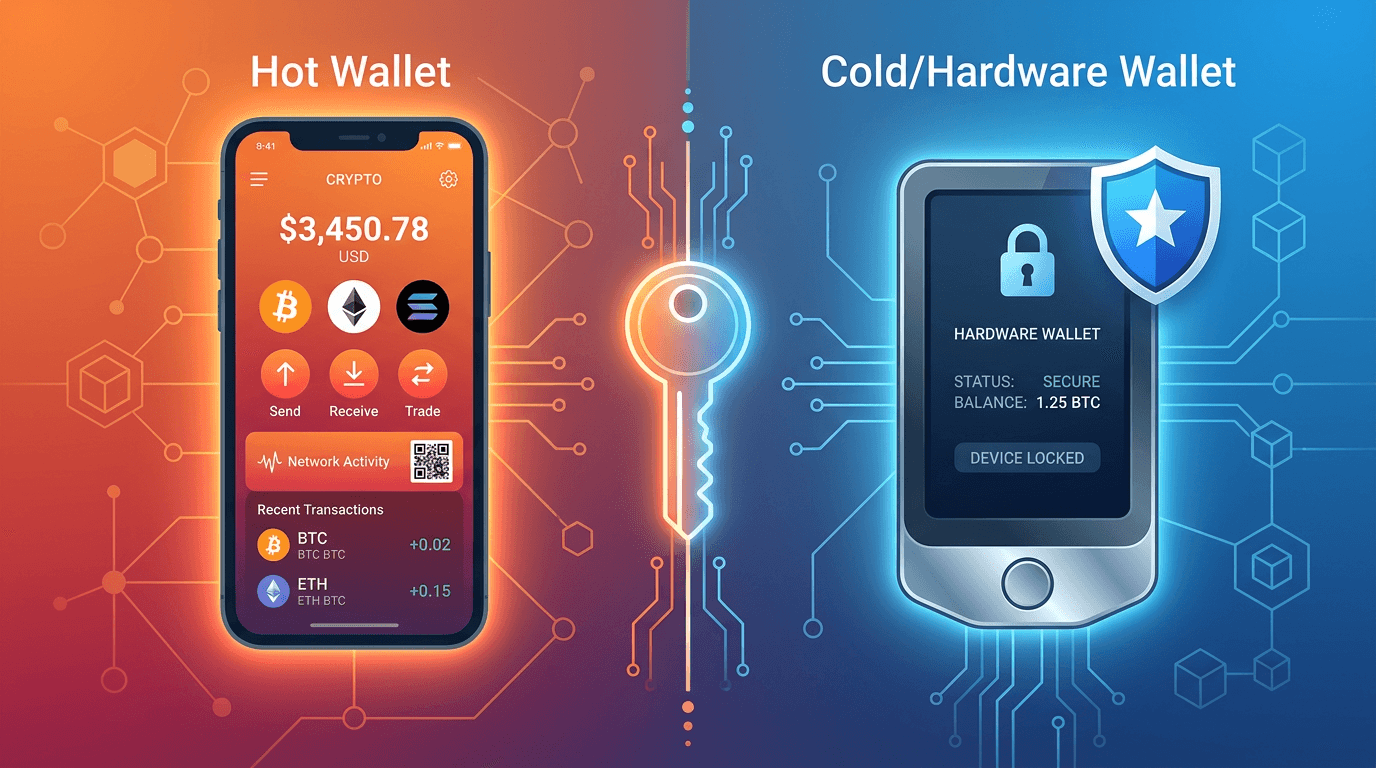
Crypto Wallet Security: Your Complete Hub for Keys, Scams & Safe Custody
Everything you need to know about crypto wallet security — seed phrases, smart wallets, bridge risks, and scam prevention. Your gateway to staying safe on-chain.
GOMTU11 min read
Crypto Scam Prevention Guide 2026: How to Spot, Avoid, and Respond
Crypto scams drain billions every year — and most victims thought they were careful. This how-to guide covers 10 scam types, step-by-step prevention rules, a security checklist, and what to do if you get hit.
GOMTU11 min read