DeFi Explained: Your Complete Hub for Decentralized Finance
Confused by DeFi jargon? This hub maps the whole ecosystem — AMMs, stablecoins, yield farming, perp DEXs, and more — with honest risk breakdowns and safe first steps. NFA.

Last updated
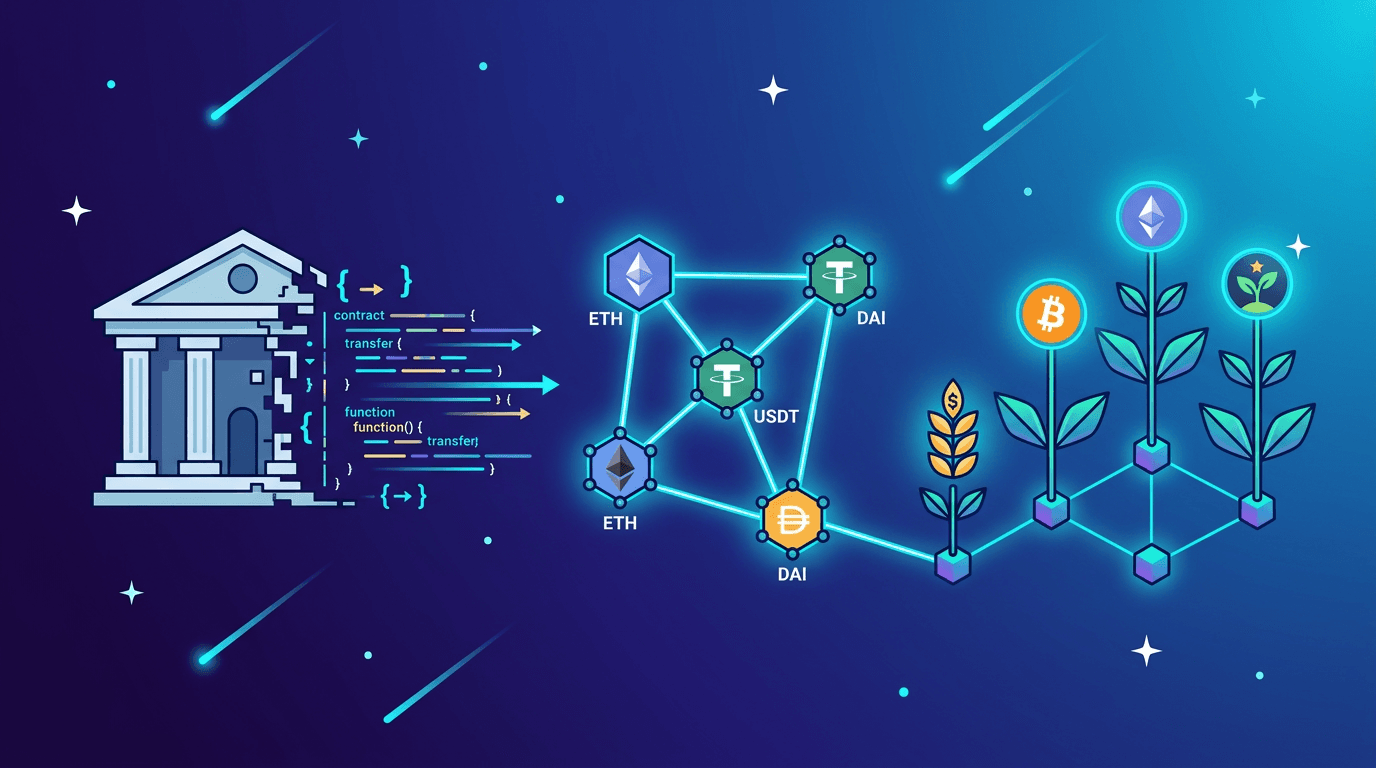
DeFi throws a lot at you at once — liquidity pools, AMMs, impermanent loss, yield farming, perp DEXs. Look up one term and you end up with twenty more questions. If that loop sounds familiar, you're not alone, and this page is designed to break it.
Think of this as your DeFi map: a quick orientation of the whole ecosystem, followed by links to deeper guides on every topic that matters. Read what you need; skip what you don't.
Heads up: Nothing here is financial advice (NFA). DeFi involves real risks — smart contract bugs, price volatility, liquidations. Only participate with funds you can afford to lose, and always do your own research (DYOR).
What Is DeFi and Why Does It Matter?
Decentralized Finance is the ecosystem of financial services — lending, borrowing, trading, earning yield — built on blockchain and smart contracts, with no banks or brokerages in the middle.
Think of it like replacing the loan officer with a vending machine. The vending machine runs on code: put in your collateral, get your loan. No paperwork, no business hours, no middleman — just rules written in code, executing automatically, 24/7.
Here's how DeFi compares to what you already know:
| Feature | Traditional Finance (TradFi) | DeFi |
|---|---|---|
| Intermediary | Banks, brokerages | Smart contracts |
| Hours | Business hours (Mon–Fri) | 24/7/365 |
| Access | Bank account + KYC | A wallet is all you need |
| Transparency | Internal ledgers (private) | All transactions on-chain, public |
| Yield | Savings: 1–3% | Stablecoin supply: 4–7%+ APY |
| Settlement | 1–3 business days | Seconds to minutes |
As of early 2026, over $95 billion is locked in DeFi protocols. Aave alone has processed more than $1 trillion in cumulative loans — a first for any DeFi protocol. This isn't a niche experiment anymore.
How DeFi Works (The Short Version)
Three things make DeFi possible:
- Blockchains — the ledger. Ethereum is the most established home for DeFi, but Solana, Arbitrum, and Base also host major protocols. No single party controls the record.
- Smart contracts — the logic. Code that says "if user deposits X collateral, release Y in loans" and executes automatically when conditions are met. No loan officer. No manual processing.
- Non-custodial wallets — the key. Apps like MetaMask or Rabby let you connect directly to any protocol. You control your funds; no platform holds them on your behalf.
Your DeFi Reading Map
The seven topics below cover what matters most for anyone navigating DeFi. Each section gives you a quick orientation, then links to the full deep-dive.
AMM & Liquidity Pools
Traditional exchanges match buyers and sellers through order books. DeFi flipped that model with liquidity pools — shared reserves of two tokens that you trade against directly. The price adjusts automatically based on the ratio of tokens inside (this is the AMM, or Automated Market Maker, mechanism).
Liquidity providers (LPs) deposit token pairs into these pools and earn a cut of every trade that flows through. It sounds passive — and it can be — but there are real trade-offs you need to understand first.
Deep dive: How AMMs and Liquidity Pools Work →
DEX vs. CEX: Which Should You Use?
A centralized exchange (CEX) like Coinbase or Binance holds your funds and matches orders on its own servers. A decentralized exchange (DEX) like Uniswap executes trades via smart contracts — your wallet, your funds, your keys.
Each has genuine advantages. CEXs are simpler and better for converting fiat to crypto. DEXs give you access to a far wider range of tokens and keep custody with you, but they require you to manage your own wallet security. Most active DeFi users combine both.
Deep dive: DEX vs. CEX — A Practical Comparison →
Ethereum Staking
Ethereum runs on Proof of Stake. Validators lock up ETH to help secure the network and earn staking rewards in return — roughly 3.2–3.8% annually. The catch: direct staking requires 32 ETH, which puts it out of reach for most people.
Liquid staking solves this. Protocols like Lido let you deposit any amount, and you receive a liquid token (like stETH) that keeps earning rewards while remaining usable across other DeFi protocols. About 30% of all ETH is currently staked, with Lido holding roughly 28% of that.
Deep dive: Ethereum Staking — Options, Yields, and Risks →
Hyperliquid & Perp DEXs
Not all DeFi is about yield. Perpetual futures (perps) let you take leveraged long or short positions on crypto assets — entirely on-chain, no centralized exchange required.
Hyperliquid has emerged as the dominant perp DEX, capturing over 70% of on-chain perp market share and surpassing $3 trillion in annualized trading volume. It runs on its own purpose-built chain optimized for speed and low fees. Perps are powerful tools, but leverage amplifies losses just as readily as gains — this is high-risk territory.
Deep dive: Hyperliquid and the Perp DEX Landscape →
Impermanent Loss
If you're considering providing liquidity to a DEX pool, impermanent loss is the concept you need to understand before committing funds. When the price of one token in your LP position moves relative to the other, you can end up with less value than if you'd simply held both tokens in your wallet.
It's called "impermanent" because if prices return to the original ratio, the loss disappears. In practice, that doesn't always happen. Uniswap data from volatile periods in 2025 showed average impermanent losses of 4.7–8.2%.
Deep dive: Impermanent Loss Explained with Examples →
Stablecoins
Stablecoins are the dollar bills of DeFi — tokens pegged to fiat currency (usually USD) that let you operate in DeFi without full exposure to crypto price swings. They come in different flavors: fiat-backed (USDC, USDT), algorithm-backed, and the newer yield-bearing stablecoins that maintain their dollar peg while automatically generating returns.
In 2025 alone, 88 new yield-bearing stablecoins launched. Ethena's USDe has grown to roughly $5.9B TVL. Understanding how each type works — and what can go wrong — matters before you park funds in any of them.
Deep dive: Stablecoins — Types, Risks, and How They Work →
Yield Farming
Yield farming is the practice of actively moving funds across DeFi protocols to maximize returns — lending on Aave, providing liquidity on Uniswap, staking LP tokens for extra rewards, and stacking yields across multiple steps. Done well, it can significantly outperform any single protocol's native rate.
The trade-offs: complexity, gas costs, exposure to multiple smart contract risks simultaneously, and the added layer of impermanent loss if pools are involved. Early DeFi was famous for sky-high APYs fueled by token emissions; as of 2026, about 65% of lending yields come from genuine borrowing demand rather than inflationary rewards.
Deep dive: Yield Farming — Strategies, Platforms, and Risks →
ERC-4626 Tokenized Vaults
Yield vaults bundle deposits into shares while one or more strategies manage the underlying asset. ERC-4626 gives single-asset vaults a common interface for deposits, redemptions, previews, and limits, making them easier for wallets and protocols to integrate.
The standard does not guarantee safety or returns. Strategy losses, fees, withdrawal constraints, admin powers, and share-rounding attacks still matter.
Deep dive: ERC-4626 tokenized vault shares, accounting, and risks →
DeFi Risks: The Honest Overview
The potential yields in DeFi are real. So are the risks. Here's the honest summary before you move any money.
Smart contract hacks — Code can have bugs. Roughly $3.2 billion was lost to hacks in 2024 alone. Even audited protocols are not immune.
Impermanent loss — As covered above, LP positions can underperform simple holding in volatile markets. The numbers from 2025 make this concrete.
Rug pulls and scams — Unverified teams can disappear with user funds. Cumulative rug pull losses exceed $240 million. Very high APYs (100%+/year) are almost always a red flag, not an opportunity.
Phishing and wallet drains — Connecting your wallet to a fake protocol site or approving a malicious contract can empty your wallet silently. Bookmark official URLs; don't click search results.
Liquidation risk — If you borrow against collateral and the collateral value drops below the required threshold, your position can be automatically liquidated.
Warning
DeFi has no customer support to call and no chargebacks. Mistakes — wrong address, malicious approval, lost seed phrase — are usually permanent. Understand the mechanics before moving real money.
General principles that hold across DeFi: use protocols with long track records and professional audits, keep funds spread across protocols rather than concentrated in one, and maintain a dedicated DeFi wallet separate from your main holdings.
Getting Started: A Safe First Step
If you're new to DeFi, the lowest-risk entry point is supplying a stablecoin to a major lending protocol. Here's a straightforward path:
- Get a wallet — Install MetaMask or Rabby. Write your seed phrase on paper and store it somewhere physically secure. Never enter it on any website.
- Fund your wallet — Buy USDC or ETH on a centralized exchange, then withdraw to your personal wallet address.
- Try Aave — Go to app.aave.com, connect your wallet, select USDC, and click "Supply." You'll see interest accrue in real time.
- Start small — $50–$100 is enough to understand the mechanics. Scale up only after you understand the risks of what you're doing.
If gas fees on Ethereum mainnet eat into your returns at small amounts, consider low-cost chains like Arbitrum or Solana, where the same protocols run at a fraction of the cost.
Frequently Asked Questions
Is DeFi legal? In most jurisdictions, DeFi itself is not illegal. However, earnings — interest, trading gains, staking rewards — typically trigger tax obligations. Check your local rules.
Can I lose money in DeFi? Yes. Smart contract exploits, impermanent loss, liquidations, and token price drops can all result in losses. Only use capital you can afford to lose entirely.
What's the minimum to get started? There's no theoretical minimum, but gas fees on Ethereum mainnet make very small amounts impractical. $50–$100 is a reasonable starting point; even less works on low-cost chains like Arbitrum or Solana.
Do I need to use DeFi exclusively, or can I combine it with a CEX? Combining both is common and sensible. A typical pattern: buy crypto on a CEX with fiat → transfer to your wallet → use DeFi → convert back via CEX when you want fiat again.
What's TVL and why does it matter? TVL (Total Value Locked) is the total value of assets deposited in a protocol. Higher TVL generally signals more usage and liquidity — but it's not a safety guarantee.
The Bottom Line
DeFi has moved from a niche experiment to a $95 billion ecosystem reshaping how people lend, borrow, trade, and earn. The fundamentals — smart contracts replacing intermediaries, transparent on-chain logic, 24/7 access — represent a genuine shift in how financial infrastructure can work.
But the risks are real and distinct from traditional finance. There's no insurance fund, no customer service line, and no way to reverse a mistake. The guides linked above exist to help you understand each piece before you commit funds.
Start with what you need. Come back when you're ready for more.
This article is for informational purposes only and does not constitute financial advice. DeFi participation involves real risks including smart contract vulnerabilities, price volatility, and potential total loss of funds. Always do your own research (DYOR) and never participate with more than you can afford to lose. NFA.
Everything in this guide

Ethereum Validator Consolidation: How MaxEB and EIP-7251 Work
Learn how Ethereum validator consolidation, Type 2 withdrawal credentials, and the 2,048 ETH maxEB limit work—and what operators should check first.
 GOMTU8 min read
Ethereum Validator Slashing Explained: Penalties, Causes, and Prevention
Understand Ethereum validator slashing, how it differs from ordinary downtime penalties, what triggers it, and how solo stakers can reduce operational risk.
GOMTU8 min read
ERC-4626 Tokenized Vaults Explained: Shares, Yield, and Hidden Risks
Learn how ERC-4626 tokenized vaults turn one underlying asset into standardized shares, how deposits and redemptions work, and which risks to check first. NFA.
GOMTU8 min read
DeFi Lending and Borrowing Explained: How It Works and the Risks (2026)
How does DeFi lending work — and why is every loan overcollateralized? A clear guide to health factors, liquidations, interest rates, and the real risks.
GOMTU7 min read
Restaking Explained: EigenLayer, LRTs, and Shared Security (2026)
What is restaking, and why did it become one of the biggest DeFi narratives of 2026? A clear breakdown of EigenLayer, AVSs, liquid restaking tokens, and the stacked risks — before you chase the yield.
GOMTU8 min read
Impermanent Loss Explained: The Hidden Cost of DeFi Liquidity
Understand impermanent loss in plain language — what it is, when it hurts most, how to reduce it, and the risks every DeFi LP should know before depositing.
GOMTU8 min read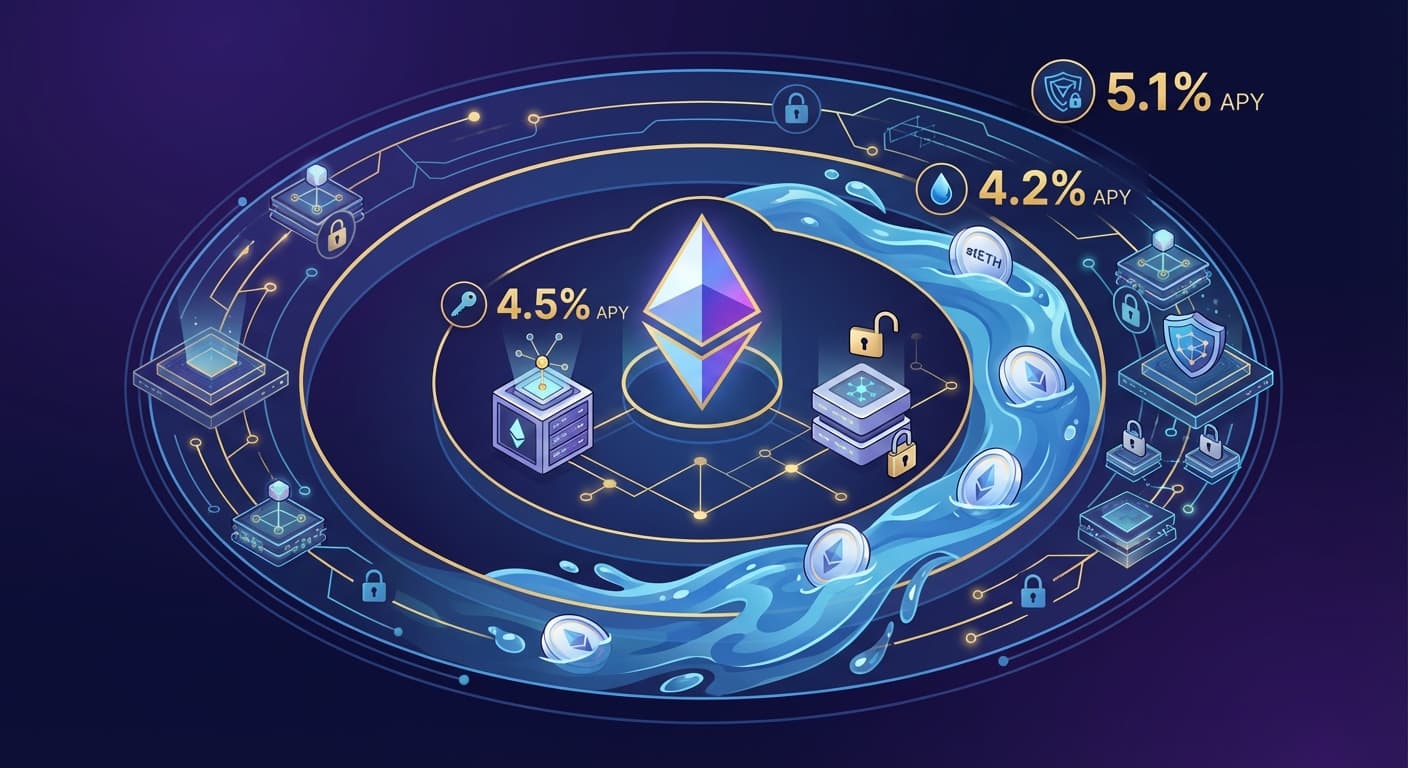
Ethereum Staking Guide: How to Stake ETH Step by Step (2026)
A practical how-to for staking ETH in 2026 — choose your path, set up step by step, and understand the real risks before you commit. Covers solo, liquid, exchange, and restaking.
GOMTU10 min read
What Are Stablecoins? Types, How They Work, and Real Risks
Understand stablecoins from the ground up — fiat-backed, crypto-backed, algorithmic, and yield-bearing types — plus depeg risks, USDT vs USDC, and how to use them in DeFi.
GOMTU7 min read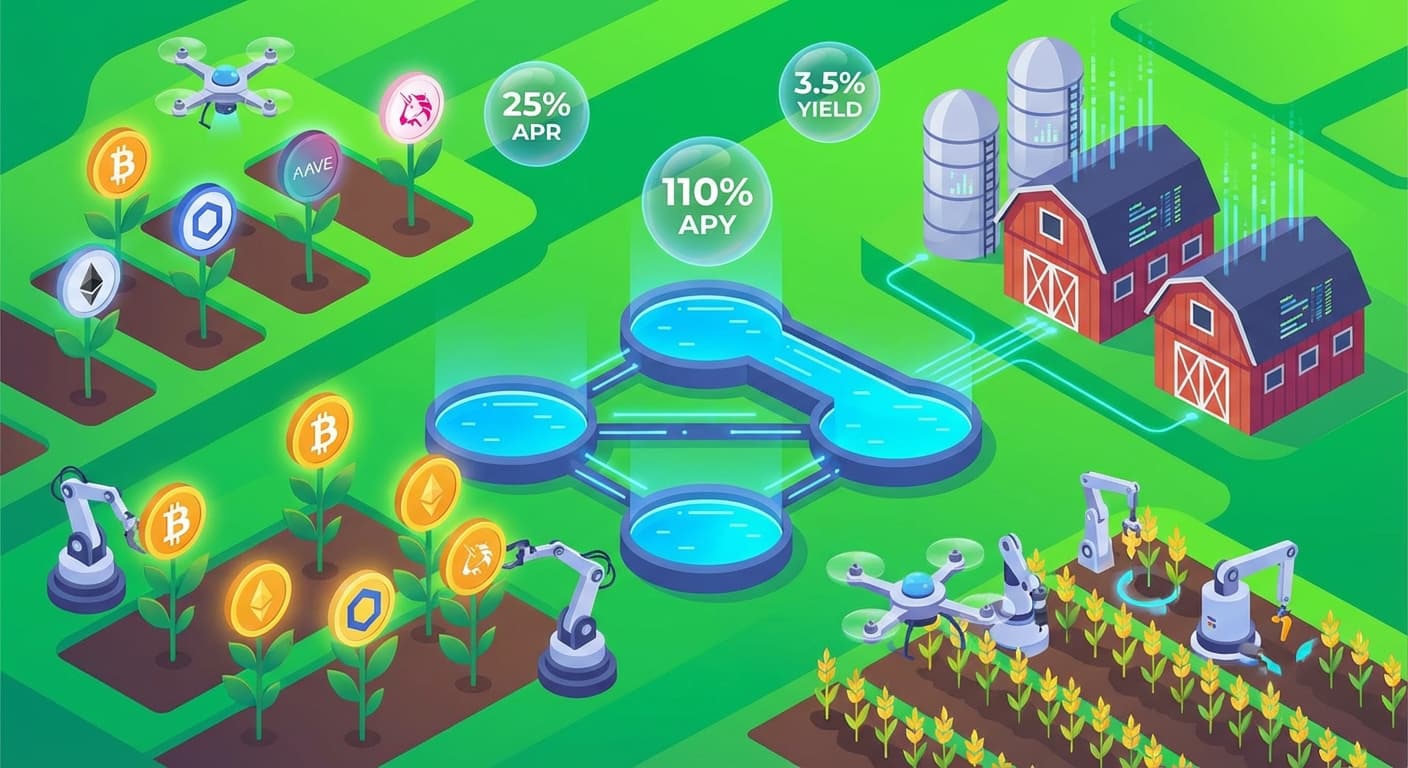
How to Start Yield Farming: A Step-by-Step DeFi Guide
Learn how to start yield farming in DeFi — wallet setup, platform selection, step-by-step deposits, risk management, and a pre-deposit checklist. NFA.
GOMTU9 min read
Hyperliquid Perp DEX Guide: How HyperCore, HLP, and Fees Work
A practical Hyperliquid perp DEX guide covering HyperCore, current fee tiers, HLP, bridging, liquidations, and leverage risks.
GOMTU6 min read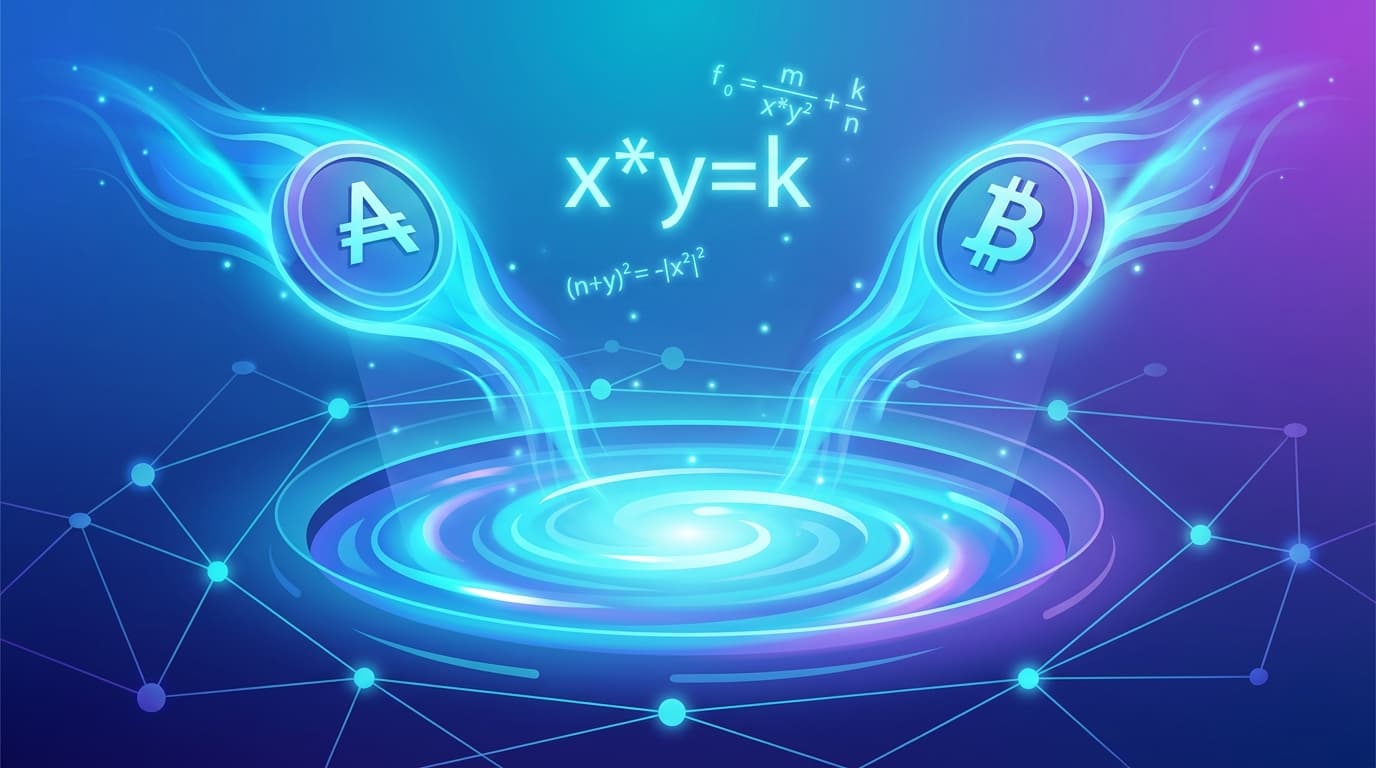
AMM and Liquidity Pools Explained: How DEX Trading Really Works
Understand how automated market makers (AMMs) and liquidity pools power decentralized trading. Covers the x*y=k formula, impermanent loss, LP returns, and Uniswap v4 hooks — your 2026 DeFi guide.
GOMTU8 min read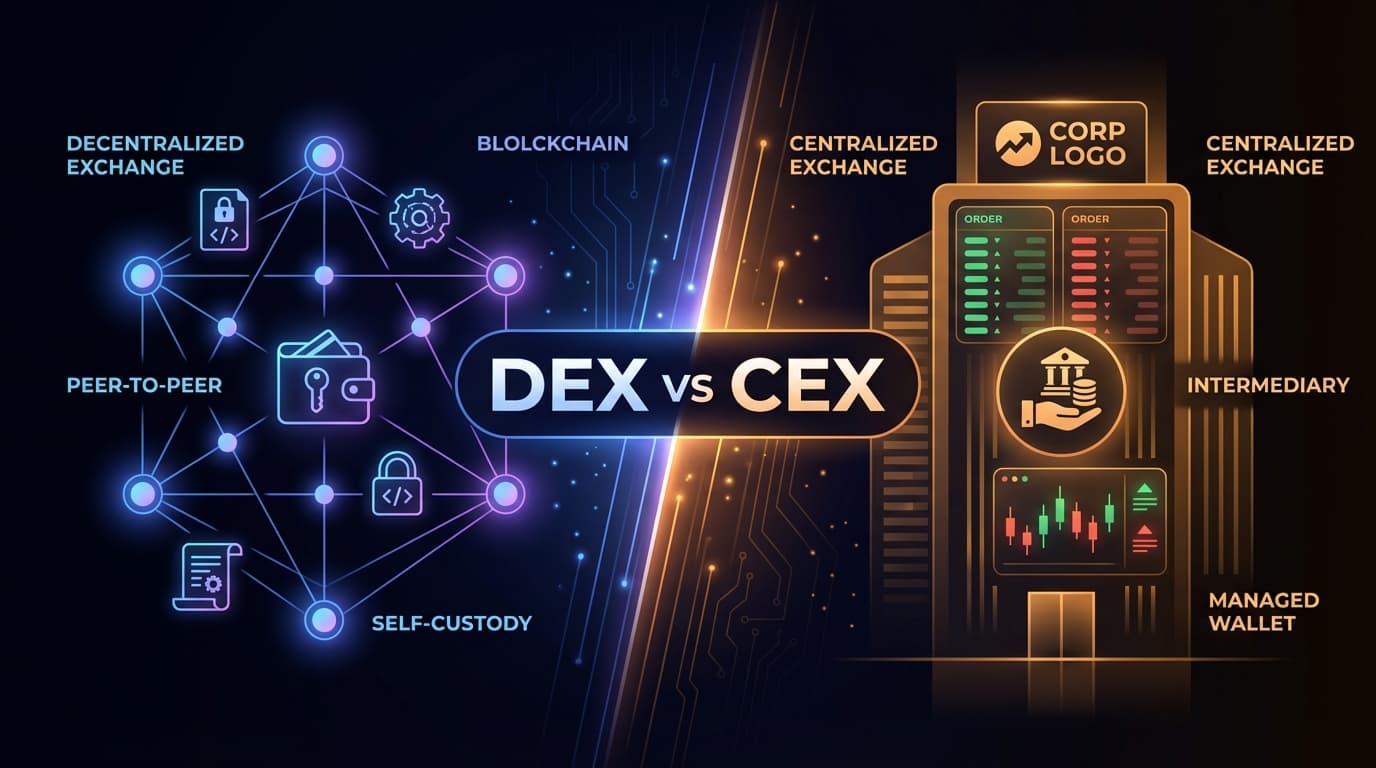
DEX vs CEX: A Practical Comparison for Crypto Users
Centralized or decentralized exchange — which one fits you? Compare security, fees, custody, and use cases to find out what actually matters for your situation.
GOMTU7 min read