Impermanent Loss Explained: The Hidden Cost of DeFi Liquidity
Understand impermanent loss in plain language — what it is, when it hurts most, how to reduce it, and the risks every DeFi LP should know before depositing.

Last updated
You deposit ETH and stablecoins into a DeFi liquidity pool. ETH doubles in price. You check your position — and somehow you have less total value than if you had simply held everything in your wallet. What just happened?
That's impermanent loss. It catches almost every new liquidity provider off guard at least once, and it's one reason over half of Uniswap V3 LPs in volatile pairs have ended up worse off than plain holders. This guide explains exactly what causes it, when it hurts most, and what you can do about it — without the math panic.
What Is Impermanent Loss?
Impermanent loss (IL) is the difference in value between holding tokens in an AMM liquidity pool versus simply holding them in your wallet. When the relative price of your pooled assets changes, the pool's automatic rebalancing leaves you with less value than a basic hold strategy would have delivered.
The word "impermanent" matters. If prices return to their original ratio, the loss disappears. But if you withdraw while prices are diverged, the loss becomes permanent.
Warning
Research shows that 54.7% of Uniswap V3 LPs in volatile pairs lost money because IL exceeded their fee income. Understanding this risk is essential before you provide liquidity in any AMM pool.
How It Works: The Balanced Scale
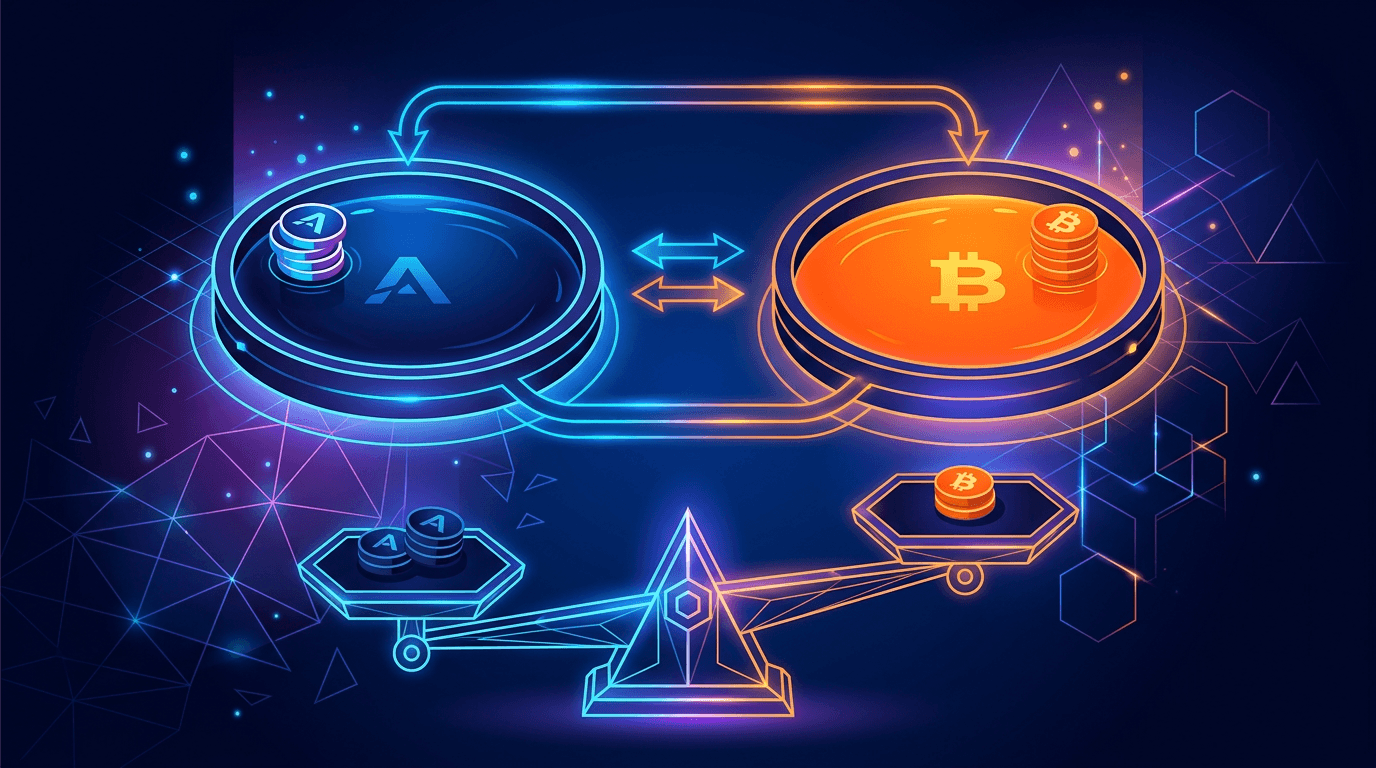
Think of an AMM pool like a perfectly balanced scale. One side holds your ETH, the other holds your USDC. The scale must stay balanced in dollar value at all times — that's how the protocol is designed.
When ETH price rises on external exchanges, traders immediately notice a price gap: ETH is cheaper inside the pool than on other platforms. So they buy ETH from the pool until prices equalize. With each purchase, the scale tips: you end up with less ETH and more USDC. The pool traded your appreciating asset for you, without ever asking.
Here's that in numbers:
- You deposit 1 ETH + 2,000 USDC into a pool (ETH = $2,000, total = $4,000)
- ETH price rises to $4,000 on external exchanges
- Arbitrageurs buy cheap ETH from the pool until prices equalize
- Pool rebalances to: 0.707 ETH + 2,828 USDC = $5,656
- If you had held instead: 1 ETH ($4,000) + 2,000 USDC = $6,000
- Impermanent loss: $6,000 − $5,656 = $344 (5.72%)
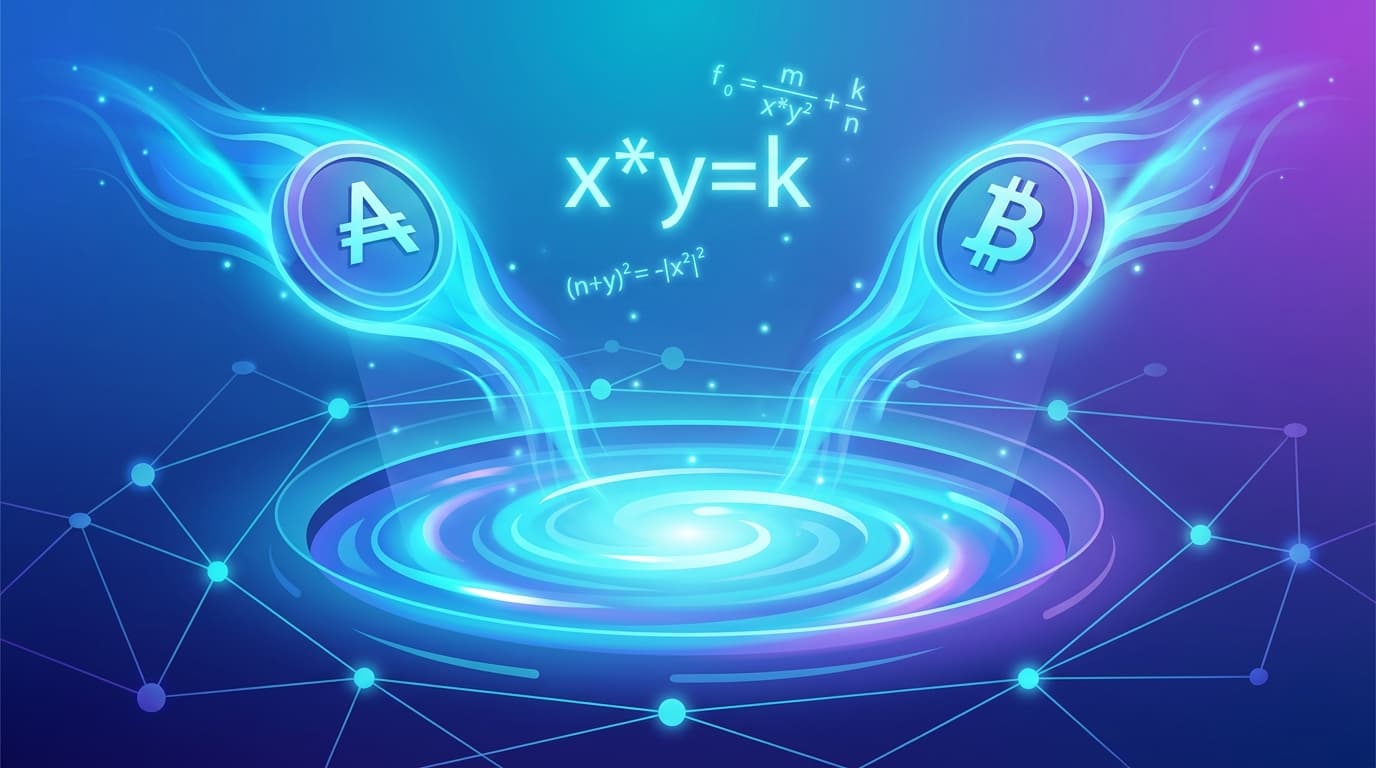
The root cause: AMMs use the constant product formula (x × y = k) to maintain a 50:50 value ratio at all times. This systematically reduces your exposure to appreciating assets and increases your exposure to depreciating ones.
The IL Formula
For a standard 50/50 AMM pool:
IL = 2 × √r ÷ (1 + r) - 1Where r = price ratio (new price ÷ original price).
| Price Change | IL | Notes |
|---|---|---|
| ±0% | 0% | No divergence, no loss |
| +25% | −0.6% | Usually negligible |
| +50% | −2.0% | Often offset by fees |
| +100% (2×) | −5.72% | Monitor closely |
| +200% (3×) | −13.4% | Significant — review position |
| +400% (5×) | −25.5% | Severe loss |
| −50% | −5.72% | Same IL as a 2× increase |
| −75% | −20.0% | Principal loss compounded by IL |
Note
IL is symmetrical — it depends only on the magnitude of price divergence, not the direction. A 50% drop and a 100% increase produce identical IL (5.72%).
When Does IL Get Worse?
Several factors amplify impermanent loss. Knowing them helps you choose pools more deliberately.
Large price swings. The formula above is unforgiving: a 5× price move creates 25.5% IL. Few fee structures can overcome losses at that scale.
High-volatility pairs. Assets that move independently — ETH/altcoin, BTC/altcoin — diverge more often and more sharply than correlated pairs. More divergence means more IL, more frequently.
Concentrated liquidity positions (V3/V4). Uniswap V3 and V4 let you set a custom price range to earn higher fees. Sounds appealing — but IL is amplified within that range. And if price exits your range entirely, you earn zero fees while holding 100% of the worse-performing asset. Studies show that 67% of V3 LPs in volatile pairs were underwater when they failed to actively manage their ranges.
JIT (Just-In-Time) liquidity. Sophisticated bots add and remove liquidity around large trades, capturing fees while passive LPs get crowded out. This practice erodes passive LP profits by up to 44% per affected trade.
Long time horizons without fee offset. In the short run, fees can absorb small IL. Over months in volatile markets, IL compounds faster than fee income in many pools — especially those with low volume relative to TVL.
How to Reduce Impermanent Loss
1. Choose Stablecoin Pairs
Stablecoin pairs like USDC/USDT or DAI/USDC have minimal price divergence, keeping IL near zero. Yields are lower but predictable.
2. Pick Correlated Asset Pairs
Assets that tend to move together — ETH/stETH, wBTC/renBTC — experience minimal IL because their price ratio stays relatively stable.
3. Target High-Volume Pools
Pools with high daily volume relative to TVL (above 10% daily turnover) generate fees that can outpace IL. Historical fee APY for established pools like ETH/USDC 0.3% has ranged around 11% — which, against a 5.72% IL on a 2× move, can still net positive. Always check current rates before depositing; fee APY shifts with market conditions.
4. Use Automated Liquidity Managers (ALMs)
Active management tools can handle range rebalancing on your behalf:
- Gamma Strategies: auto-rebalances price ranges across multiple DEXs and chains to minimize IL while maximizing fee capture
- Arrakis Finance: non-custodial vault management for Uniswap V3 concentrated liquidity positions
5. Options-Based Hedging
DeFi options protocols can directly offset IL exposure:
- Panoptic: perpetual options built on Uniswap V3/V4. Take an opposing position to your LP exposure to neutralize IL directly. Backed by Uniswap Labs Ventures, Coinbase Ventures, and Jane Street.
- GammaSwap: short LP tokens to create impermanent gain — the mirror image of IL. Enables volatility speculation and IL hedging simultaneously.
6. Uniswap V4 Hooks
V4's programmable hook system enables IL mitigation strategies built directly into the protocol:
- Dynamic Fee Hooks: automatically raise fees during high volatility to boost LP compensation
- Options Hedging Hooks: automatically purchase protective options within the hook logic
Tip
For most retail LPs, the simplest path is a low-volatility or correlated pair combined with an ALM like Gamma Strategies to handle range rebalancing automatically.
Risks and Limits
Every mitigation strategy has its own floor of remaining risk. Here's what none of them fully eliminates:
Stablecoin pairs carry depeg risk. USDC/USDT IL is near zero under normal conditions — but stablecoin depegs (like UST's collapse in 2022) can produce losses far larger than any fee income. "Near-zero IL" really means "near-zero IL under normal conditions."
ALMs add smart contract exposure. Delegating liquidity management to Gamma or Arrakis adds another layer of protocol risk. A bug in the ALM itself could amplify losses from IL. Only use platforms with multiple reputable security audits.
Options hedging adds cost and complexity. Perpetual options from Panoptic or GammaSwap incur ongoing premiums. In a low-volatility environment, hedging costs can exceed the IL they offset. This approach works best for large, actively managed positions — not small retail deposits.
No strategy eliminates IL entirely. Even the best pair selection and active management reduce IL — they cannot remove it. In extreme market moves, IL can exceed combined fee income and hedging benefits.
Smart contract risk is always present. Every pool, ALM, and options protocol can contain undiscovered vulnerabilities. Only deploy capital on platforms with multiple reputable audits and established track records. Diversify across pools, not just within one.
For a broader look at DeFi risks, see what is DeFi.
Frequently Asked Questions
Can impermanent loss exceed 100%? IL itself is bounded — the worst case is holding 100% of the weaker asset. But if that asset also falls sharply in price at the same time, your total portfolio loss can approach your full initial deposit. IL and market downside compound independently.
Is impermanent loss a taxable event? Tax treatment varies by jurisdiction and is still evolving for DeFi. In many regions, IL only becomes a realized event at withdrawal, and how it is classified — capital loss, income adjustment, or something else — depends on local law. Consult a tax professional familiar with crypto before making decisions based on tax implications.
Does IL apply to single-sided staking? No. IL is specific to two-asset AMM pools where the protocol automatically rebalances between the two. Single-sided staking, lending protocols, and vaults carry different risks — including liquidation, inflationary token rewards, and smart contract bugs — but not IL in the classic sense.
Does IL hurt more in bear markets? Not automatically. IL depends on divergence, not direction. If both assets in your pool fall equally, IL stays near zero. The dangerous scenario in a bear market is when one asset collapses while the other holds — divergence drives IL, not the overall market trend. Bear markets can also reduce pool volume, shrinking the fee income that would otherwise offset IL.
What fee APY is needed to break even on a 2× price move? A 2× price move creates 5.72% IL. Your pool needs to generate at least 5.72% in fees over the same period to break even. Always check historical fee APY for the specific pool — not projected figures, which can shift dramatically when volume drops.
Wrapping Up
Impermanent loss is not a flaw in DeFi — it is a predictable structural feature of how AMMs work. The better you understand it, the better your ability to select positions where fee income, pair choice, and hedging tools work in your favor rather than against you.
The LP tooling ecosystem has matured significantly. Uniswap V4's dynamic hooks, perpetual options protocols, and automated rebalancing vaults all lower the bar for more structured, risk-aware liquidity provision. But no tool makes LP positions risk-free.
Before you deposit: review the pair's volatility history, understand how IL would play out at different price scenarios, and allocate only capital you can afford to lose. DeFi rewards informed participants — and has a way of penalizing those who skip the homework.
This article is for educational purposes only and does not constitute financial or investment advice. DeFi liquidity provision involves significant risks including impermanent loss, smart contract vulnerabilities, and market volatility. Always do your own research (DYOR) before participating.
Ready to compare pool options? See the DEX vs CEX breakdown for context on where AMM pools fit in the broader trading landscape, or explore the DeFi yield farming guide for a fuller picture of returns.
Keep learning
AMM and Liquidity Pools Explained: How DEX Trading Really Works
Understand how automated market makers (AMMs) and liquidity pools power decentralized trading. Covers the x*y=k formula, impermanent loss, LP returns, and Uniswap v4 hooks — your 2026 DeFi guide.
 GOMTU8 min read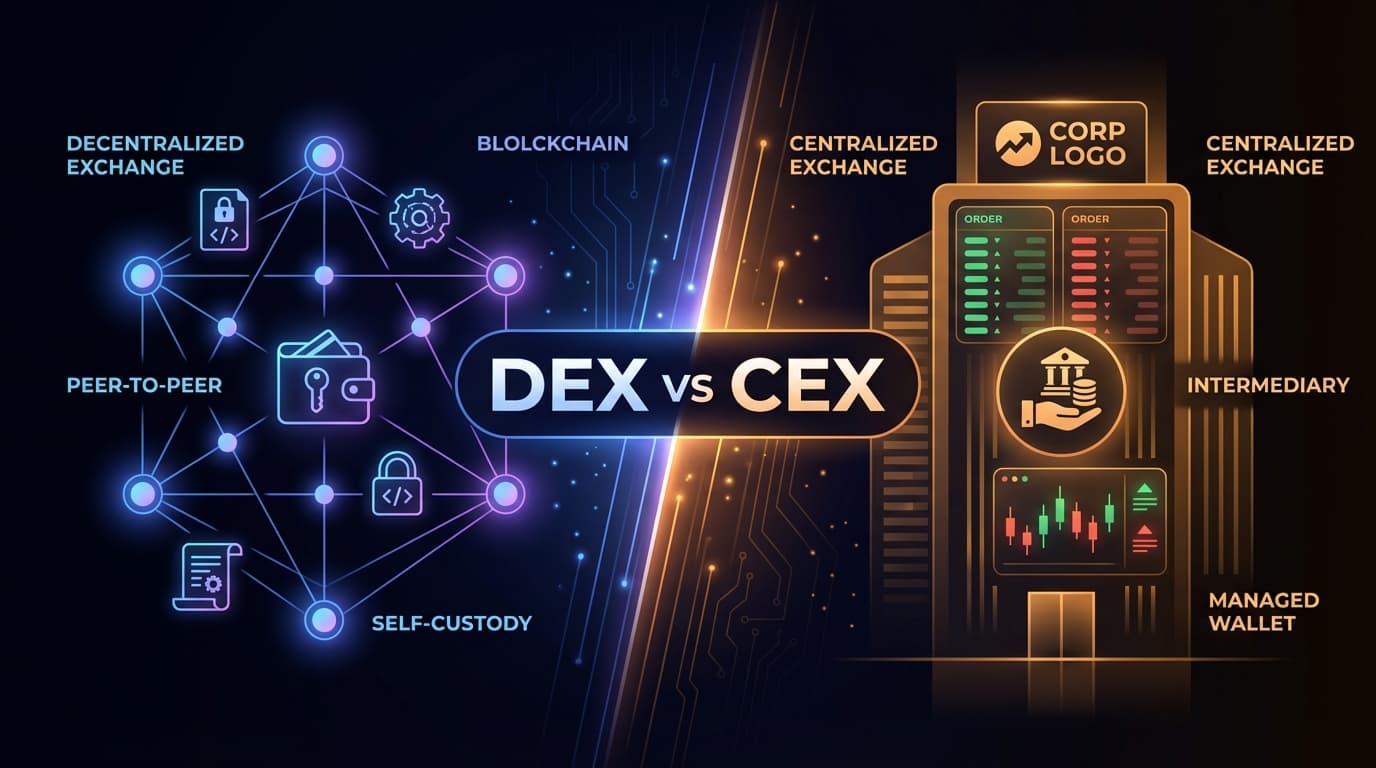
DEX vs CEX: A Practical Comparison for Crypto Users
Centralized or decentralized exchange — which one fits you? Compare security, fees, custody, and use cases to find out what actually matters for your situation.
GOMTU7 min read
What Are Stablecoins? Types, How They Work, and Real Risks
Understand stablecoins from the ground up — fiat-backed, crypto-backed, algorithmic, and yield-bearing types — plus depeg risks, USDT vs USDC, and how to use them in DeFi.
GOMTU7 min readExplore related topics

Cross-Chain Bridge Guide: How to Bridge Safely in 2026 (Step-by-Step)
Learn how to use cross-chain bridges safely: what they are, how lock-and-mint and liquidity pool bridges work, a step-by-step tutorial, and how to avoid the hacks that cost DeFi over $2.8B.
GOMTU9 min read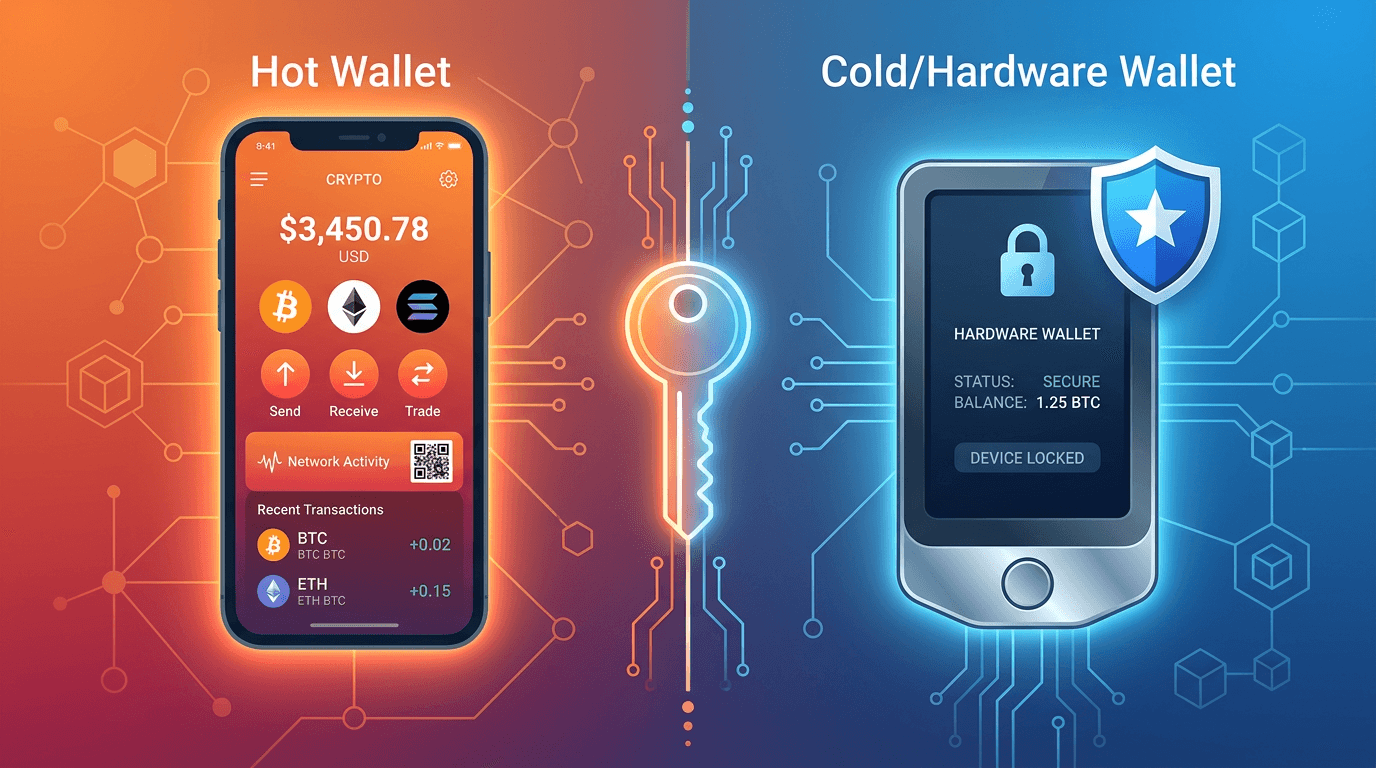
Crypto Wallet Security: Your Complete Hub for Keys, Scams & Safe Custody
Everything you need to know about crypto wallet security — seed phrases, smart wallets, bridge risks, and scam prevention. Your gateway to staying safe on-chain.
GOMTU11 min read