How to Start Yield Farming: A Step-by-Step DeFi Guide
Learn how to start yield farming in DeFi — wallet setup, platform selection, step-by-step deposits, risk management, and a pre-deposit checklist. NFA.

Last updated
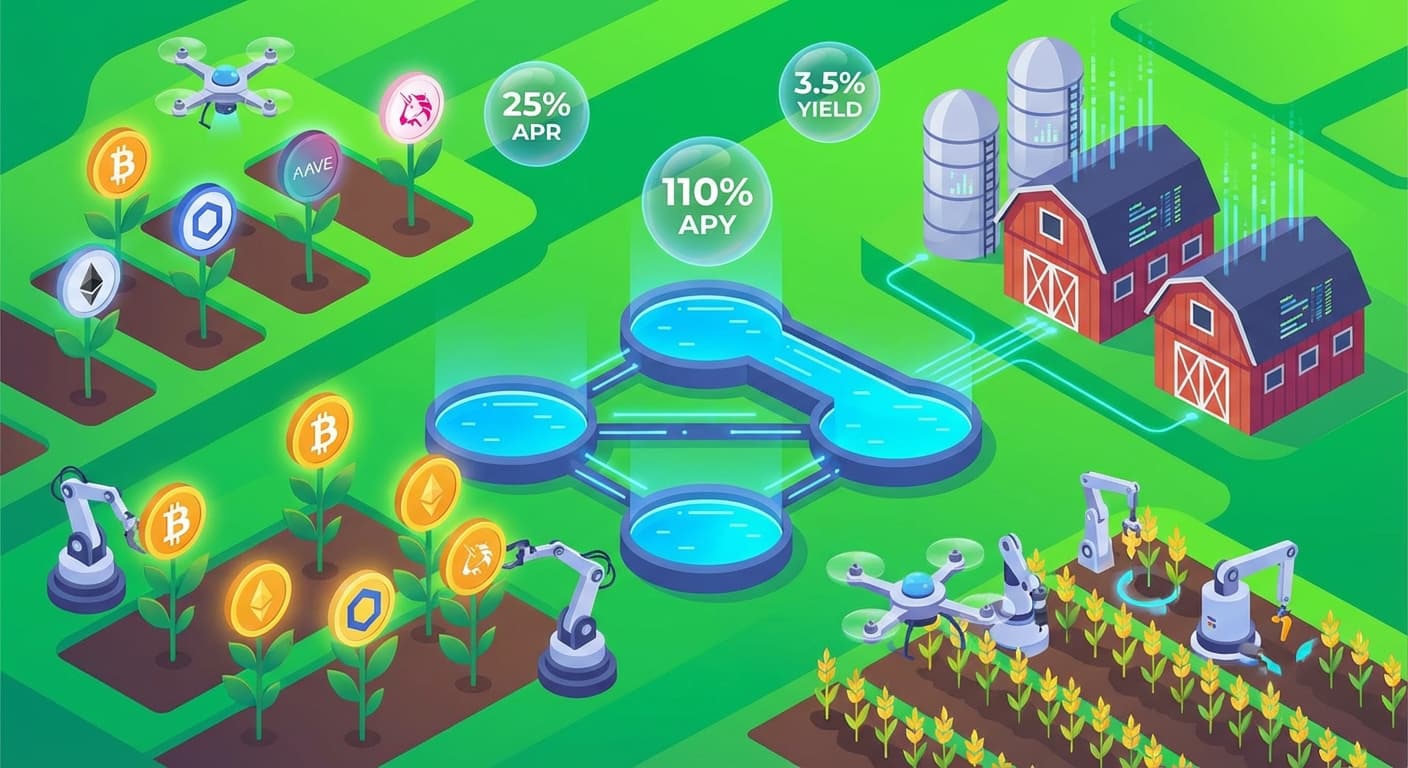
You've probably heard that people earn yield on their crypto without actively trading — but when you sit down to figure out where to actually start, the DeFi space can feel like a maze. Aave or Uniswap? Stablecoins or ETH? What is impermanent loss, and should you be worried before your first deposit?
This guide answers those questions in order. You'll learn what yield farming is, what you need before your first deposit, how to make that deposit safely, and — crucially — what risks can trip up beginners who skip the fine print.
Not financial advice (NFA). Yield farming carries real risk of capital loss. Only use funds you can afford to lose entirely. Always do your own research (DYOR).
What Is Yield Farming — and Why Does It Exist?
Think of a traditional bank: you deposit money, the bank lends it to borrowers, and you receive a slice of the interest. Yield farming works on the same basic logic — except the "bank" is a transparent smart contract on a blockchain, there's no loan officer involved, and the range of possible returns looks very different.
When you deposit crypto into a DeFi protocol, you're supplying liquidity that other users borrow or trade against. In return, the protocol distributes a portion of the fees and interest it collects. That share is your yield.
Headline APY numbers vary enormously — from a few percent on stablecoin lending to much higher figures on volatile token pairs or leveraged strategies. High numbers always raise one critical question: where, exactly, is this yield coming from? Real borrowing demand and trading fees are fundamentally different from governance token emissions that dilute over time. We'll return to this under Common Mistakes.
What You Need Before You Start
Getting three things right before your first deposit avoids the most common beginner mistakes.
1. A Self-Custody Wallet
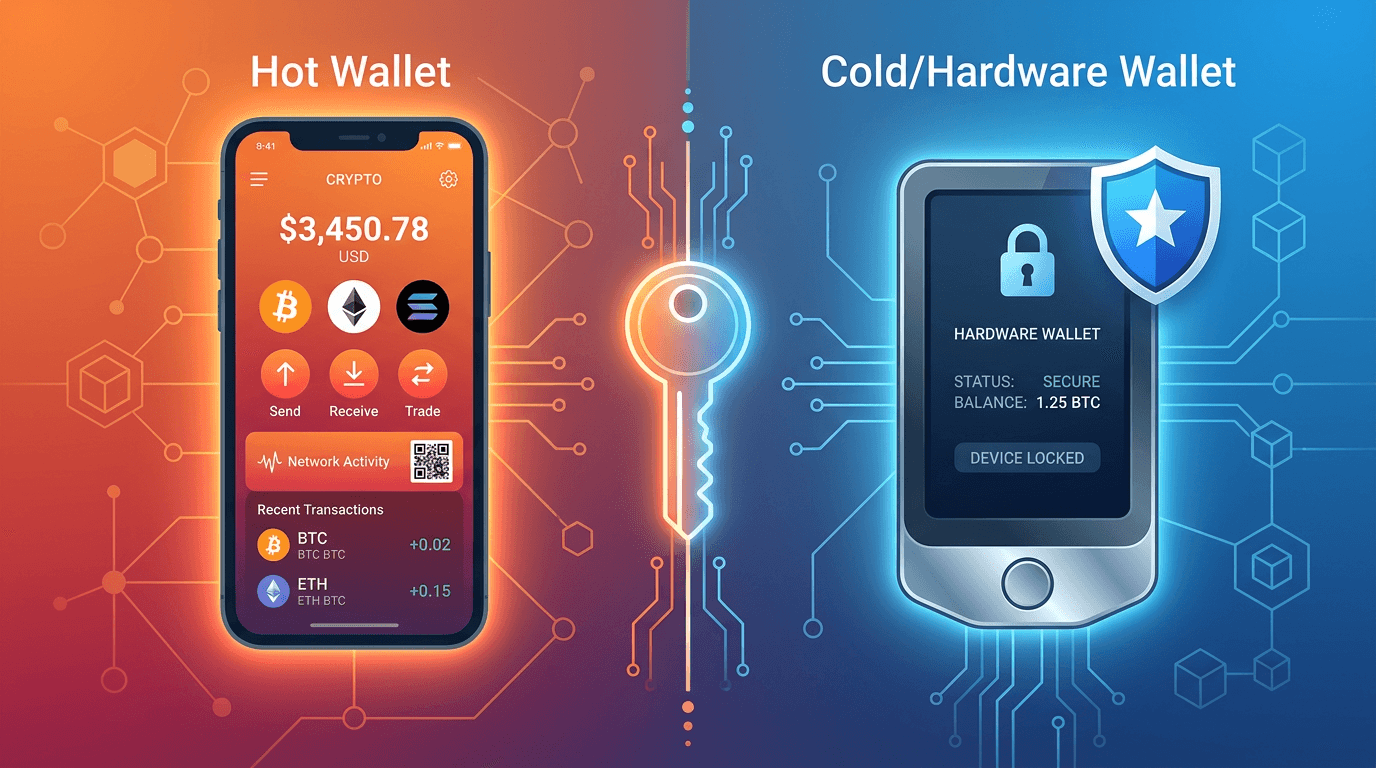
You need a non-custodial wallet — one where you control the private key, not an exchange. MetaMask and Rabby are two widely-used browser wallets. Write your seed phrase on paper, store it somewhere offline and secure, and never share it with anyone.
For larger amounts, consider a hardware wallet for extra protection. Our wallet security guide walks through setup step by step.
2. Starting Capital — Keep It Small
Gas fees create a practical floor. On Ethereum mainnet, positions under a few hundred dollars can be eroded by transaction costs. On Layer 2 networks like Arbitrum, Base, or Optimism, that floor drops to $50–$100 — a workable range for learning.
Regardless of network: only commit funds you could lose entirely without disrupting your daily life.
3. A Platform That Matches Your Experience Level
Not every yield farming strategy has the same complexity or risk profile. Before choosing a platform, know what you're signing up for:
| Strategy | Platforms | Complexity | Key Risk |
|---|---|---|---|
| Lending | Aave, Compound, Morpho | Low | Smart contract risk |
| Liquidity provision (LP) | Uniswap, Curve | Intermediate | Impermanent loss |
| Yield aggregators | Yearn Finance, Beefy Finance | Intermediate | Multi-contract dependency |
| Leveraged / yield tokenization | Alpaca, Pendle | Advanced | Liquidation, structural complexity |
TVL and APY figures change constantly — always verify on DeFiLlama before depositing.
Start with lending. Move to LP positions only once you understand impermanent loss thoroughly.
Step-by-Step: Your First Yield Farm
Step 1: Set Up and Fund Your Wallet
- Install MetaMask or Rabby as a browser extension
- Create a new wallet and carefully write down your 12- or 24-word seed phrase on paper
- Store that seed phrase offline — not in a screenshot, cloud note, or email
- Buy ETH and/or USDC on a reputable centralized exchange
- Withdraw to your self-custody wallet, keeping a small amount of ETH reserved for gas fees
Step 2: Make Your First Deposit on Aave
Aave is one of the longest-running, most heavily audited DeFi lending protocols. Supplying USDC there is about as straightforward as DeFi gets.
- Go to app.aave.com
- Connect your wallet
- Select USDC → click Supply
- Approve the transaction in your wallet (you pay a one-time gas fee)
- Interest begins accruing automatically in real time — no further action required
Check the live APY on the platform at the time you deposit. Rates fluctuate with market demand and are not fixed — any number you read in a guide may already be out of date.
Step 3: Try a Stablecoin LP on Curve (Optional Next Step)
Once you're comfortable with lending, Curve Finance's stablecoin pools are a reasonable progression. Because USDC and USDT both target $1, impermanent loss is minimal compared to volatile token pairs.
- Visit curve.fi
- Connect your wallet
- Choose a stablecoin pool (e.g., USDC/USDT) and add liquidity
- Earn trading fees plus CRV token rewards
Step 4: Compound Your Returns
Most protocols don't compound rewards automatically. You need to actively manage this:
- Claim earned reward tokens periodically — how often depends on gas costs versus the rewards you've accumulated
- Re-deposit them into productive positions, or swap for USDC and repeat
- Alternatively, deposit into a Yearn Vault — it automatically rotates funds across Curve, Convex, Morpho, and other protocols to pursue the best available return
On Layer 2s where gas is cheap, compounding more frequently can noticeably improve your effective annual return over time.
Best Practices
- Diversify across protocols — avoid concentrating more than 25–30% of your DeFi allocation in a single protocol
- Start with audited, established platforms — check DeFiLlama for TVL history and published audit reports
- Understand where the yield comes from before depositing — real protocol revenue (borrowing interest, trading fees, RWA income) versus token emissions are entirely different risk profiles
- Use stablecoin pairs first — they greatly limit impermanent loss while you learn LP mechanics
- Keep thorough records — deposits, rewards, and withdrawals are likely taxable events in most jurisdictions; track dates, amounts, and token values
Common Mistakes and Key Risks
Impermanent Loss
When you provide liquidity to an AMM pool, price divergence between the two assets causes a paper loss compared to simply holding both. The larger the price swing, the larger the loss.
| Price Change | Impermanent Loss |
|---|---|
| 1.25× | 0.6% |
| 1.5× | 2.0% |
| 2× | 5.7% |
| 3× | 13.4% |
| 5× | 25.5% |
How to manage it: use stablecoin pairs (USDC/USDT) or highly correlated pairs (stETH/ETH); choose pools where trading fee income historically offsets the impermanent loss; don't enter volatile LP positions before reading the full impermanent loss guide.
Smart Contract Risk
Warning
DeFi protocols carry no deposit insurance. Smart contract exploits have caused significant industry-wide losses — and if a protocol is exploited, funds are typically unrecoverable.
Use only protocols with published security audits and a track record of safe operation. Never concentrate your entire DeFi allocation in a single protocol.
Token Inflation Risk
Protocols advertising very high APYs often fund those returns by emitting their own governance token. If demand for that token falls — and it often does once early incentives wind down — the real value of your returns can turn negative.
Red flag: any APY well above 30–50% warrants serious scrutiny. Ask yourself: is this yield from real economic activity (borrowing demand, trading fees) or from token emissions?
Rug Pulls
Unaudited protocols with anonymous teams have repeatedly allowed developers to drain deposited user funds.
Caution
Never deposit into a protocol you cannot independently verify. No APY is high enough to justify trusting an unaudited smart contract run by an anonymous team.
Stick to protocols listed on DeFiLlama with published audit reports and an established community track record. Before using any newer protocol, test it with a small amount first.
Liquidation Risk (Leveraged Farming Only)
If you borrow against deposited assets to amplify farming yield, a price drop can trigger automatic liquidation of your entire position. This is an advanced strategy — do not attempt it before thoroughly understanding the mechanics and your liquidation thresholds.
Quick Pre-Deposit Checklist
Run through this before any new deposit:
- Does the protocol have a published security audit from a reputable firm?
- Has it operated without a major exploit for at least six months?
- Can I explain where the yield comes from — not just what the APY number is?
- Have I assessed the impermanent loss exposure for this specific token pair?
- Is this money I can afford to lose entirely?
- Does this position represent less than 25–30% of my total DeFi allocation?
- Do I have an exit plan — when will I withdraw, and under what conditions?
Frequently Asked Questions
How much can I realistically expect to earn from yield farming?
Rates vary constantly with market conditions — any specific number in this guide may be out of date by the time you read it. As a general orientation: stablecoin lending on major platforms has historically offered returns in the low-to-mid single digits annually. LP positions on volatile pairs can show higher nominal yields, but impermanent loss can offset or exceed those gains. APYs in the hundreds of percent almost always reflect unsustainable token emissions. Always check live rates on the platform before depositing, and approach extreme figures with extreme caution.
What is the minimum amount I need to start?
On Ethereum mainnet, gas fees make small positions impractical — a single deposit or withdrawal can cost $10–$30 or more. On Layer 2 networks (Arbitrum, Base, Optimism), fees are far lower and $50–$100 is a workable starting amount for learning. Either way, start small.
Is yield farming income taxable?
In most jurisdictions, yes — receiving reward tokens is often treated as ordinary income at the time of receipt, and selling them later triggers capital gains. Rules vary significantly by country and are still evolving for crypto. Keep detailed records of every transaction (date, asset, amount, value in local currency) and consult a qualified tax professional in your jurisdiction.
Can I combine yield farming with airdrop farming?
Yes. Active DeFi participation — supplying assets to Aave, providing liquidity on Uniswap or Curve — contributes to protocol usage history that many projects use to determine airdrop farming eligibility. The two strategies overlap naturally, letting you earn ongoing yield while building a usage track record.
What is "Real Yield" and why does it matter?
Real Yield refers to returns derived from actual protocol revenue — borrowing interest, DEX trading fees, real-world asset income — rather than from token emissions that dilute supply. It tends to be more sustainable over time. When evaluating a protocol, asking "is this yield real or emission-driven?" is one of the most important due diligence questions you can ask.
Wrapping Up: Take It One Step at a Time
Yield farming lets you put idle crypto to work inside the DeFi ecosystem. It can offer returns that exceed traditional savings rates — but every bit of that upside comes with risks that are entirely yours to manage: impermanent loss, smart contract vulnerabilities, rug pulls, and token inflation can all erode or eliminate returns.
The path forward: start with the simplest strategy, use audited platforms, keep position sizes manageable, understand every risk before committing capital, and never deploy more than you're willing to lose entirely.
This article is for informational purposes only and does not constitute financial or investment advice. Yield farming involves significant risk of loss. Always do your own research (DYOR). NFA.
Keep learning
AMM and Liquidity Pools Explained: How DEX Trading Really Works
Understand how automated market makers (AMMs) and liquidity pools power decentralized trading. Covers the x*y=k formula, impermanent loss, LP returns, and Uniswap v4 hooks — your 2026 DeFi guide.
 GOMTU8 min read
Impermanent Loss Explained: The Hidden Cost of DeFi Liquidity
Understand impermanent loss in plain language — what it is, when it hurts most, how to reduce it, and the risks every DeFi LP should know before depositing.
GOMTU8 min read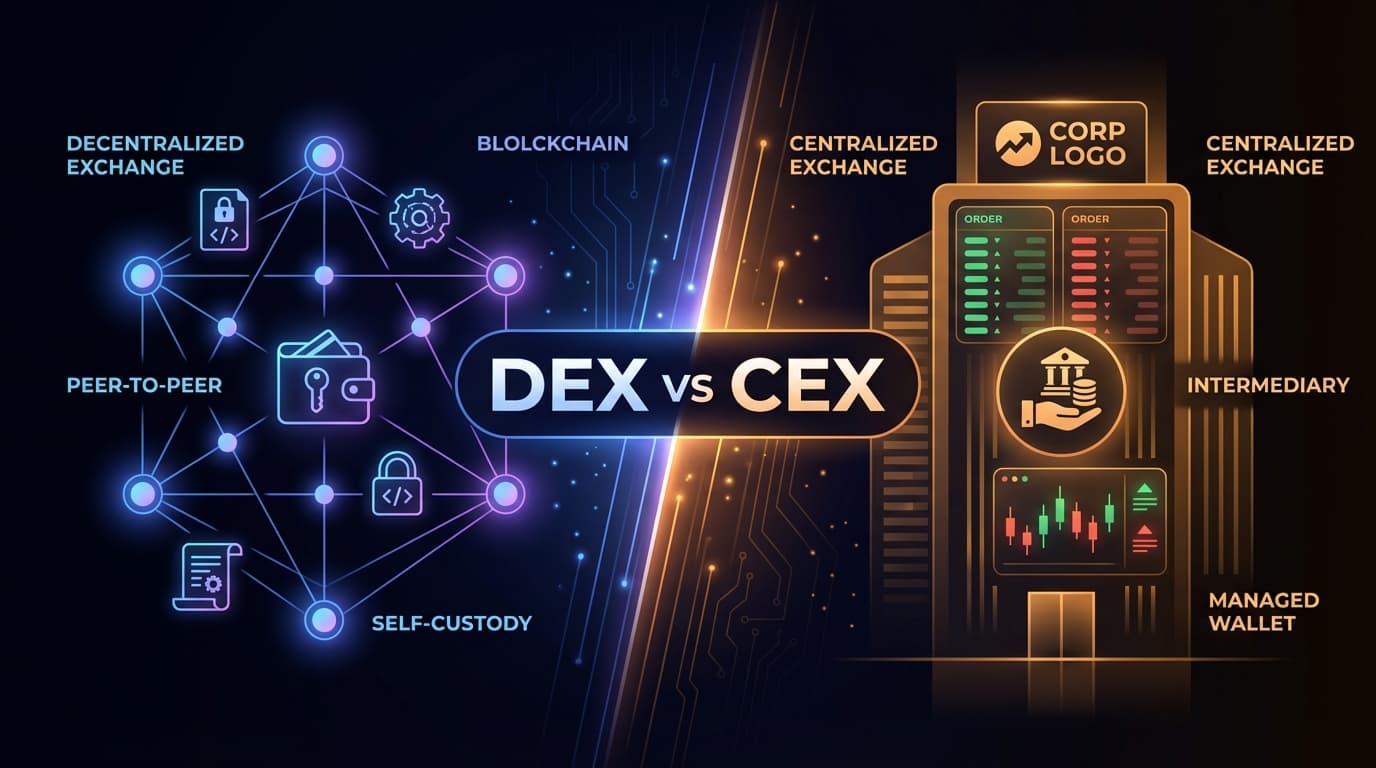
DEX vs CEX: A Practical Comparison for Crypto Users
Centralized or decentralized exchange — which one fits you? Compare security, fees, custody, and use cases to find out what actually matters for your situation.
GOMTU7 min readExplore related topics
Crypto Wallet Security: Your Complete Hub for Keys, Scams & Safe Custody
Everything you need to know about crypto wallet security — seed phrases, smart wallets, bridge risks, and scam prevention. Your gateway to staying safe on-chain.
GOMTU11 min read
Cross-Chain Bridge Guide: How to Bridge Safely in 2026 (Step-by-Step)
Learn how to use cross-chain bridges safely: what they are, how lock-and-mint and liquidity pool bridges work, a step-by-step tutorial, and how to avoid the hacks that cost DeFi over $2.8B.
GOMTU9 min read