Blockchain Finality Explained: When Is a Crypto Transaction Really Settled?
Learn how blockchain finality differs from confirmation, why Bitcoin and Ethereum settle differently, and what to check before moving funds again.


Your wallet says “confirmed,” but an exchange still will not let you trade the deposit. Nothing is necessarily broken. The wallet, the blockchain, and the exchange may simply be using three different thresholds for the same transaction.
To understand that gap, you need one idea from blockchain basics: finality. It is the degree of confidence that a block—and the transactions inside it—will not be removed from the chain’s accepted history. Finality is why “included,” “confirmed,” and “safe to act on” are related but not identical.
Confirmation Is Not the Same as Finality
A transaction normally passes through several stages:
- Broadcast: your wallet sends the signed transaction to the network.
- Pending: nodes have seen it, but a block producer has not included it yet.
- Included: the transaction appears in a block.
- Confirmed: one or more later blocks build on top of that block, or validators vote for it.
- Finalized: the protocol’s chosen safety threshold has been reached.
- Credited: an exchange, bridge, or merchant applies its own operational policy and releases funds or service.
Think of an included transaction as wet concrete. It is visible and in the right place, but you should not immediately park a truck on it. Each confirmation adds confidence; finality is the protocol’s strongest signal that the concrete has set.
The exact signal depends on the network’s consensus algorithm. A chain reorganization, or reorg, happens when nodes replace a recent branch with another valid branch selected by the protocol’s fork-choice rule. A reorg can remove or reorder transactions that looked confirmed on the discarded branch.
Three Finality Models You Will Encounter
Probabilistic finality
Proof-of-work networks such as Bitcoin do not mark a block with an absolute “final” flag. Instead, confidence increases as more proof of work accumulates on top of it. Replacing an older block requires redoing that work and catching the accepted chain.
This is probabilistic finality: reversal becomes progressively less likely, but the protocol does not turn probability into a literal zero. Bitcoin’s original white paper models how an attacker’s chance of catching up falls as confirmations accumulate. That does not make one confirmation useless; it means the suitable waiting period depends on value, risk tolerance, network conditions, and the receiving service’s policy.
Crypto-economic finality
Ethereum proof of stake combines a fork-choice rule for the chain head with validator votes on checkpoint blocks. When checkpoints receive votes representing at least two-thirds of staked ETH, they can become justified and then finalized. Reverting a finalized block would require a consensus failure that destroys substantial attacker stake.
This is called crypto-economic finality because the guarantee is backed by penalties, not by claiming that software history is physically impossible to change. Ethereum’s official documentation notes that an attacker delaying finality and one producing conflicting finality cross different stake thresholds. In unusual conditions, the chain may continue producing blocks while finality is delayed, so “the latest block exists” does not always mean “the latest block is finalized.”
Vote-based commitment levels
Fast proof-of-stake chains may expose several commitment levels to apps. Solana, for example, distinguishes processed, confirmed, and finalized. A processed transaction has been handled by a node but may still sit on a fork; confirmed has received cluster voting support; finalized refers to the highest lockout commitment used by the network.
That is why a wallet can update quickly while an exchange waits longer. The wallet may optimize for responsiveness, while the exchange chooses a stronger commitment level before crediting a deposit.
Bitcoin vs Ethereum vs Solana at a Glance
| Network | Early signal | Stronger settlement signal | Main tradeoff |
|---|---|---|---|
| Bitcoin | Included in a mined block | More blocks built on top | Confidence grows over time rather than switching to an explicit finalized state |
| Ethereum PoS | Included and attested near the chain head | Checkpoint finalized by validator supermajority | Fast visibility, with stronger economic settlement arriving later |
| Solana | processed or confirmed commitment | finalized commitment | Apps choose between faster feedback and stronger fork resistance |
The labels are not interchangeable across chains. “One confirmation” on Bitcoin is not equivalent to confirmed on Solana or a finalized Ethereum checkpoint. Even block time alone does not tell you settlement quality.
Why Exchanges, Bridges, and Rollups Wait Differently
Receiving services are risk managers. A coffee payment, a large exchange deposit, and a cross-chain bridge do not have the same consequence if a reorg occurs.
An exchange may require more confirmations for a large deposit, pause credits during network instability, or apply different rules to different assets. Those are service policies rather than changes to the underlying protocol. Always check the deposit screen instead of relying on a universal confirmation number.
Bridges add another layer. They may wait for source-chain finality before a message is accepted on the destination chain. Acting too early can expose the bridge to conflicting source history. The bridge’s own validators, relayers, or proof system can add further delay and trust assumptions.
Rollups make the distinction even sharper. A transaction can feel complete on a Layer 2 while its batch is still moving through posting and Layer 1 settlement stages. Optimistic rollup withdrawals use a separate challenge process. The Ethereum rollup transaction status guide explains unsafe, safe, finalized, and withdrawal states; see Layer 1 vs Layer 2 for the broader trust model.
A Practical Checklist Before You Act
- Match the address and network. Finality cannot rescue funds sent through an unsupported network or to the wrong address.
- Open a reputable block explorer. Confirm the transaction status, block number, and destination rather than trusting a screenshot.
- Check the receiver’s policy. Exchanges publish required confirmations or show progress on the deposit page.
- Use a small test transfer. This reduces operational risk when an address, bridge, or chain is new to you.
- Wait for stronger finality when stakes are higher. Faster feedback is useful, but it is not always the right settlement threshold.
- Do not rebroadcast blindly. On account-based chains, nonce handling matters; on Bitcoin, fee replacement has specific rules.
Transaction fees influence when a transaction is included, but paying more does not rewrite a chain’s finality model. Our gas fee guide explains that separate part of the lifecycle.
Risks and Edge Cases
Finality reduces reorg risk; it does not eliminate every way funds can be lost. Smart-contract bugs, compromised keys, bridge failures, validator concentration, software defects, and coordinated social recovery decisions sit outside a simple confirmation counter.
Finality can also stall. Ethereum documents an inactivity-leak mechanism designed to restore finality when enough validators stop participating, but recovery takes time. During a chain incident, a service may require extra confirmations or temporarily suspend deposits and withdrawals.
Finally, protocol finality and legal finality are different. A blockchain may consider a transfer settled while a court, custodian, or regulated exchange treats ownership or access under separate rules.
FAQ
How many confirmations are enough?
There is no chain-independent number. Follow the receiving service’s current requirement and use a higher safety threshold for larger or unusually sensitive transfers. Avoid treating “six confirmations” as a universal rule outside its Bitcoin context.
Can a finalized transaction ever be reversed?
Under normal protocol operation, finalized means the network provides its strongest protection against reversion. Extraordinary events—such as a severe consensus failure followed by coordinated software intervention—are governance and social-layer questions, not ordinary reorgs.
Why does my exchange still show pending?
The transaction may be included but below the exchange’s confirmation threshold, the exchange may be processing deposits internally, or deposits may be paused. Verify the transaction on an explorer, then check the exchange status page and deposit policy.
Does a faster block time mean faster finality?
Not necessarily. Block production, confirmation, and finality are different measurements. Compare the network’s commitment model and security assumptions, not just seconds per block.
Primary Sources
- Ethereum.org: Proof-of-stake finality
- Ethereum.org: Proof-of-stake FAQ
- Bitcoin white paper: transaction confirmations
- Solana documentation: commitment status
Finality is best understood as a safety threshold, not a magic timestamp. Learn which threshold your chain and receiving service use, verify on-chain status yourself, and increase caution with the value at risk. This guide is educational, not financial advice; always verify current network and platform policies before transferring funds.
Keep learning

Consensus Algorithms Explained: PoW vs PoS vs DPoS
Learn how blockchain consensus algorithms work — from Proof of Work to Proof of Stake, DPoS, BFT, and PoH. Compare trade-offs, real-world use cases, risks, and what it all means for your gas fees and staking activity.
 GOMTU9 min read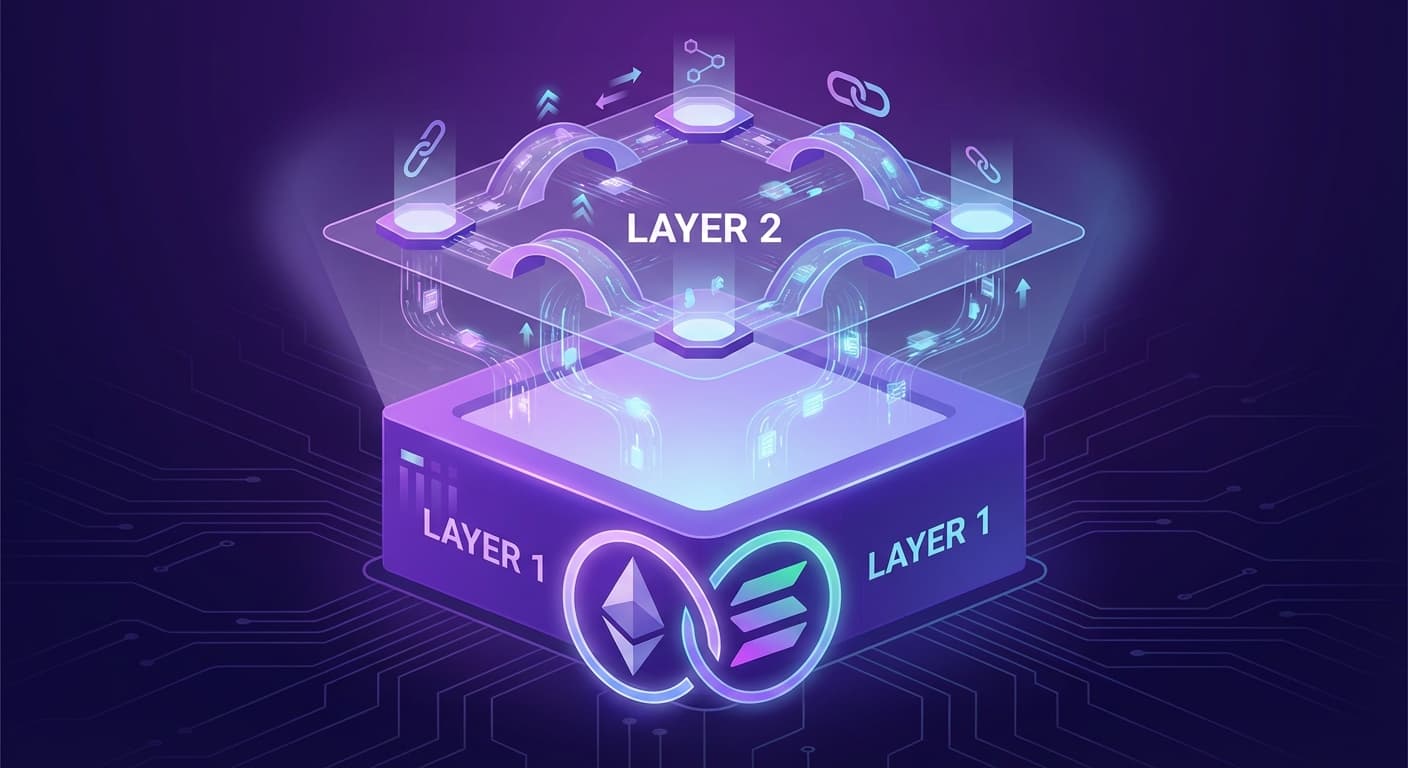
Layer 1 vs Layer 2: Key Differences, When to Use Each, and Top Projects
Not sure whether to use Layer 1 or Layer 2? Compare L1 vs L2 blockchains — rollup types, costs, speed, risks, and which chain fits your use case in 2026.
GOMTU9 min read
Ethereum Rollup Transaction Status: Unsafe, Safe, and Finalized
Learn what unsafe, safe, and finalized mean for Ethereum rollup transactions, why withdrawals take longer, and which status your app should trust.
GOMTU7 min readExplore related topics
Crypto Wallet Security: Your Complete Hub for Keys, Scams & Safe Custody
Everything you need to know about crypto wallet security — seed phrases, smart wallets, bridge risks, and scam prevention. Your gateway to staying safe on-chain.
GOMTU11 min read
Cross-Chain Bridge Guide: How to Bridge Safely in 2026 (Step-by-Step)
Learn how to use cross-chain bridges safely: what they are, how lock-and-mint and liquidity pool bridges work, a step-by-step tutorial, and how to avoid the hacks that cost DeFi over $2.8B.
GOMTU9 min read