Consensus Algorithms Explained: PoW vs PoS vs DPoS
Learn how blockchain consensus algorithms work — from Proof of Work to Proof of Stake, DPoS, BFT, and PoH. Compare trade-offs, real-world use cases, risks, and what it all means for your gas fees and staking activity.

Last updated
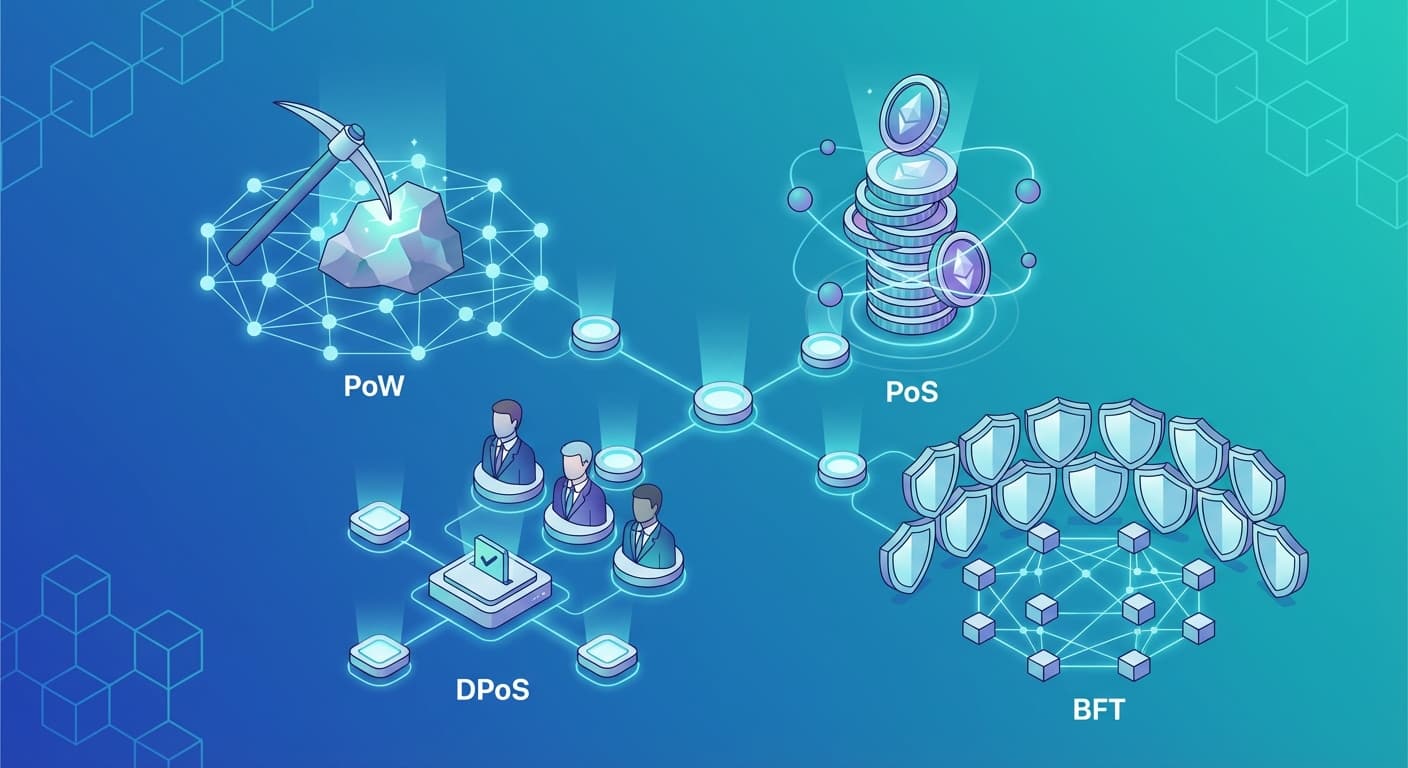
If thousands of computers share a blockchain ledger with no central boss — no bank, no company, no admin — who decides which transactions are real? That's not a philosophical question. It's an engineering problem with direct consequences for your gas fees, staking returns, and even the environmental footprint of your wallet.
The answer is a consensus algorithm. Understanding the main types is one of the most practical things you can learn about crypto — and it's a lot less complicated than it sounds.
What Are Consensus Algorithms?
A blockchain is a distributed ledger copied across thousands of computers worldwide. Nobody owns the master copy, which means nobody has the automatic authority to declare "this transaction is valid."
A consensus algorithm is the rulebook that lets all those independent computers reach the same conclusion — without trusting each other and without a central authority. Without it, bad actors could record fake transactions, and the entire system would collapse.
Think of consensus as the answer to a single question: who gets to write in the shared notebook, and how does everyone agree the entry is legitimate?
How Consensus Algorithms Work
A Daily Analogy
Imagine 30 strangers sharing a public notebook. Someone writes: "Alice sent Bob $1,000." Before the group accepts this entry, they need a way to verify it. Different consensus algorithms solve this problem differently:
- PoW (Proof of Work): Only the person who solves a hard math puzzle first earns the right to write. Everyone else checks the math and accepts the entry if it's correct.
- PoS (Proof of Stake): Only someone who put up a large deposit can be chosen to write. If they cheat, they forfeit their deposit.
- DPoS (Delegated PoS): The group votes for trusted representatives, and only those reps take turns writing.
The rules are enforced by code — automatically, transparently, and without any middleman. No one can skip the queue.
Types of Consensus Algorithms
Overview at a Glance
| Algorithm | Key Chains | Energy Use | Speed (TPS) | Decentralization | Security |
|---|---|---|---|---|---|
| PoW | Bitcoin | Very High | ~7 | High | Very High |
| PoS | Ethereum | Very Low | ~30 | High | High |
| DPoS | EOS, Tron | Low | ~4,000 | Low | Medium |
| PoH + PoS | Solana | Low | ~4,000+ | Medium | High |
| BFT variants | Cosmos, Sui | Low | ~10,000+ | Medium | High |
PoW — Proof of Work
Miners race to solve a cryptographic hash puzzle using raw computing power. The winner adds the next block and earns a reward. For Bitcoin:
- New transactions pool together
- Miners compete to solve a hash puzzle (roughly every 10 minutes)
- The first solver creates the block
- Other nodes verify the math and accept it
- The winning miner earns 3.125 BTC (post-2024 halving)
Strengths:
- Battle-tested — Bitcoin has run without a successful hack for 15+ years
- True decentralization — anyone with hardware can participate
- Predictable, simple rule set
Weaknesses:
- Enormous energy cost — Bitcoin uses ~204 TWh annually, comparable to the Czech Republic
- Slow — ~7 TPS, with finality taking up to 60 minutes
- ASIC hardware concentrates mining power in large pools
PoS — Proof of Stake
Instead of mining, validators lock up cryptocurrency as collateral (the "stake"). The network randomly selects a validator to propose each block, weighted by stake size. Cheating results in slashing — partial or full destruction of the staked funds.
For Ethereum:
- Validators stake 32 ETH (~$60,000+) to participate directly
- The network randomly picks a block proposer
- Other validators attest to the block's validity
- Confirmed blocks pay rewards to the validator
- Misbehavior triggers slashing
Tip
Liquid staking protocols like Lido let you participate in Ethereum staking with any amount of ETH — you don't need the full 32 ETH minimum.
Strengths:
- Over 99.95% more energy-efficient than PoW
- No expensive hardware required
- Economic security — attacking requires staking massive capital you'd then lose
Weaknesses:
- Wealthier stakers accumulate more rewards — a "rich get richer" dynamic
- Skewed initial token distribution can lead to centralization
- Theoretical "nothing at stake" attack vector (largely mitigated in practice)
DPoS — Delegated Proof of Stake
Token holders vote for a fixed set of delegates (typically 21–100) who take turns validating. Think of it as representative democracy for a blockchain.
- Token holders vote for delegates
- Elected delegates rotate block production
- Underperforming delegates can be voted out
- Rewards split between delegates and their voters
Strengths:
- Very fast — fewer validators means higher TPS
- Energy-efficient
- Token holders have direct governance influence
Weaknesses:
- Power concentrates in a tiny delegate set
- Delegate collusion has happened (see EOS history)
- Voter participation tends to be low in practice
Warning
DPoS chains like EOS have faced criticism for delegate collusion and voter apathy driving effective centralization. Understand the trade-offs before using DPoS-based networks for high-value transactions.
Other Notable Algorithms
PoH (Proof of History) — Solana: Creates a cryptographic timestamp for every event, removing the need for validators to synchronize clocks. Combined with PoS for security. Currently ~4,000+ TPS; the Alpenglow upgrade aims for 150ms finality.
BFT (Byzantine Fault Tolerance): Designed to function correctly even when some validators are malicious or offline. Blocks finalize when 2/3+ of validators agree.
- Tendermint BFT (Cosmos): instant finality, limited validator set
- HotStuff (Sui, Aptos): 3-phase pipelining for high throughput
Note
"Byzantine" refers to the Byzantine Generals Problem — a computer science challenge about reaching agreement in a network where some participants may send false or conflicting information.
PoA (Proof of Authority): Only pre-approved validators participate. Very fast and efficient, but significantly centralized. Used mainly in private or consortium blockchains. BNB Chain's 45-validator PoSA (PoS + PoA hybrid) is a real-world example.
Real-World Use Cases and Examples
Consensus algorithms shape your everyday crypto experience more than most people realize.
Gas Fees
Your transaction costs vary dramatically based on the consensus mechanism. See our gas fees guide for a full breakdown.
- Bitcoin (PoW): Average $1–$5 per transaction
- Ethereum (PoS): Average $0.01–$0.50 per transaction
- Solana (PoH): Average ~$0.00025 per transaction
Staking Rewards
PoS chains let you earn passive income by staking tokens. Approximate current APY ranges (these fluctuate — always verify from current sources):
| Chain | Approximate APY |
|---|---|
| Ethereum | 3.2–3.8% |
| Solana | 6–8% |
| Cosmos | 15–20% |
These numbers are not guaranteed and change constantly. Staking also exposes you to price volatility and slashing risk — never stake more than you can afford to lose.
Environmental Footprint
The energy gap between PoW and PoS is staggering:
| Metric | Bitcoin (PoW) | Ethereum (PoS) |
|---|---|---|
| Annual energy | 204 TWh | 0.0026 TWh |
| Per transaction | ~1,135,000 Wh | ~35 Wh |
| Annual CO₂ | ~114M tonnes | ~870 tonnes |
Ethereum's 2022 transition to PoS reduced energy consumption by 99.95% — from 204 TWh down to 0.0026 TWh annually.
2026 Consensus Trends
- Hybrid consensus on the rise: Solana uses PoH + PoS + Tower BFT (transitioning to Alpenglow); BNB Chain uses PoS + PoA; Avalanche combines DAG-based consensus with subnets.
- Finality speed race: Solana Alpenglow targets 150ms; Sui targets ~500ms; Ethereum sits at ~12 minutes on L1 but seconds on L2s.
- Client diversity: Ethereum runs 5+ independent clients. Solana is adding Firedancer as a second client — a meaningful step toward reducing single points of failure.
Why Consensus Algorithms Matter
Every design choice in a consensus algorithm is a trade-off. Bitcoin's PoW prioritizes security and decentralization at the expense of speed and energy. Ethereum's PoS balances security and efficiency. DPoS trades some decentralization for throughput.
This is the blockchain trilemma: no system can simultaneously maximize security, decentralization, and scalability. Every consensus algorithm picks a point on that triangle — and where it lands affects everything from fee levels to staking returns to censorship resistance.
Understanding where a chain sits helps you evaluate:
- Whether a network is trustworthy enough for your use case
- What risks you carry when using a faster, more centralized chain
- How design choices connect to real-world outcomes
Related reading: What is a Blockchain? | Layer 1 vs Layer 2 | What are Smart Contracts?
Risks and Limitations
No consensus algorithm is risk-free. Here's what to watch out for:
51% attack (PoW): If a single miner or pool controls more than 50% of a network's hash rate, they can rewrite recent blocks. Bitcoin's scale makes this nearly impossible, but smaller PoW chains have been successfully attacked this way.
Staking concentration (PoS): Large staking pools — Lido alone holds 30%+ of staked ETH — recreate the centralization that PoS was partly designed to prevent. Regulatory action against a dominant staking provider could affect the whole network.
Slashing risk (PoS): Validators can be slashed for misbehavior — even unintentionally, due to software bugs or connectivity issues. If you delegate to a validator, you share this risk proportionally.
Delegate collusion (DPoS): With only 21–100 validators, coordinating bad behavior is far easier than in large validator sets. This has happened on real chains.
Liquid staking smart contract risk: Liquid staking protocols add a smart contract layer on top of consensus risk. A bug in a staking protocol could result in loss of funds — this has happened in the broader DeFi ecosystem.
Regulatory uncertainty: Staking rewards are increasingly treated as taxable income in many jurisdictions. The regulatory landscape is still evolving. Always check local rules — and note this article is not tax or legal advice.
FAQ
Q: Is Proof of Work more secure than Proof of Stake?
A: Bitcoin's PoW has an unmatched 15-year track record. But "more secure" depends on the metric. PoW security comes from energy expenditure; PoS security comes from locked economic capital. Ethereum's PoS has operated without a critical breach since the 2022 Merge. The theoretical attack vectors differ, but both mature implementations are considered highly secure.
Q: Can I earn money by staking?
A: PoS chains pay staking rewards — a share of newly issued tokens and transaction fees. Yields vary and fluctuate significantly. Keep in mind: your staked tokens are still exposed to price volatility, and slashing risk exists. Don't stake more than you can afford to lose. DYOR before picking a chain or staking provider.
Q: Why does Bitcoin cost so much more to send than Solana?
A: Consensus design directly controls throughput. Bitcoin's PoW produces one block every ~10 minutes at ~7 TPS — when blocks fill up, fees spike. Solana's PoH + PoS handles thousands of TPS, so blocks rarely fill and fees stay near zero. See our gas fees guide for a full comparison.
Q: What is the blockchain trilemma?
A: The trilemma is the observation that blockchain networks face a fundamental tension among three properties: security, decentralization, and scalability. Optimizing for two typically means sacrificing the third. PoW maximizes security and decentralization; DPoS maximizes scalability. Researchers continue working toward solutions — but no consensus algorithm has fully cracked it yet.
Q: Is DPoS a failed experiment?
A: Not failed — but its reputation took a hit after EOS's delegate issues. The DPoS design principle survives in evolved forms: BNB Chain's PoSA blends authority and stake in a practical hybrid. The speed-vs-decentralization trade-off remains relevant; how much centralization you're comfortable accepting is ultimately a values decision.
Q: What is Solana's Alpenglow upgrade?
A: Alpenglow is an upcoming protocol change replacing Solana's Tower BFT consensus layer with a new design targeting 150ms block finality. It's part of an effort to improve consistency and reduce single-client dependencies. Details are still evolving — follow official Solana channels for current status.
Closing Thoughts
Consensus algorithms are the invisible referees behind every blockchain transaction you make. Understanding how they work makes you a more informed participant — not just a passenger.
PoW remains the gold standard for proven security. PoS delivers better efficiency for most use cases. DPoS and BFT variants push throughput further, trading some decentralization in return. Hybrid approaches like Solana's PoH keep pushing the boundaries.
There is no single "best" consensus algorithm. The right choice depends on what a network prioritizes — and what you, as a user, are comfortable with.
Explore more in the blockchain basics cluster: What is a Blockchain? | What are Smart Contracts? | Gas Fees Explained
Note
This article is for informational purposes only and does not constitute financial or investment advice. Staking yields, APY figures, and on-chain statistics change over time — always verify from current, authoritative sources. Any financial decisions should be based on your own research and judgment. NFA/DYOR.
Keep learning

What Are Smart Contracts? How They Work and Real Use Cases
Discover what smart contracts are, how they work on the blockchain, and their real-world use cases in DeFi, NFTs, and RWA — plus risks, limits, and FAQ.
 GOMTU7 min read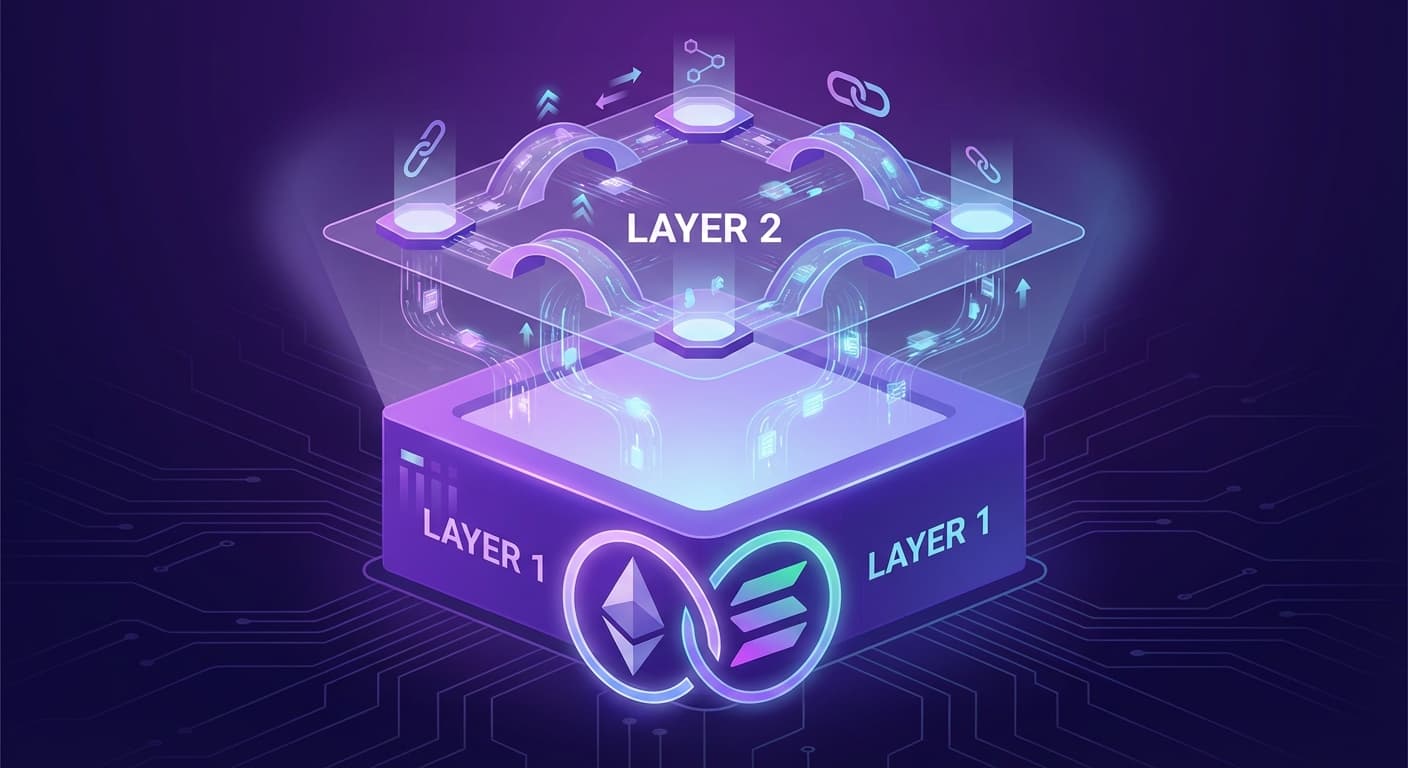
Layer 1 vs Layer 2: Key Differences, When to Use Each, and Top Projects
Not sure whether to use Layer 1 or Layer 2? Compare L1 vs L2 blockchains — rollup types, costs, speed, risks, and which chain fits your use case in 2026.
GOMTU9 min read
Gas Fees Explained: A Complete Guide to Blockchain Transaction Costs
Learn how blockchain gas fees work, what drives costs up or down, practical tips to save on every transaction, and the risks every user should understand.
GOMTU9 min readExplore related topics
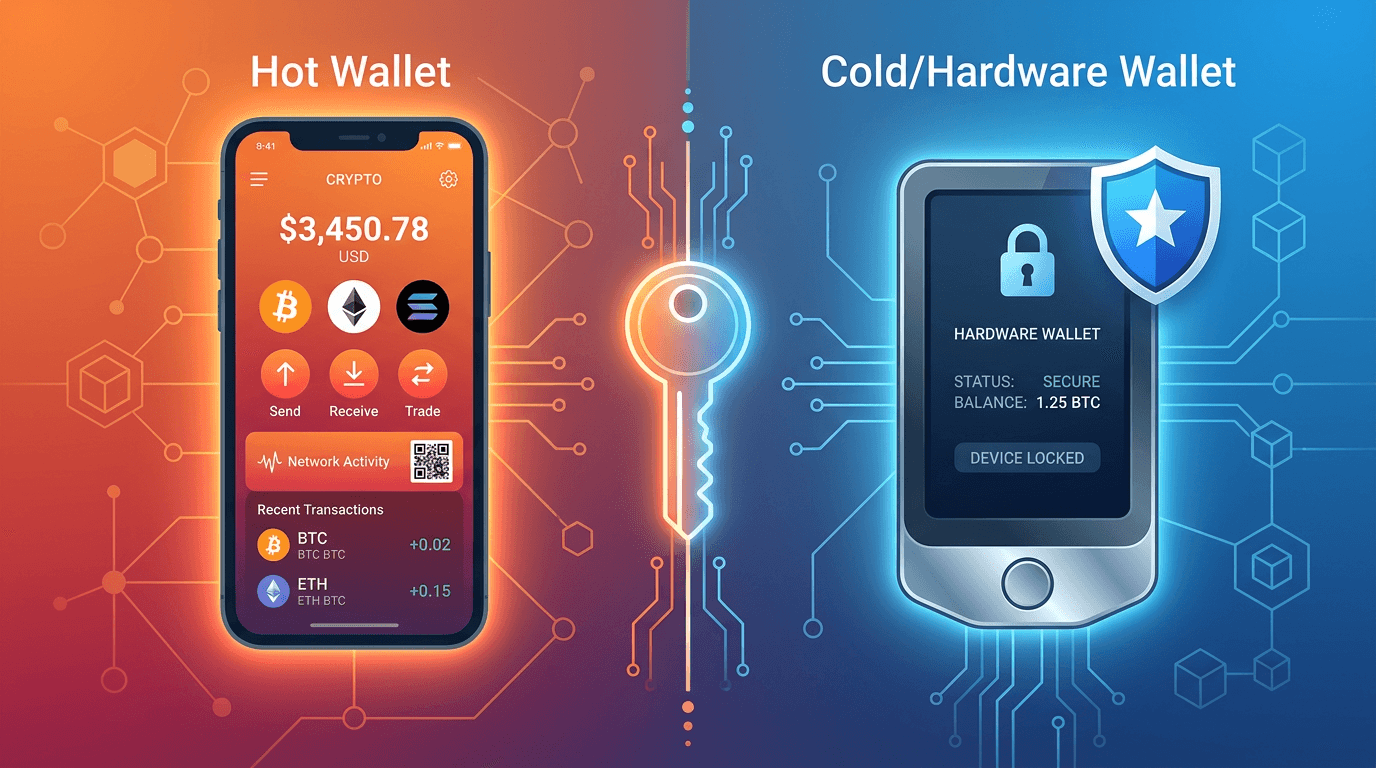
Crypto Wallet Security: Your Complete Hub for Keys, Scams & Safe Custody
Everything you need to know about crypto wallet security — seed phrases, smart wallets, bridge risks, and scam prevention. Your gateway to staying safe on-chain.
GOMTU11 min read
Cross-Chain Bridge Guide: How to Bridge Safely in 2026 (Step-by-Step)
Learn how to use cross-chain bridges safely: what they are, how lock-and-mint and liquidity pool bridges work, a step-by-step tutorial, and how to avoid the hacks that cost DeFi over $2.8B.
GOMTU9 min read