Gas Fees Explained: A Complete Guide to Blockchain Transaction Costs
Learn how blockchain gas fees work, what drives costs up or down, practical tips to save on every transaction, and the risks every user should understand.

Last updated

You have connected your wallet, found a promising swap, and are about to confirm — then you spot a line item labeled "gas fee" that costs more than the trade itself. The answer starts with how blockchain infrastructure prices computation and scarce block space.
Gas fees are one of the most misunderstood costs in crypto. They are not a platform tax, not a bug, and not arbitrary. They are a fundamental part of how blockchains stay operational and secure. This guide walks you through what gas fees are, how the cost is calculated, what drives them up or down, practical ways to reduce them, and the risks every user should keep in mind.
What Are Gas Fees?
A gas fee is the processing charge you pay to execute a transaction on a blockchain. On Ethereum, the protocol burns the base-fee portion and the block proposer receives the priority fee; saying the whole fee "goes to validators" misses that split. The fee also protects the network from spam and infinite computation.
Think of it this way:
- Gas = the fuel that powers a vehicle
- Gas fee = what you pay at the pump
- Transaction = the trip you need to take
A simple ETH transfer is a short city drive — low fuel, predictable cost. Interacting with a complex DeFi smart contract is a cross-country road trip: more computation, more fuel, significantly higher cost.
How Gas Fees Work
Ethereum's EIP-1559 model — introduced with the 2021 London hard fork — is now the dominant fee structure for most EVM-compatible chains. Every transaction cost breaks into three components.
Base Fee
The network automatically adjusts the base fee block by block. If the previous block was more than 50% full, the base fee rises; if under 50% full, it falls. The key detail: the base fee is burned permanently — removed from ETH supply rather than paid to validators.
Priority Fee (Tip)
This is an optional top-up that incentivizes a block proposer to include your transaction. A higher tip can improve its priority when transactions compete, but it does not guarantee a particular confirmation time. Wallet estimates are safer than an arbitrary minimum.
Gas Limit and Max Fee
The gas limit is the ceiling on computation your transaction can consume. Unused gas is not charged. A separate wallet field, maxFeePerGas, caps what you are willing to pay per unit of gas. If the actual base fee plus priority fee is below that cap, the difference remains with you.
Standard planning estimates:
| Transaction Type | Gas Units Used |
|---|---|
| Simple ETH transfer | 21,000 |
| ERC-20 token transfer | Contract-dependent |
| DEX swap | Route- and contract-dependent |
| Complex DeFi operation | Contract-dependent |
The Fee Formula
Gas Fee = (Base Fee + Priority Fee) × Gas UsedFor example, if an ETH transfer uses 21,000 gas and the effective price is 12 gwei, the fee is 21,000 × 12 = 252,000 gwei, or 0.000252 ETH. Its fiat value changes with the ETH exchange rate. This is illustrative math, not a live quote; check your wallet's estimate immediately before signing. The Ethereum gas documentation gives the protocol-level formula and explains how the cap and refund work.
What Drives Gas Costs Up or Down?
Network Congestion
The biggest single factor. When many users compete for limited block space, the base fee climbs. NFT drops, token launches, and market dislocations are classic congestion triggers. When traffic is light, the base fee settles back down automatically.
Transaction Complexity
A simple transfer touches almost no smart contract code. A multi-step DeFi action — depositing into a lending protocol that also triggers a rebalance — consumes far more computation, regardless of how congested the network is.
Chain Architecture
Ethereum L1 can fit a finite number of transactions per block. Layer 2 rollups — Arbitrum, Base, Optimism — process transactions off-chain and submit compressed data to Ethereum, dramatically reducing per-transaction cost while inheriting Ethereum's security.
Protocol Upgrades
Recent upgrades changed capacity, but they did not promise a fixed discount:
- EIP-4844 / Dencun (March 2024) introduced blob transactions, a temporary data lane with a fee market separate from normal execution gas. Rollups can post compressed batch data there instead of permanent calldata.
- Pectra (May 2025) activated EIP-7691, raising the blob target from three to six and the maximum from six to nine per block.
- Fusaka (December 2025) introduced PeerDAS, changing blob-data distribution so nodes can verify assigned samples rather than every node downloading every blob in full. Capacity can then be raised gradually rather than assumed all at once.
These changes give rollups more room to publish data. They do not guarantee that a user's next transaction will be cheaper: L2 execution demand, compression, batching policy, operator charges, and the independent blob fee market still matter. Ethereum's optimistic-rollup documentation breaks those fee components apart.
Note
Blob capacity and a user's L2 fee are related, but they are not the same metric. Treat any fixed chain-fee table as a temporary snapshot, not a promise.
How to Reduce Your Gas Fees
These are practical, repeatable strategies — not one-time tricks.
1. Use an L2 Rollup
Rollups batch many transactions and divide their L1 data cost among users, so they are commonly cheaper than Ethereum mainnet. But each rollup has its own execution, data-publication, and operator fee rules. Verify the network, bridge path, withdrawal conditions, and live estimate before moving funds. See the layer 1 vs layer 2 guide for the trust trade-offs.
2. Time Your Transactions
Gas fees follow demand, not a guaranteed clock. If the transaction is not urgent, compare the current base fee with recent blocks and wait only when doing so does not create another risk, such as liquidation or an expiring quote.
Tip
Check Etherscan Gas Tracker for real-time base fee trends before confirming any mainnet transaction. Waiting out a brief congestion spike is often the easiest saving available.
3. Batch Transactions
Smart wallets and application routers can bundle some actions. Bundling may avoid repeated overhead, but it can also create a more complex call that uses more gas. Compare the wallet's final simulation rather than assuming a bundle is cheaper.
4. Set Gas Parameters Manually
Most wallets let you configure the priority fee and set a max fee cap:
- Urgent transaction: raise the priority fee
- Non-urgent: lower the priority fee and set a max fee cap to prevent overpaying during unexpected spikes
5. Limit Token Approvals
Every DeFi protocol interaction starts with a token approval — which itself costs gas. Approve only the exact amount you need rather than unlimited. Revoking an unlimited approval later also costs gas, so minimizing up front saves twice.
Warning
Unlimited token approvals are a common attack vector. If a protocol is exploited, an attacker can drain your entire approved balance. Approve the minimum required amount and revoke unused approvals periodically.
6. Look for Sponsored Options
Some applications sponsor the user's fee or accept payment in another token. "Gasless" means someone else pays or recovers the cost elsewhere; it does not mean the network performed free computation. Confirm the sponsor terms and the exact message you sign.
7. Compare Networks for the Whole Task
Do not compare the displayed transaction fee alone. Check whether the asset and application really exist on that network, whether a bridge is required, how withdrawals work, and who controls the sequencer or upgrade keys. A small test transfer can catch a network or address mistake before more value is at risk.
Risks and Limitations
Gas fees are not just a cost — they come with risk patterns worth understanding before you transact heavily.
Failed transactions still consume gas. If a smart contract condition is not met mid-execution, the transaction fails — but the gas spent up to that point is gone. You can pay a fee and end up with nothing to show for it. This is especially common during congestion, when DEX prices move between the time you submit and the time your transaction is processed.
MEV and front-running. Validators and bots monitor the mempool for profitable pending transactions. Large swaps on high-liquidity DEXs can be front-run — a bot inserts its own transaction ahead of yours to capture price movement, effectively worsening your execution price. This is mostly invisible but real.
L2 bridge risk. Moving assets from Ethereum L1 to an L2 requires bridge contracts. A vulnerability in a bridge smart contract can put assets at risk — bridge exploits have happened before. Research any bridge you use, and avoid moving funds you cannot afford to lose through an unvetted bridge.
Fees can spike without warning. Today's low-fee environment reflects a specific combination of protocol upgrades and usage patterns. A viral NFT launch, a market dislocation, or a sudden DeFi activity surge can push base fees sharply higher in minutes. There is no guarantee current levels persist.
Unlimited approvals persist indefinitely. Token approvals do not expire automatically. An unlimited approval granted months ago to a protocol that later gets exploited remains a live risk. Use a revocation tool like Revoke.cash periodically to clean up old approvals.
ETH burn is not a price signal. EIP-1559 burns the base fee while priority fees go to the proposer. Burn varies with execution demand, and issuance is a separate input to net supply. Neither a high burn nor a low burn predicts ETH's price. Always DYOR.
Frequently Asked Questions
What happens if I set the gas fee too low?
Your transaction enters the mempool — the pending queue — and waits. If the base fee never drops to your level, the transaction is eventually dropped without execution and without a gas charge for the wait. However, if execution starts and then fails mid-way, the gas consumed up to that point is still charged.
Can gas fees spike again like they did in 2021?
Short-term spikes are still possible during congestion events. Future demand for block space is unknowable, so no one can responsibly promise a ceiling or duration. Always check current conditions before a large or time-sensitive transaction.
Does Bitcoin have gas fees?
Bitcoin has transaction fees, but it does not use Ethereum's gas-unit model. A Bitcoin wallet generally estimates a fee rate based on transaction weight and demand for block space. Do not copy an Ethereum gwei setting into a Bitcoin transaction.
Is a failed Ethereum transaction charged the full gas limit?
No. A failure consumes the gas used before execution reverted, up to the gas limit. The unused portion is not charged. A transaction rejected before inclusion is different: it does not execute onchain, so there is no execution gas charge.
What is ETH burning, and does it determine supply?
EIP-1559 burns the base-fee portion of included Ethereum transactions. Net supply depends on both that burn and protocol issuance, so burn alone does not tell you whether supply is increasing or decreasing over a chosen period.
Primary Sources
- Ethereum.org: Gas and fees
- EIP-1559: Fee market change
- EIP-4844: Shard blob transactions
- Ethereum.org: Optimistic rollup fees
- Ethereum.org: Pectra upgrade
Wrapping Up
Gas fees are the toll road of the blockchain world: variable, sometimes frustrating, but entirely manageable once you understand what drives them.
For many routine actions, an established L2 can reduce cost by batching activity, but cheaper is not the same as identical security or withdrawal assumptions. Beyond comparing networks, keep token approvals tight, read the wallet simulation, and check the live estimate before sending.
Protocol upgrades have expanded execution and rollup-data capacity, but spikes are still possible, bridge risks are real, failed transactions cost gas, and unlimited approvals remain a persistent security exposure. Stay informed, verify conditions before transacting, and size your on-chain activity to what you can afford to lose.
This article is for informational purposes only and is not financial advice. Gas fees fluctuate in real time based on network conditions. Always check current fees before executing transactions. NFA / DYOR.
Keep learning

What Are Smart Contracts? How They Work and Real Use Cases
Discover what smart contracts are, how they work on the blockchain, and their real-world use cases in DeFi, NFTs, and RWA — plus risks, limits, and FAQ.
 GOMTU7 min read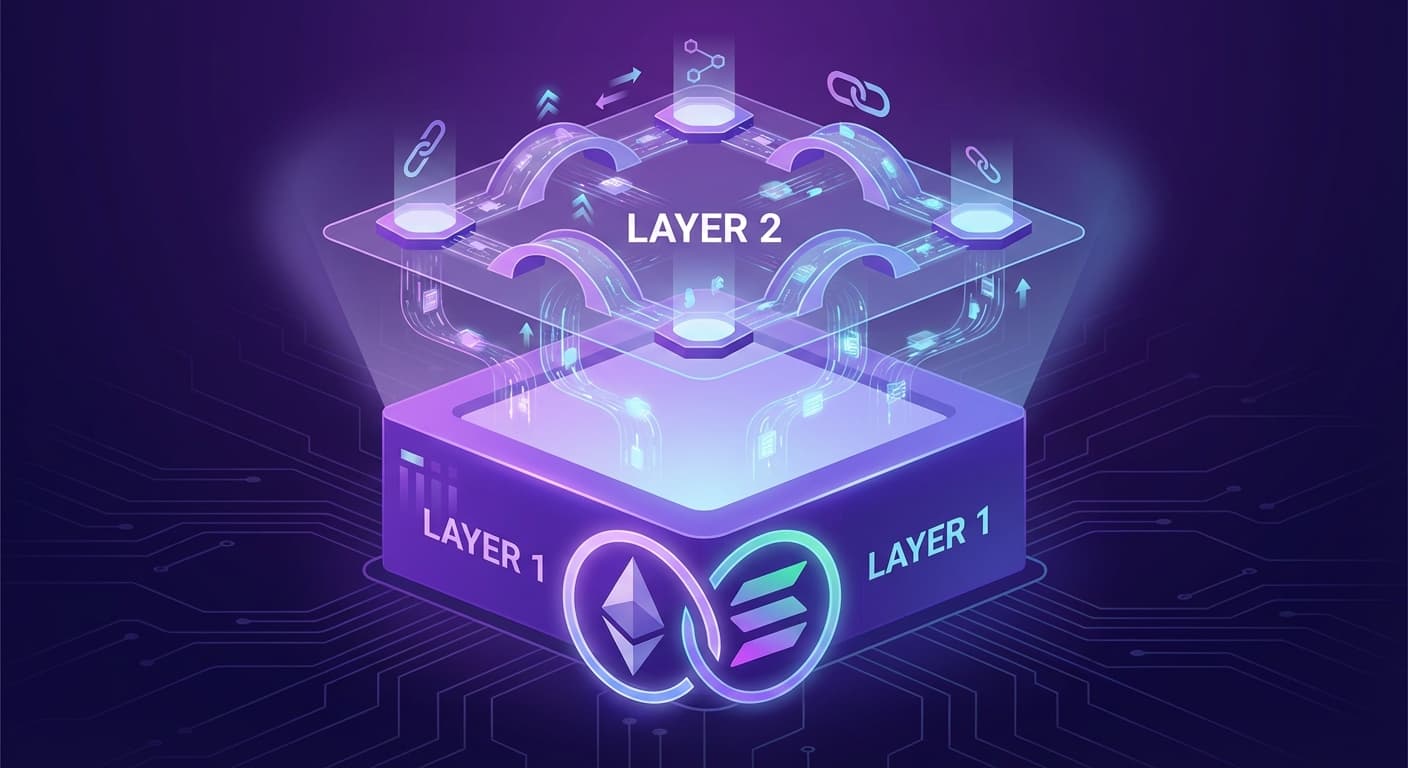
Layer 1 vs Layer 2: Key Differences, When to Use Each, and Top Projects
Not sure whether to use Layer 1 or Layer 2? Compare L1 vs L2 blockchains — rollup types, costs, speed, risks, and which chain fits your use case in 2026.
GOMTU9 min read
Ethereum Transient Storage: How EIP-1153 TLOAD and TSTORE Work
Learn how Ethereum transient storage works, when EIP-1153 clears data, how Solidity exposes it, and which reentrancy and composability risks matter.
GOMTU8 min readExplore related topics

Polkadot Halving 2026: DOT Supply Cap, 53.6% Emission Cut Explained
Polkadot undergoes its first-ever tokenomics overhaul on March 14, 2026 — a 2.1B DOT supply cap, 53.6% emission cut, and staking redesign. Here is what the changes actually mean.
GOMTU8 min read
Crypto Scam Prevention Guide 2026: How to Spot, Avoid, and Respond
Crypto scams drain billions every year — and most victims thought they were careful. This how-to guide covers 10 scam types, step-by-step prevention rules, a security checklist, and what to do if you get hit.
GOMTU11 min read