Ethereum Rollup Transaction Status: Unsafe, Safe, and Finalized
Learn what unsafe, safe, and finalized mean for Ethereum rollup transactions, why withdrawals take longer, and which status your app should trust.


Your Layer 2 wallet says “confirmed” within seconds, but a bridge or exchange still asks you to wait. Both can be correct. An Ethereum rollup transaction does not move through one universal confirmation state; it passes through several confidence levels as the sequencer publishes data to Ethereum and Ethereum finalizes the containing block.
This blockchain basics guide explains the journey without treating a fast wallet notification as irreversible settlement. We will use the OP Stack labels unsafe, safe, and finalized because its public specification defines them clearly. Other rollups may use different labels and timing, so always verify the network’s own documentation.
The Short Version
Think of a rollup transaction like shipping an important document.
- Unsafe: a local courier—the sequencer—accepts and stamps it. You get a fast receipt, but the document has not reached the central archive.
- Safe: the courier’s batch is published to Ethereum. Independent rollup nodes can reconstruct the transaction from canonical Layer 1 data.
- Finalized: Ethereum finalizes the block containing that batch data. Reversing the rollup history would now require violating Ethereum’s finality guarantee.
That simple model describes transaction ordering. It does not mean an optimistic-rollup withdrawal is immediately claimable on Ethereum. Withdrawal finalization uses a separate proof and dispute process.
Stage 1: Sequencer Confirmation Is Fast but Unsafe
You sign a transaction and send it to the rollup’s RPC endpoint. The sequencer orders it, executes it, and includes it in an L2 block. Wallets and applications can show the result within seconds because they receive this block directly from the sequencer.
OP Stack documentation calls this an unsafe block. “Unsafe” does not mean the transaction is fraudulent. It means the block is known from the sequencer but cannot yet be derived entirely from data on Ethereum.
This distinction matters during an outage. A sequencer may keep producing L2 blocks while its batch publisher cannot reach Ethereum. The unsafe chain head advances, but the safe and finalized heads stop. If the sequencer fails to publish within the protocol’s sequencing window, an unsafe transaction can be excluded from the final chain.
For low-stakes interactions, an app may optimistically update its interface after sequencer confirmation. A merchant, bridge, or exchange accepting a valuable deposit should choose a stronger status based on its risk policy.
Stage 2: Data Publication Makes the Transaction Safe
The sequencer does not send every user transaction to Ethereum separately. A batcher compresses many L2 transactions and posts the batch data to Layer 1, commonly using blob space introduced by EIP-4844. This spreads the L1 data cost across many users.
Once the relevant data lands in a canonical Ethereum block, a verifier can reproduce the L2 block by following the rollup’s deterministic derivation rules. The transaction is now safe in OP Stack terminology.
The word still has a boundary. A safe L2 block depends on an Ethereum block that has not necessarily finalized. If Ethereum reorganizes that recent portion of its chain, a rollup node may temporarily downgrade a safe block and derive the L2 chain again from the new canonical L1 history. Safe therefore means “anchored to the current canonical Ethereum chain,” not “mathematically impossible to reorganize.”
Blobs are temporary data storage, but temporary does not mean unverified. Ethereum consensus nodes attest that the blob data was available, while the rollup posts commitments that bind it to the data. Parties needing long-term history must preserve it separately. Our modular blockchain guide explains why data availability and permanent archival are different jobs.
Stage 3: Ethereum Finality Finalizes the L2 History
When Ethereum finalizes the L1 block containing the batch, the corresponding rollup blocks can become finalized. At this point, reverting the transaction would require reverting finalized Ethereum history under the rollup’s stated assumptions.
This is why the status is inherited rather than created by a separate L2 consensus vote. A standard OP Stack rollup uses Ethereum to order and finalize its published inputs. The rollup node maps Ethereum’s finality signal to the highest L2 block derivable from finalized L1 data.
Timing is not a promise. OP documentation describes sequencer confirmation in seconds, safe status commonly within minutes, and finalization later as Ethereum finalizes the relevant block. Network congestion, batch-publisher problems, or adverse L1 conditions can extend those intervals. Code should inspect chain state instead of hard-coding a countdown.
Why a Finalized Transaction Can Still Have a Pending Withdrawal
The most common misconception is that an optimistic rollup needs its full dispute period to finalize ordinary L2 transactions. It does not. Transaction ordering can inherit Ethereum finality much earlier.
Withdrawing through the canonical bridge is a different operation:
- You initiate a withdrawal on L2.
- A claim about the L2 state is proposed on Ethereum.
- The protocol gives participants time to challenge an invalid claim.
- After the applicable proof and dispute conditions are satisfied, the withdrawal can be finalized and claimed on L1.
The delay protects the bridge’s L1 contracts from accepting an invalid output claim. A successful challenge removes a bad claim; it does not rewrite an already finalized sequence of valid L2 transactions. Fast bridges may provide liquidity before the canonical path completes, but that adds liquidity-provider, smart-contract, and counterparty assumptions.
ZK rollups use validity proofs rather than the same optimistic dispute design, but proof generation, proof submission, L1 inclusion, and bridge processing still take time. “ZK” should not be read as “every withdrawal is instant.” Compare the broader designs in Layer 1 vs Layer 2.
A Practical Status Checklist
Before treating a rollup transaction as settled, match the status to the action:
| Your action | Reasonable minimum question |
|---|---|
| Updating a low-value app screen | Has the sequencer included the transaction? |
| Crediting a valuable deposit | Is the block safe or finalized under the service’s policy? |
| Acting across chains | Has the source message reached the bridge’s required finality and proof state? |
| Claiming a canonical withdrawal | Has the protocol-specific dispute/proof process completed? |
Then check these details:
- Confirm the network, transaction hash, sender, recipient, token, and amount in the rollup’s official explorer.
- Distinguish
latestor sequencer-confirmed data fromsafeandfinalizedRPC block tags where the network supports them. - Check whether safe and finalized block heights are advancing. A frozen safe head can indicate that L2 data is not reaching L1.
- Read the canonical bridge’s current documentation before moving a large amount. Do not infer withdrawal timing from a wallet’s “success” badge.
- Verify contract addresses from official sources. Search ads and unsolicited links are common phishing paths.
- Send a small test transfer before a high-value bridge operation.
Risks and Limits
Sequencer risk: a centralized sequencer can delay, censor, or reorder transactions within protocol constraints, and its early confirmation is weaker than L1-backed status.
L1 reorganization risk: safe but unfinalized data can be affected by a reorg of the Ethereum blocks on which it depends.
Bridge risk: canonical and third-party bridges add contracts, relayers, proof systems, and operational dependencies. A finalized source transaction alone does not prove the destination action is complete.
Implementation differences: OP Stack terminology is useful, but Arbitrum, ZK rollups, validiums, and custom chains do not share one identical lifecycle. Data availability choices and upgrade controls also change the security model.
Interface risk: a wallet’s single “confirmed” label may hide whether it means sequencer inclusion, L1 publication, or finalization. For consequential actions, inspect the underlying explorer or RPC status.
FAQ
Does “unsafe” mean my transaction failed?
No. It normally means the transaction is included in a sequencer-produced block whose data is not yet anchored to Ethereum. It can execute successfully while remaining subject to a stronger confirmation step.
Does every L2 use unsafe, safe, and finalized labels?
No. These are explicit OP Stack concepts and RPC tags. Other systems may expose different states. The underlying questions—who ordered the transaction, where its data was published, how correctness is proven, and what finalized it—remain useful everywhere.
Why does my exchange wait after the L2 explorer shows success?
The exchange may require safe or finalized status, additional confirmations, or an internal compliance review. Its crediting policy is separate from the rollup protocol.
Is a fast bridge the same as the canonical bridge?
Usually not. A fast bridge can advance destination liquidity and settle later, which improves speed but introduces additional contracts and counterparties. Review its audits, liquidity model, fees, and failure procedures.
Can I speed up rollup finality by paying more gas?
A higher L2 fee may influence sequencer inclusion, but it does not make Ethereum finalize faster or bypass a canonical withdrawal’s proof/dispute rules.
Primary Sources
- Ethereum.org: Optimistic rollups
- Ethereum.org: Danksharding and blob data
- OP Stack documentation: Transaction finality
- OP Stack specification: L2 chain derivation
Bottom Line
A rollup transaction can be visible in seconds, anchored to Ethereum minutes later, and finalized only after its L1 data reaches Ethereum finality. That lifecycle is separate from the longer process for claiming an optimistic-rollup withdrawal on L1.
Treat status labels as security signals, not decorative UI. Verify the network’s current documentation and choose a confirmation threshold proportional to what could be lost. This article is educational, not financial advice. Crypto systems and assets carry technical and market risk; do your own research (DYOR). NFA.
Keep learning
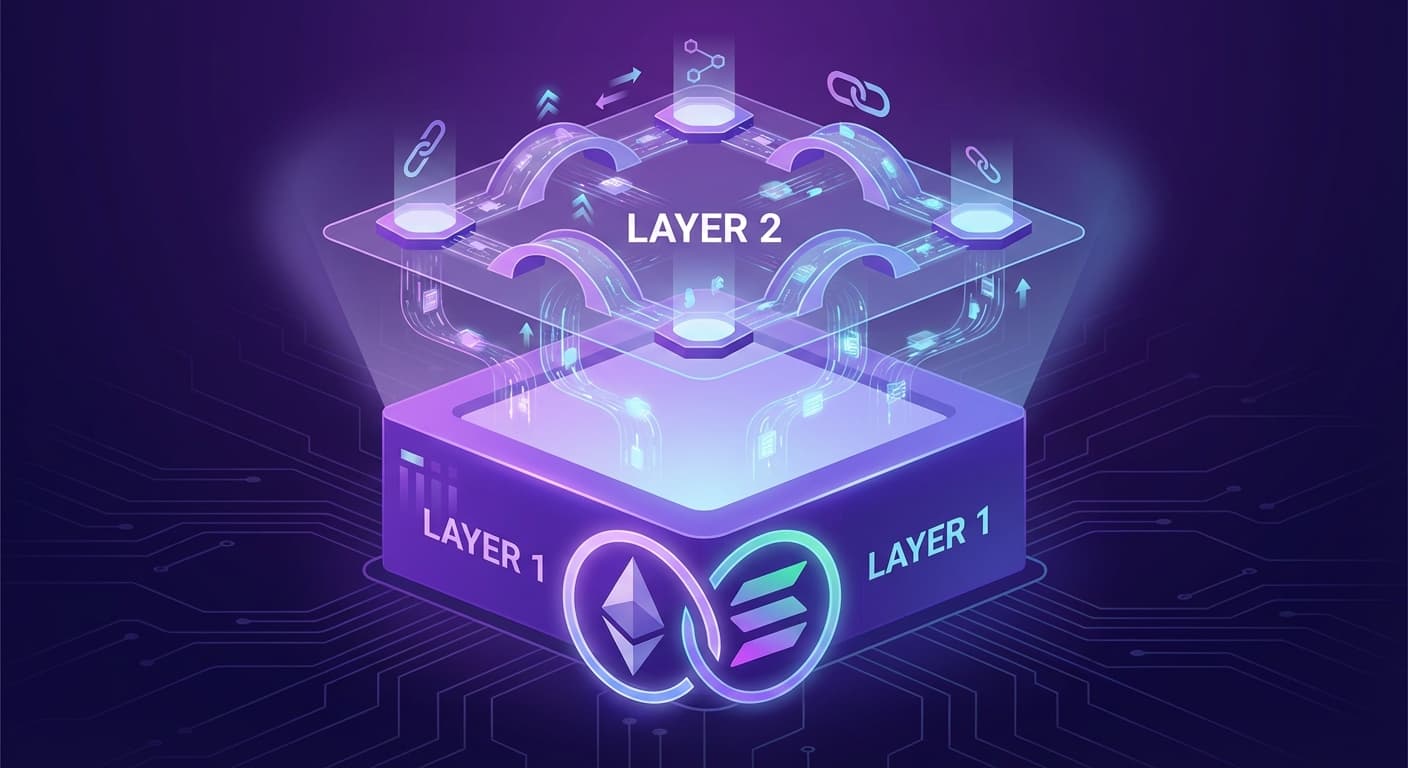
Layer 1 vs Layer 2: Key Differences, When to Use Each, and Top Projects
Not sure whether to use Layer 1 or Layer 2? Compare L1 vs L2 blockchains — rollup types, costs, speed, risks, and which chain fits your use case in 2026.
 GOMTU9 min read
Blockchain Finality Explained: When Is a Crypto Transaction Really Settled?
Learn how blockchain finality differs from confirmation, why Bitcoin and Ethereum settle differently, and what to check before moving funds again.
GOMTU7 min read
Modular Blockchains Explained: Rollups, Data Availability, and the New Stack (2026)
What is a modular blockchain, and why did the industry pivot to it? A plain-English guide to the four layers, Celestia vs EigenDA, and the real trade-offs.
GOMTU10 min readExplore related topics

Crypto Airdrop Farming Guide 2026: Qualify Without Gambling Your Wallet
A practical crypto airdrop farming guide for 2026: evaluate campaigns, limit wallet risk, verify claims, keep records, and avoid Sybil abuse.
GOMTU8 min read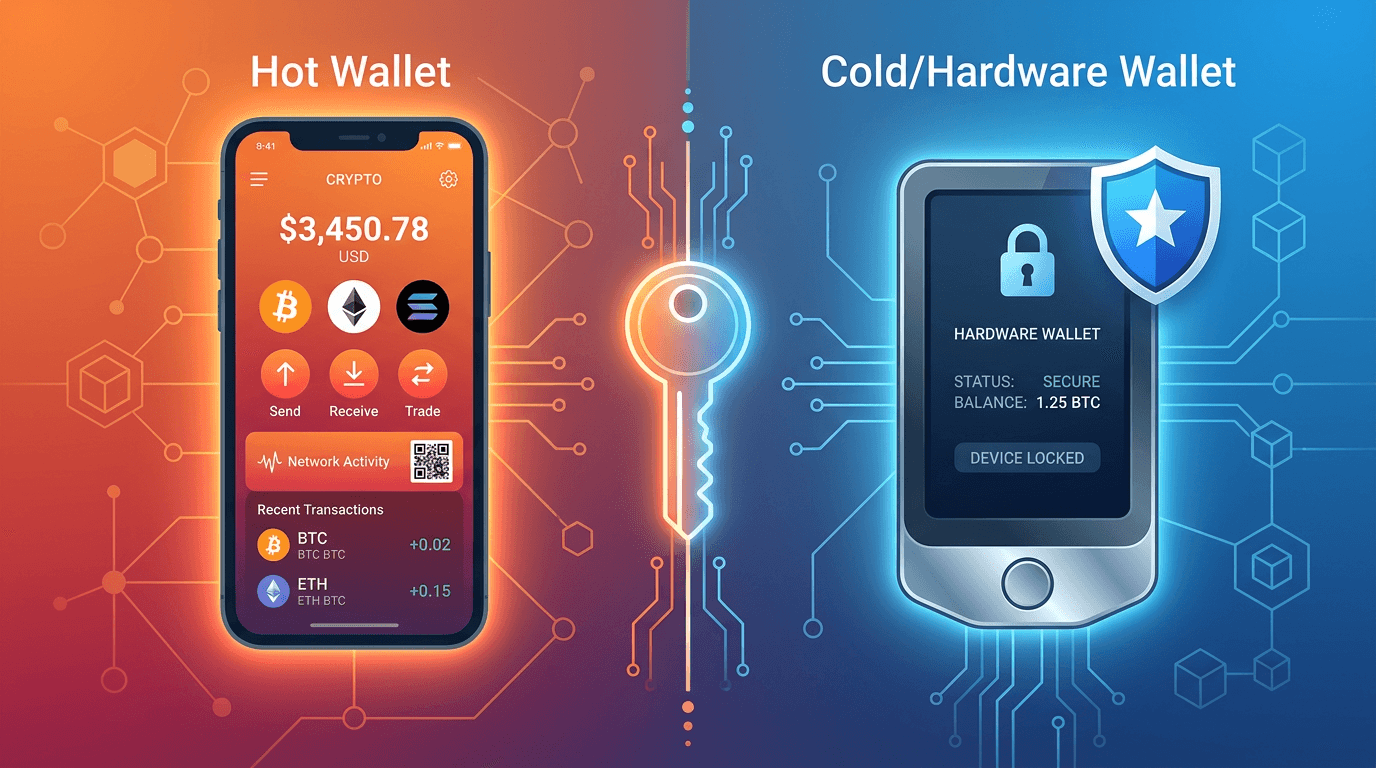
Crypto Wallet Security: Your Complete Hub for Keys, Scams & Safe Custody
Everything you need to know about crypto wallet security — seed phrases, smart wallets, bridge risks, and scam prevention. Your gateway to staying safe on-chain.
GOMTU11 min read