Blockchain Oracles Explained: How Smart Contracts Get Real-World Data (2026)
Blockchains can't see past their own network — so how does a smart contract know the ETH price? A plain guide to oracles, the oracle problem, and Chainlink.

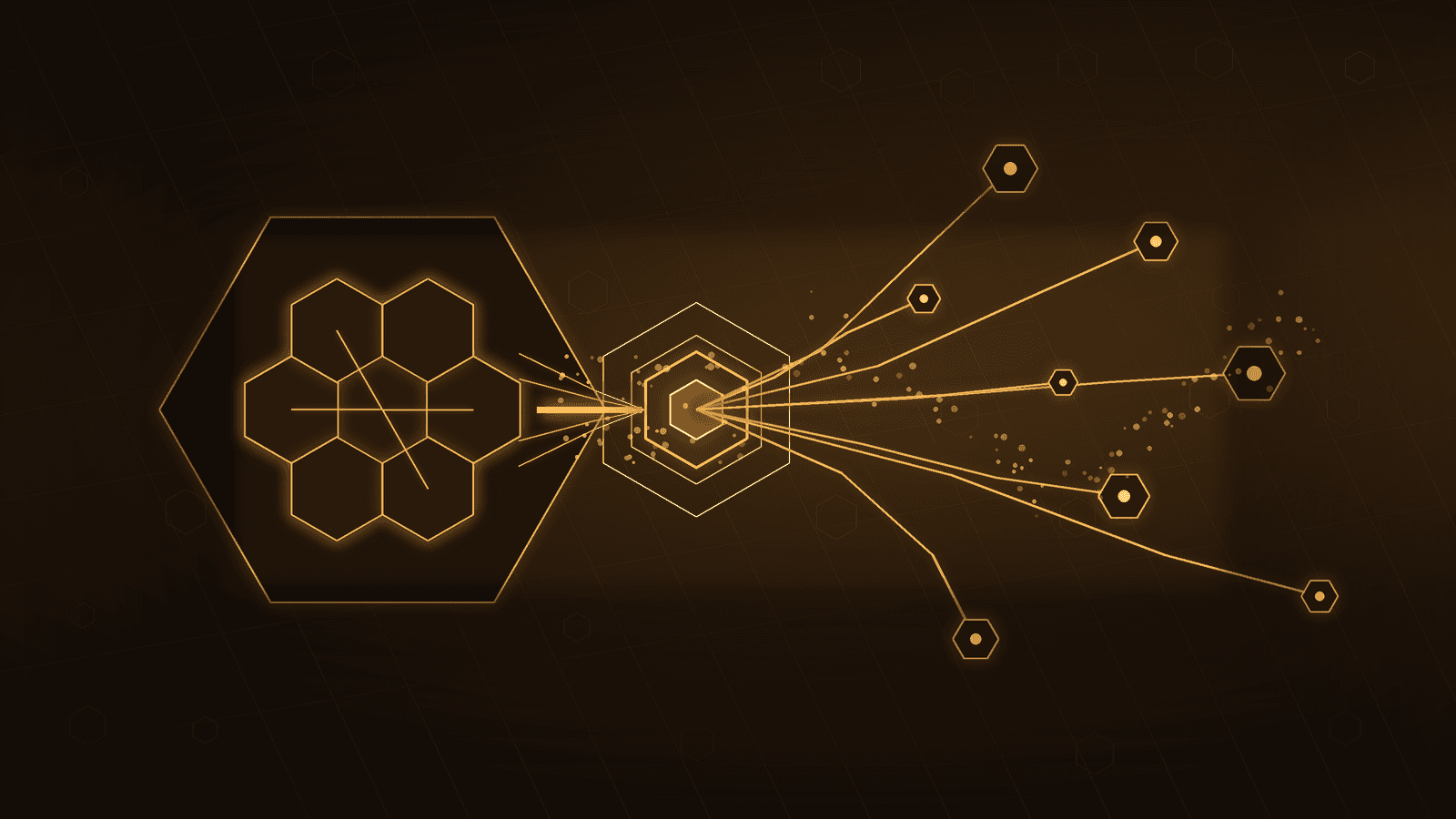
Here's a strange fact about blockchains: they have no idea what's happening in the outside world. A smart contract can't tell you the price of ETH, whether a flight was delayed, or whether a loan has become undercollateralized — not on its own. Yet DeFi liquidations, tokenized stocks, and automated insurance all depend on exactly that kind of real-world data. Blockchain oracles are the bridge that makes it possible, and by 2026 they quietly secure over $100 billion in DeFi assets.
This guide explains the "oracle problem" that makes oracles necessary, how a decentralized oracle network like Chainlink actually works, the main types you'll encounter, and — critically — the ways oracles can fail.
Not financial advice (NFA). This is an educational explainer. Mentioning networks like Chainlink or Pyth is not an endorsement of any token, and oracle-related tokens carry real volatility and risk. Always do your own research (DYOR).
The Oracle Problem: Why Blockchains Are Blind
A blockchain is brilliant at one thing: getting a distributed network to agree on the state of its own ledger. To do that reliably, it has to be deterministic — every node running the same transaction must reach the exact same result, forever. That's what makes it trustworthy.
But that same property is a cage. If a smart contract tried to fetch a price from a website directly, different nodes might get slightly different answers at slightly different moments — and the network could never agree. So blockchains are deliberately walled off from the outside internet. They're mathematically incapable of knowing anything beyond their own chain.
This is the oracle problem: blockchains need real-world data to be useful, but can't safely go get it themselves. An oracle is the solution — a service that fetches external data and delivers it on-chain in a way the network can agree on.
What Is a Blockchain Oracle?
Think of a blockchain as a sealed courtroom where every decision must be based only on evidence formally entered into the record. The judge (the smart contract) can't just glance out the window to check the weather. An oracle is the sworn courier who goes outside, gathers the facts, and formally submits them as admissible evidence.
More precisely: an oracle is a service that connects smart contracts to off-chain information — asset prices, event outcomes, weather, shipping data — and delivers it on-chain in a verifiable form. It's the layer that turns a blockchain from an isolated ledger into something that can react to the real world.
How a Decentralized Oracle Works
The naive way to build an oracle is to have one server report the data. But that recreates the exact problem blockchains were built to avoid: a single point of trust and failure. If that one source is wrong, hacked, or bribed, every contract relying on it is compromised.
Decentralized oracle networks — Chainlink is the largest, with roughly 70% of the market by value secured — solve this the same way blockchains solve trust: with many independent participants. Here's the flow for a typical price feed:
- Request — A smart contract needs data, e.g. the current price of ETH in USD.
- Fetch — Many independent node operators each pull that price from different sources: exchanges, data providers, market feeds.
- Aggregate — The network takes the median of all reported values, discarding outliers and bad data.
- Deliver — That single verified value is written on-chain, where the contract acts on it — triggering a liquidation, settling a trade, updating a collateral ratio.
The median step is the quiet hero. Even if one node is compromised or one exchange prints a bad tick, it gets filtered out. No single source decides the answer.
Types of Oracles
Not all oracles work the same way. A few distinctions worth knowing:
| Distinction | Options |
|---|---|
| Trust model | Decentralized (many nodes, e.g. Chainlink) vs. centralized (single source, single point of failure) |
| Data sourcing | Third-party node model (nodes fetch and relay) vs. first-party (data comes straight from the originators) |
| Data type | Software oracles (web/API data like prices) vs. hardware oracles (IoT sensors, real-world devices) |
The first-party approach is worth a note: Pyth sources prices directly from the institutions that create them — major exchanges and trading firms — enabling sub-second updates that suit high-frequency uses like perpetual futures. Chainlink and Pyth reflect genuinely different designs, and different applications favor different trade-offs between speed, coverage, and decentralization.
What Oracles Actually Power
Oracles are infrastructure — invisible when they work, catastrophic when they don't. Their real-world footprint in 2026 is large:
- DeFi price feeds. Lending protocols, AMMs, and perps rely on oracle prices to trigger liquidations and settle trades. This is the single biggest use case.
- Real-world asset tokenization. Tokenized equities and funds need trusted price and reference data. In April 2026, SIX Group — operator of the Swiss and Spanish national exchanges — moved to push over €2 trillion in European equities data on-chain via Chainlink.
- Cross-chain messaging. Chainlink's CCIP, used by institutions including Swift, JPMorgan, and Mastercard, processes billions in monthly volume — validating cross-chain transfers with a separate risk-management layer rather than the custodial model of many bridges.
- Parametric insurance. Smart contracts connected to weather, flight, or crop data can pay out claims automatically when verifiable conditions are met — useful in markets where traditional insurance is thin.
The Risks: When the Oracle Is the Weak Link
Because so much value depends on oracles, they're a prime target. The risks are real and worth understanding:
- Price manipulation. The classic attack: a bad actor uses a flash loan to distort the price on a thinly traded venue, tricking a contract into a mispriced liquidation or loan. Decentralized reporting and time-weighted average pricing (TWAP) reduce — but don't eliminate — this.
- Centralization risk. An oracle that leans on a single source or a small set of nodes reintroduces the single point of failure blockchains were designed to avoid. "Uses an oracle" isn't the same as "uses a robust, decentralized oracle."
- Economic, not just technical, attacks. Many oracle failures aren't code bugs — they're economic. Attackers target the data sources, the node incentives, or the market conditions around a feed. The exploit is in the money, not the smart contract.
- Latency and cost. Getting reliable external data on-chain takes time and gas. Faster, cheaper, and more decentralized are in constant tension — pick two.
Warning
Many of DeFi's largest exploits trace back to oracle manipulation, not broken smart contracts. When you evaluate a protocol, ask where it gets its prices and how hard that source is to manipulate — it's one of the most important safety questions you can ask.
Frequently Asked Questions
What is the oracle problem in simple terms?
Blockchains are deterministic and isolated, so they can't safely fetch outside data on their own — every node must agree on identical results. The oracle problem is this gap: smart contracts need real-world data but can't retrieve it natively. Oracles fill the gap by delivering external data on-chain in a verifiable way.
Is Chainlink the only oracle?
No. Chainlink is the largest by value secured, but there are others with different designs — Pyth, for example, uses a first-party model sourcing data directly from exchanges and trading firms for sub-second updates. Different oracles suit different needs.
Why not just use one trusted data source?
Because that recreates a single point of failure. If the one source is wrong, hacked, or manipulated, every contract relying on it breaks. Decentralized oracles use many independent nodes and take the median, so no single source controls the outcome.
Can oracles be hacked or manipulated?
Yes. The most common attack manipulates the price an oracle reports — often via flash loans on low-liquidity markets. Decentralization, multiple data sources, and time-weighted averages make this much harder, but no oracle is entirely immune.
Do all smart contracts need oracles?
No — only those that depend on external data. A contract that just moves tokens between wallets needs no oracle. But anything reacting to prices, real-world events, or another chain's state almost certainly does.
Wrapping Up
Oracles are the unglamorous plumbing that lets blockchains touch reality. Without them, smart contracts would be sealed calculators — unable to know a price, an event, or a condition in the outside world. With them, you get DeFi liquidations, tokenized real-world assets, cross-chain messaging, and automated insurance.
But that power comes with a dependency: a protocol is only as trustworthy as the oracle feeding it. Understanding the oracle problem — and how decentralized networks reduce (not erase) the risk of manipulation — is one of the clearest lenses for judging how safe an on-chain application really is.
Note
This article is for educational and informational purposes only and does not constitute investment or financial advice. Oracle networks and their associated tokens are evolving and carry significant volatility and risk. Always do your own research (DYOR) and consult qualified professionals before making financial decisions. NFA.
Keep learning

What Are Smart Contracts? How They Work and Real Use Cases
Discover what smart contracts are, how they work on the blockchain, and their real-world use cases in DeFi, NFTs, and RWA — plus risks, limits, and FAQ.
 GOMTU7 min read
Modular Blockchains Explained: Rollups, Data Availability, and the New Stack (2026)
What is a modular blockchain, and why did the industry pivot to it? A plain-English guide to the four layers, Celestia vs EigenDA, and the real trade-offs.
GOMTU10 min read
Layer 1 vs Layer 2: Key Differences, When to Use Each, and Top Projects
Not sure whether to use Layer 1 or Layer 2? Compare L1 vs L2 blockchains — rollup types, costs, speed, risks, and which chain fits your use case in 2026.
GOMTU9 min readExplore related topics
Crypto Airdrop Farming Guide 2026: Qualify Without Gambling Your Wallet
A practical crypto airdrop farming guide for 2026: evaluate campaigns, limit wallet risk, verify claims, keep records, and avoid Sybil abuse.
GOMTU8 min read
Cross-Chain Bridge Guide: How to Bridge Safely in 2026 (Step-by-Step)
Learn how to use cross-chain bridges safely: what they are, how lock-and-mint and liquidity pool bridges work, a step-by-step tutorial, and how to avoid the hacks that cost DeFi over $2.8B.
GOMTU9 min read