Modular Blockchains Explained: Rollups, Data Availability, and the New Stack (2026)
What is a modular blockchain, and why did the industry pivot to it? A plain-English guide to the four layers, Celestia vs EigenDA, and the real trade-offs.

Last updated
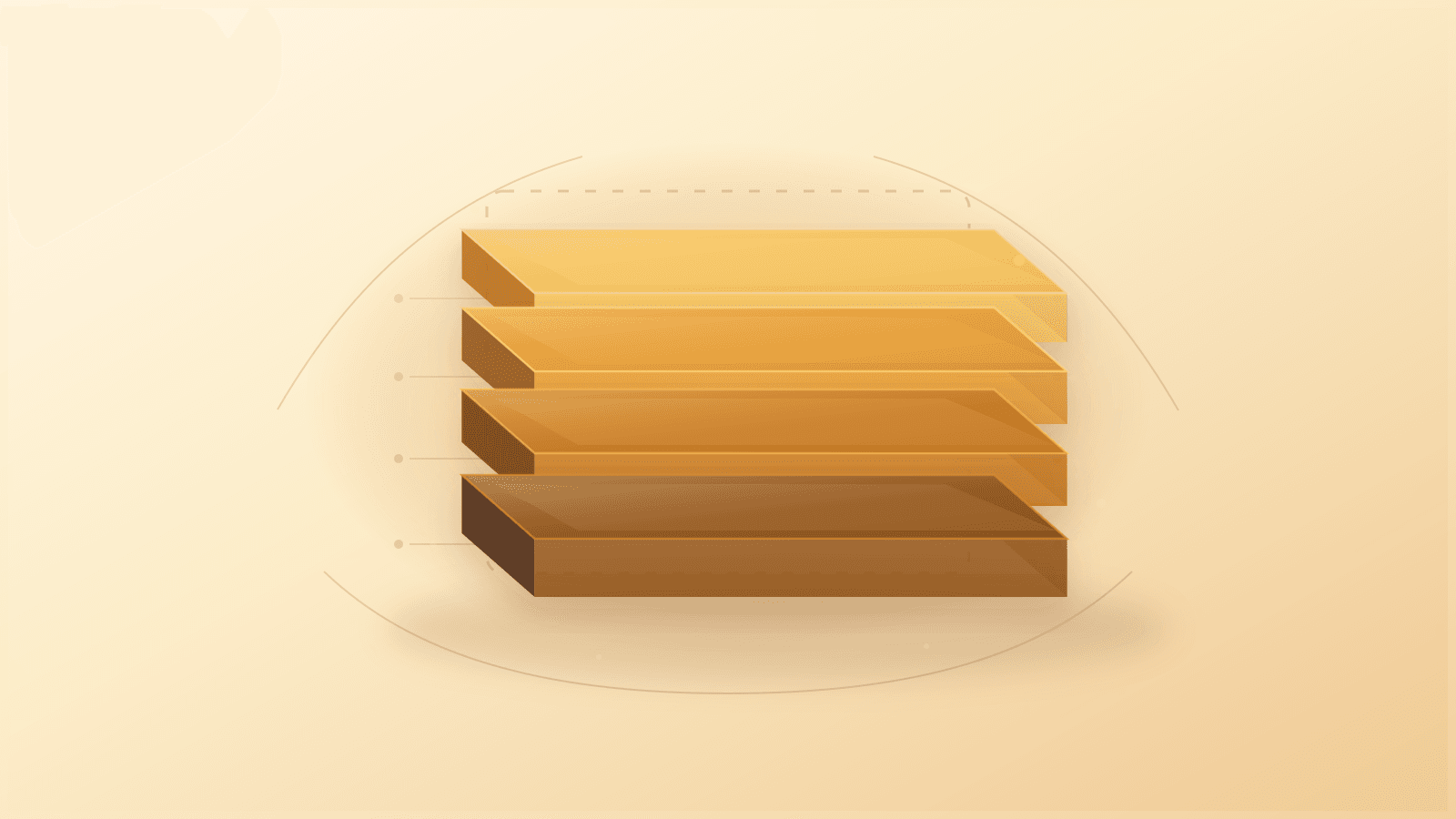
For years, every blockchain tried to do everything itself — process transactions, agree on order, store data, and settle disputes, all on one chain. That design hit a wall: you couldn't make it faster without making it more centralized. Modular blockchains are the industry's answer, and by 2026 they've become the default blueprint for ambitious new infrastructure. But "split everything into specialized layers" also introduces trade-offs that rarely make the headlines.
This guide breaks down what a modular blockchain actually is, the four jobs it splits apart, how the data availability race between Celestia, EigenDA, and Avail is playing out, and where the real risks hide.
Not financial advice (NFA). This is an educational explainer. Tokens tied to any of the projects mentioned carry real volatility and risk. Nothing here is a recommendation to buy anything. Always do your own research (DYOR).
What Is a Modular Blockchain?
Think of an old all-in-one office machine — printer, scanner, fax, copier in a single box. It's convenient until the fax jams and now nobody can print either. A monolithic blockchain works the same way: execution, consensus, data storage, and settlement are bundled into one system, so a bottleneck in any one function throttles all of them.
A modular blockchain is the opposite approach: take those jobs and hand each one to a specialized machine. One layer just executes transactions. Another just keeps data available. Another just provides final settlement. Each can be optimized and scaled independently — the way a modern office replaces the all-in-one with a fast dedicated printer, a separate scanner, and cloud storage.
That's the whole idea in one line: monolithic chains do every job themselves; modular chains split the jobs across specialized layers.
The Four Jobs a Blockchain Actually Does
Under the hood, every blockchain performs four distinct functions. Modularity is simply the decision to let different layers handle different ones.
- Execution — running the transactions and smart contracts. "Alice sends Bob 10 tokens; update the balances." This is where rollups and Layer 2s live.
- Settlement — providing a final, trusted home where results are verified and disputes are resolved. Ethereum often plays this role for rollups.
- Consensus — agreeing on the order of transactions so everyone shares one history. (If ordering is new to you, our consensus algorithms guide covers how chains reach agreement.)
- Data Availability (DA) — guaranteeing that the transaction data behind a block is actually published and retrievable, so anyone can verify what happened.
A monolithic chain like early Ethereum did all four at once. A modular stack might run execution on a rollup, post data to a dedicated DA layer, and lean on Ethereum for settlement — three specialized layers instead of one overloaded chain.
Modular vs. Monolithic: The Honest Comparison
| Monolithic | Modular | |
|---|---|---|
| Architecture | One chain does everything | Jobs split across specialized layers |
| Scaling | Limited by the slowest function | Each layer scales independently |
| Examples | Solana, early Ethereum | Ethereum + rollups + Celestia/EigenDA |
| Simplicity | Simpler, self-contained | More moving parts to reason about |
| Trust | One security domain | Layered trust across multiple systems |
Neither is universally "better." Monolithic chains are simpler and keep all security in one place. Modular stacks scale further but ask you to trust several layers working together correctly. As of 2026, the modular approach has clearly won the mindshare for new infrastructure — most transaction volume on Ethereum now happens on Layer 2 rollups — but the fragmentation and added complexity are genuine costs, not marketing footnotes.
The Data Availability Layer: Where the 2026 Battle Is
If execution gets the glory, data availability is where the modular thesis is actually being tested. The problem it solves is subtle but critical: when a rollup processes thousands of transactions off-chain, how does everyone else confirm that the underlying data was really published and not hidden? If that data disappears, no one can prove the rollup cheated.
The clever trick most DA layers use is data availability sampling (DAS). Instead of forcing every node to download an entire block, light nodes each check small random pieces. If enough random samples come back available, the full data is statistically guaranteed to be there — the way a health inspector can trust a shipment by testing a handful of random boxes rather than opening all ten thousand. More sampling nodes safely unlocks bigger blocks.
The important distinction is not which provider is "winning." It is what security promise the rollup buys. A rollup that posts data to its settlement chain can inherit that chain's availability guarantees. A rollup that uses an external DA network may lower costs or gain capacity, but users must also evaluate that network's validator set, sampling design, and recovery assumptions.
Three common designs illustrate the choices:
| DA Layer | Approach | Notes |
|---|---|---|
| Ethereum blobs | Temporary blob space secured by Ethereum consensus | Rollups post data alongside commitments; the EVM does not directly read blob contents |
| Celestia | Purpose-built DA chain with data availability sampling and light nodes | Light nodes sample random shares rather than downloading every full block |
| EigenDA | External DA service built around EigenLayer's restaking model | Adds a separate operator and dispersal model that a rollup must assess |
Ethereum already provides DA for rollups through EIP-4844 (proto-danksharding) blobs: dedicated temporary data packets with a fee market separate from ordinary execution gas. Rollups publish transaction data in blobs so verifiers have time to reconstruct and check the rollup state without forcing every Ethereum node to retain that data forever. The Ethereum data-storage documentation explains the storage choices, while the Ethereum danksharding roadmap describes blobs, commitments, and the planned scaling path.
Blobs, DAS, and PeerDAS are not synonyms
- A blob is the temporary data container introduced by EIP-4844.
- Data availability sampling (DAS) is the verification technique: nodes query random pieces of erasure-coded data and gain confidence that the complete data was published.
- PeerDAS is Ethereum's live peer-to-peer sampling system. It lets nodes verify and distribute assigned columns of blob data instead of requiring every node to download every blob in full.
That timeline changed with the Fusaka upgrade, which activated on Ethereum mainnet on December 3, 2025. Fusaka implemented PeerDAS through EIP-7594. Blob data is extended with erasure coding and divided into columns; nodes custody assigned column subnets and request samples from peers. KZG proofs let a node check that a received cell matches the blob commitment. Validators only vote for a block after its required availability checks pass.
Think of it as a warehouse audit. Previously, every auditor received a copy of every box. Under PeerDAS, auditors receive assigned slices, inspect additional random slices, and can reconstruct missing material from redundant pieces. No single ordinary node needs the whole shipment, but the network can still detect withheld or malformed data with strong probabilistic guarantees.
This does not mean blob capacity jumped to its theoretical limit in one step or that every L2 fee must immediately fall. Ethereum's official PeerDAS guide describes an eventual scaling envelope of up to eight times the earlier everyone-downloads-everything design. Actual limits are raised gradually through Blob Parameter Only (BPO) forks, and user fees still depend on L2 demand, compression, batching policy, and the blob fee market. The Ethereum Foundation's Fusaka announcement explicitly separates PeerDAS activation from these later parameter increases.
Celestia also documents a light-node DAS design in its official data availability FAQ, but its security domain remains Celestia rather than Ethereum. Same broad goal, different consensus, validator set, and trust boundary.
Why Modularity Matters
The payoff is concrete. By separating data availability into its own specialized network, rollups can post their data far more cheaply than cramming it into a monolithic base layer — which is a big part of why L2 transaction fees dropped dramatically after blobs went live. Specialized layers also let new chains launch faster: instead of bootstrapping consensus, execution, and DA from scratch, a new rollup can rent a DA layer and a settlement layer and focus only on its execution environment.
That composability is the real unlock. Modularity turns "launch a blockchain" from a years-long infrastructure project into assembling proven components.
The Trade-offs and Risks
Modularity is powerful, not free. Be clear-eyed about what it costs:
- Layered trust. Your rollup is only as safe as the weakest layer it depends on. If a DA layer fails to keep data available, the rollup relying on it inherits that failure — even if its own execution was flawless.
- Fragmentation. Splitting activity across dozens of rollups and multiple DA layers fragments liquidity and users. Moving assets between them often requires bridges, which carry their own well-documented risks.
- Complexity for users. More layers mean more places for things to go wrong, and more concepts to understand before you can assess whether a given chain is actually secure.
- Newer security assumptions. DAS and restaking-secured DA are elegant, but younger than a decade-tested monolithic chain. "Statistically guaranteed" rests on enough honest nodes sampling — an assumption worth understanding rather than taking on faith.
- Sampling and networking are operational dependencies. PeerDAS relies on peers serving assigned columns, successful sampling before validators attest, erasure-coded reconstruction, and client implementations enforcing the rules correctly. Redundancy and supernodes improve recovery, but probabilistic availability is not the same mechanism as every node holding every blob.
- Data retrieval is not permanent archival. Availability guarantees that data was published for verification at the required time; it does not automatically promise that every provider will preserve a convenient historical copy forever. Indexers, rollup operators, and archival services still matter.
- It may be over-applied. Not every application needs a modular stack. Some 2026 analysts argue the narrative outran genuine demand in places. Modularity is a tool, not a verdict.
Frequently Asked Questions
Is a modular blockchain the same as a Layer 2?
No, but they're related. A Layer 2 (like a rollup) is an execution layer — one piece of a modular stack. A modular blockchain is the broader architecture that separates execution, settlement, consensus, and data availability into specialized layers. A rollup is one component; modularity is the design philosophy.
What is data availability in simple terms?
It's the guarantee that the data behind a block was actually published and can be retrieved by anyone who wants to verify it. Without that guarantee, a rollup could hide transactions and no one could prove it misbehaved. DA layers exist to make that data provably available.
Is Solana modular or monolithic?
Solana is the flagship example of a high-performance monolithic chain — it handles execution, consensus, and data on one integrated layer, betting that raw hardware and engineering can scale a single chain far enough. It's the leading counterpoint to the modular thesis.
Do I need to understand all this to use crypto?
Not to send a transaction, no. But if you're choosing which chains to use or trying to judge how secure a new "high-throughput" chain really is, knowing whether it's monolithic or modular — and which layers it trusts — helps you ask the right questions instead of trusting a throughput number.
Which DA layer is "best"?
There's no single answer, and anyone claiming certainty is guessing. Celestia, EigenDA, and Avail make different trade-offs between throughput, cost, and how their security is anchored. The competition is active and the rankings shift — treat any "winner" claim as a snapshot, not a forecast.
Does data availability mean permanent storage?
No. Data availability asks whether the data needed to verify a block or rollup state was published and retrievable during the relevant verification window. Permanent historical storage is a separate service. Ethereum blobs make that difference concrete: consensus attests to temporary availability, while parties that need long-term history must preserve it elsewhere.
Did PeerDAS make every Ethereum L2 transaction eight times cheaper?
No. The "up to 8x" figure describes a theoretical blob-space scaling envelope, not a guaranteed fee discount. PeerDAS creates room for gradual blob-capacity increases through BPO forks. What a user pays still depends on demand, the rollup's compression and batching, its own fee policy, and current blob prices.
Primary Sources for the 2026 Update
- Ethereum.org: PeerDAS
- EIP-7594: Peer Data Availability Sampling
- Ethereum Foundation: Fusaka Mainnet Announcement
Wrapping Up
Modular blockchains reframed a stubborn problem: instead of forcing one chain to do everything and hit a ceiling, split the work across specialized layers that each scale on their own terms. Execution on rollups, data availability on Celestia or EigenDA or Ethereum's blobs, settlement anchored to a robust base layer — that's the stack most new infrastructure is being built on in 2026.
The upside is real: cheaper data, faster chain launches, composable components. So are the trade-offs: layered trust, fragmentation, and security models that are still maturing. Understanding the four jobs a blockchain does — and which layer handles each — is the clearest lens for cutting through the hype in either direction.
Note
This article is for educational and informational purposes only and does not constitute investment or financial advice. Modular blockchain technology and the projects mentioned are evolving rapidly, and tokens associated with them carry significant volatility and risk. Always do your own research (DYOR) and consult qualified professionals before making financial decisions. NFA.
Keep learning
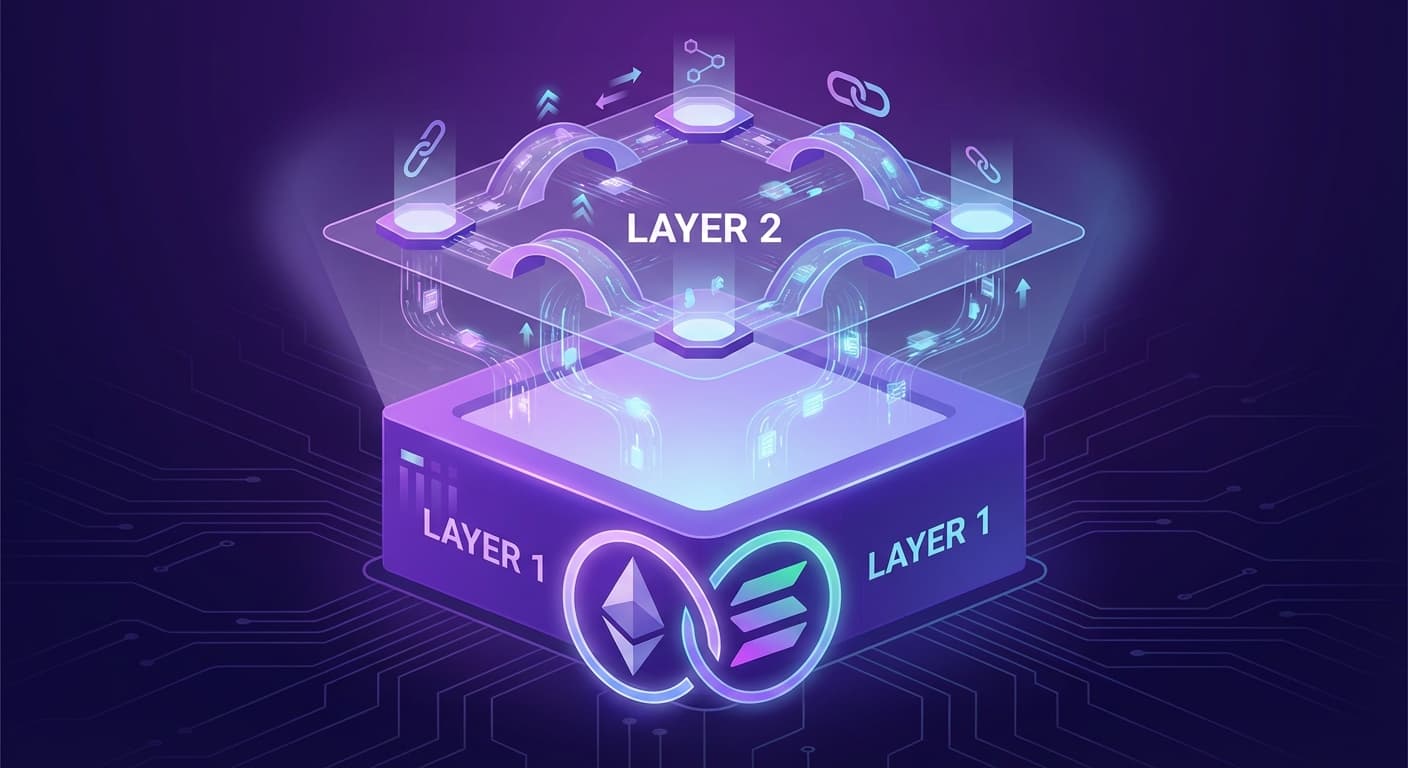
Layer 1 vs Layer 2: Key Differences, When to Use Each, and Top Projects
Not sure whether to use Layer 1 or Layer 2? Compare L1 vs L2 blockchains — rollup types, costs, speed, risks, and which chain fits your use case in 2026.
 GOMTU9 min read
Zero-Knowledge Proofs Explained: zk-SNARKs, zk-STARKs & ZK Rollups
Zero-knowledge proofs let you prove something is true without revealing the data. Learn how zk-SNARKs, zk-STARKs, and ZK rollups power privacy and Ethereum scaling.
GOMTU8 min read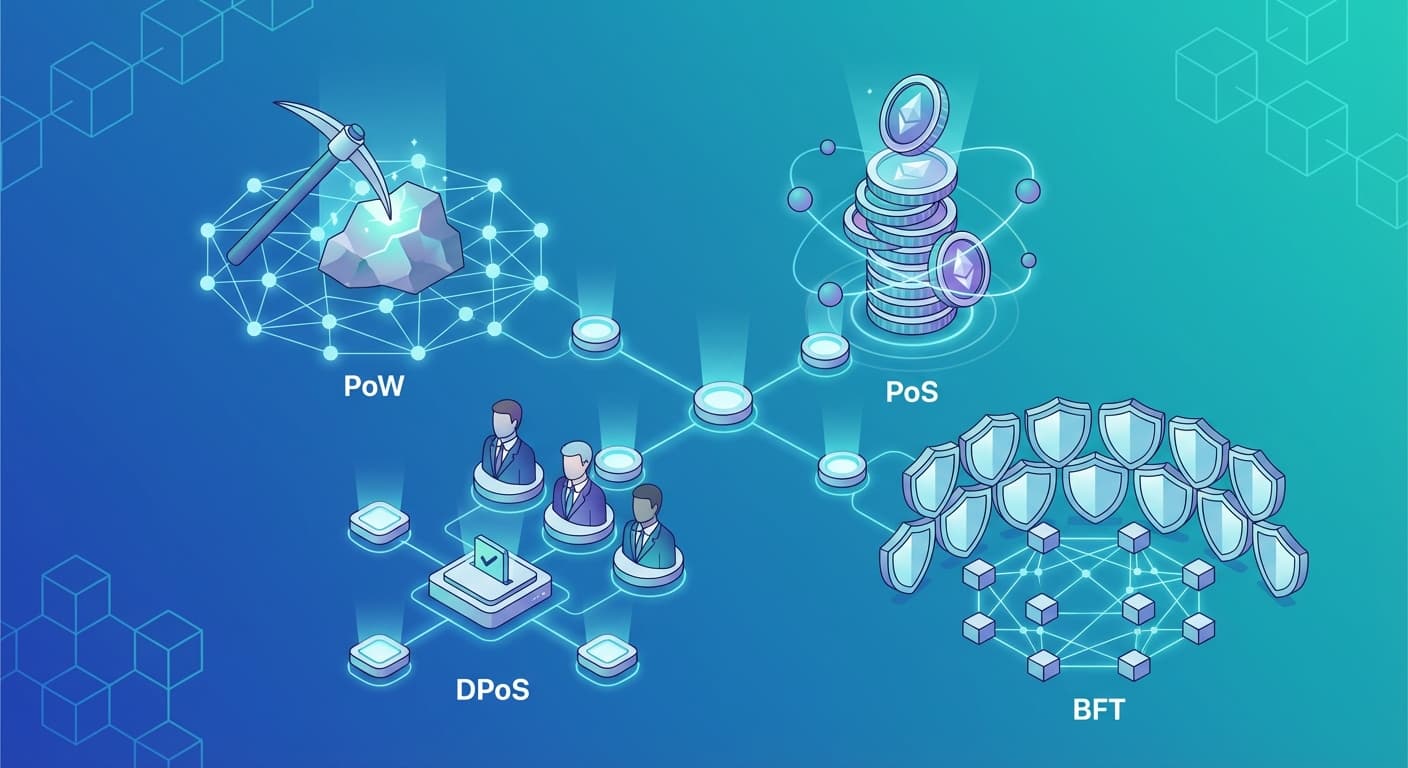
Consensus Algorithms Explained: PoW vs PoS vs DPoS
Learn how blockchain consensus algorithms work — from Proof of Work to Proof of Stake, DPoS, BFT, and PoH. Compare trade-offs, real-world use cases, risks, and what it all means for your gas fees and staking activity.
GOMTU9 min readExplore related topics

Crypto Airdrop Farming Guide 2026: Qualify Without Gambling Your Wallet
A practical crypto airdrop farming guide for 2026: evaluate campaigns, limit wallet risk, verify claims, keep records, and avoid Sybil abuse.
GOMTU8 min read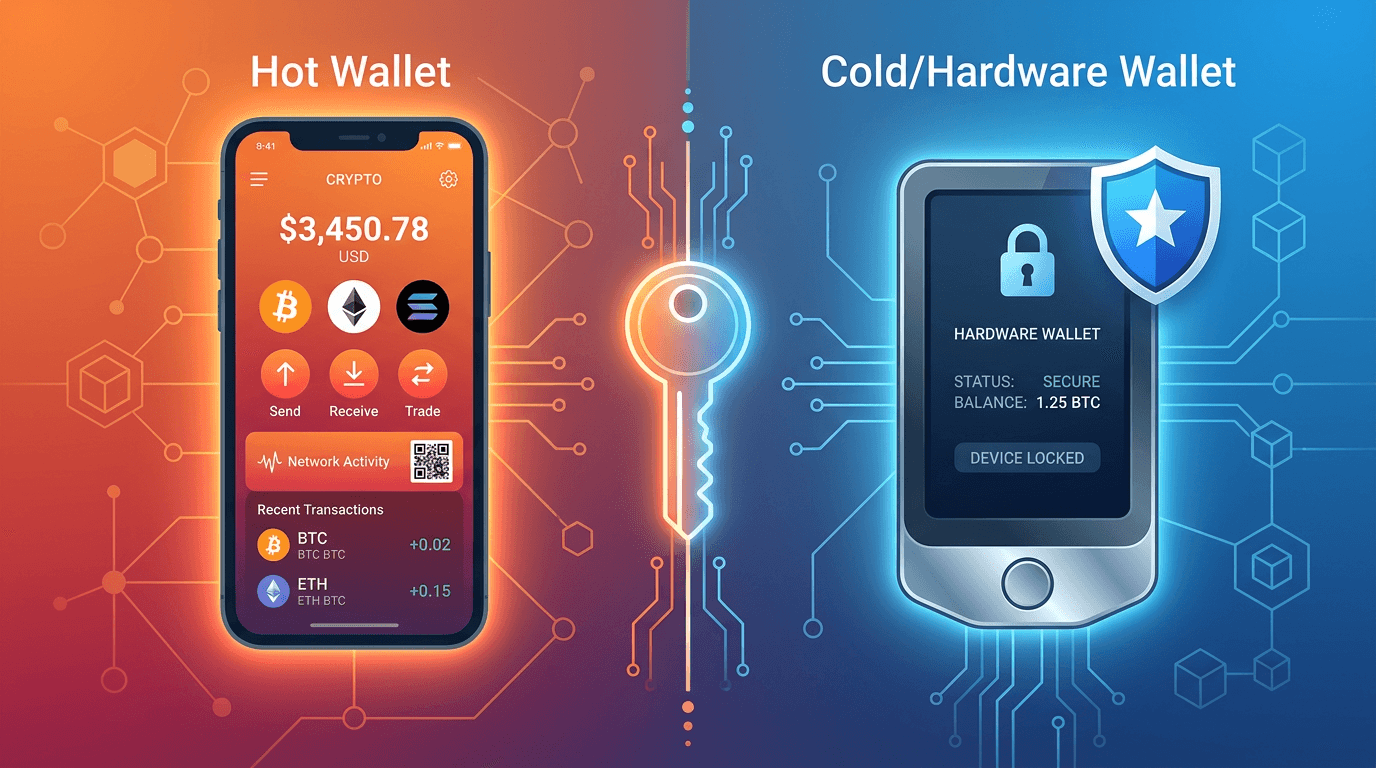
Crypto Wallet Security: Your Complete Hub for Keys, Scams & Safe Custody
Everything you need to know about crypto wallet security — seed phrases, smart wallets, bridge risks, and scam prevention. Your gateway to staying safe on-chain.
GOMTU11 min read