What Are Smart Contracts? How They Work and Real Use Cases
Discover what smart contracts are, how they work on the blockchain, and their real-world use cases in DeFi, NFTs, and RWA — plus risks, limits, and FAQ.

Last updated
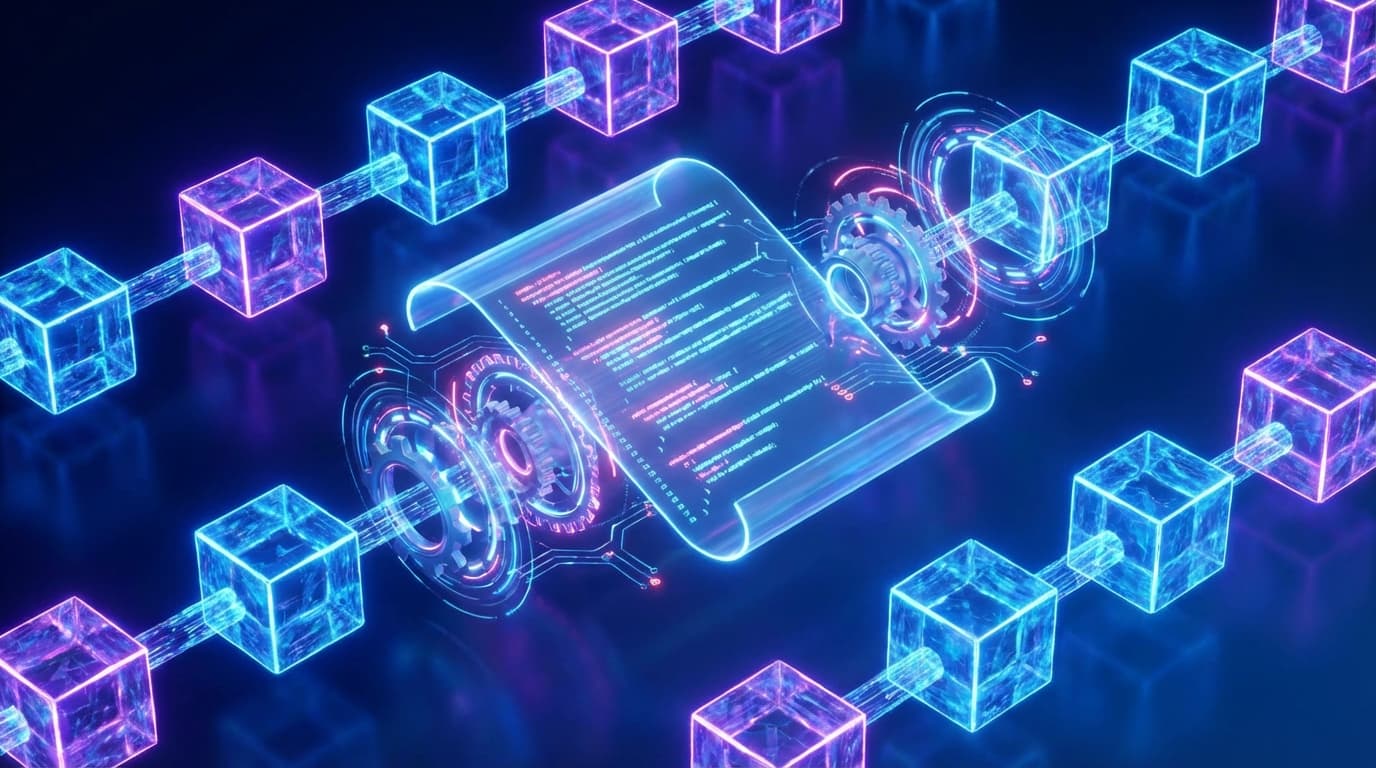
If you've heard the words "DeFi," "NFT," or "DAO" and wondered what's actually making them run — smart contracts are the answer. They're the invisible engine beneath almost every blockchain innovation today. And understanding them doesn't require a computer science degree; a vending machine will do just fine.
What Are Smart Contracts?
A smart contract is a self-executing program stored on a blockchain. Once predefined conditions are met, it automatically carries out the agreed-upon action — no lawyers, banks, or middlemen involved.
The vending machine analogy works perfectly here. You insert a coin (input), press a button (condition met), and the drink dispenses (execution). No cashier, no haggling, and nobody can secretly swap your drink for a cheaper one. Smart contracts work exactly the same way — except instead of snacks, the outputs can be tokens, loan approvals, or governance votes.
Nick Szabo first proposed the concept in 1994. It took Ethereum's launch in 2015 to bring it to life. Today, smart contracts underpin billions of dollars in daily activity across DeFi, NFT marketplaces, RWA platforms, and more.
Traditional Contracts vs Smart Contracts
| Feature | Traditional Contract | Smart Contract |
|---|---|---|
| Intermediary | Lawyers, banks, notaries | None — code executes |
| Execution | Manual by humans | Automatic when conditions are met |
| Speed | Days to weeks | Seconds to minutes |
| Transparency | Private between parties | Public on the blockchain |
| Mutability | Can be amended by agreement | Immutable once deployed |
| Cost | Fees, labor costs | Only gas fees |
How Do Smart Contracts Work?
The lifecycle looks like this:
Write Code → Deploy to Blockchain → User Triggers Transaction → Auto-Execute → Record ResultStep 1 — Write the code. Developers define the contract logic in a programming language. Example: "If User A sends 1 ETH, transfer 100 USDC to User B." The rules live entirely in code — not in anyone's head or handshake.
Step 2 — Deploy to the blockchain. The compiled code is uploaded to the network. Once deployed, nobody can modify it (immutability). This is the trust foundation: no party can rewrite the rules after the fact.
Step 3 — Trigger with a transaction. Users interact by sending transactions — swapping tokens on a DEX, depositing collateral into a lending protocol, or minting an NFT.
Step 4 — Automatic execution. When the predefined conditions are met, the code runs. No human approval needed.
Step 5 — Record the result. The outcome is permanently written to the blockchain. Anyone can verify it; nobody can alter it afterward.
Programming Languages at a Glance
| Language | Blockchain | Key Features |
|---|---|---|
| Solidity | Ethereum, EVM chains | Most widely used; JavaScript-like syntax |
| Rust | Solana | High performance; memory safety |
| Move | Sui, Aptos | Asset-oriented design; strong security |
| Vyper | Ethereum | Python-like; simpler and more auditable |
Real-World Use Cases
DeFi (Decentralized Finance)
DeFi is the largest application of smart contracts. As of March 2026, total value locked (TVL) across DeFi protocols stood at approximately $95.4 billion — and nearly every dollar passes through a smart contract.
- Lending: Deposit collateral on Aave; loans issue automatically with real-time interest calculation
- Trading: Uniswap's AMM handles token swaps with no intermediary
- Staking: Deposit ETH on Lido; receive stETH tokens automatically
NFTs and Digital Assets
Smart contracts manage NFT ownership, trading, and royalty distribution.
- Unique token IDs assigned automatically at mint
- Automatic royalties on secondary sales — artists earn from every resale
- Expanding into game items, memberships, and digital collectibles
RWA Tokenization
Smart contracts are the backbone of real-world asset (RWA) tokenization.
- Token issuance and ownership management
- Automatic distribution of interest, dividends, and rental income
- Transfer restrictions for KYC/AML compliance (ERC-3643)
Other Applications
- Insurance: Payouts trigger automatically on verified events (flight delays, weather oracle data)
- Supply chain: Each logistics stage recorded on-chain; payment releases on delivery confirmation
- DAOs: Token-holder votes execute automatically — no CEO or board required
In 2026, account abstraction (ERC-4337 smart accounts, EIP-7702 via Ethereum's Pectra upgrade) is opening new possibilities: social recovery for lost seed phrases, gas fee sponsorship by dApps, and batch transactions without signing each one individually.
Tip
Account abstraction means users no longer need to hold ETH for gas — a protocol or dApp can cover that cost on their behalf, making onboarding far simpler.
Why Smart Contracts Matter
The core value proposition is trust without a trusted third party. You don't need to know the counterparty or rely on a central institution. You only need to trust the code — and with open-source, audited contracts, anyone can read the code before interacting.
This unlocks things that were previously impossible or prohibitively expensive:
- Atomic swaps between strangers on opposite sides of the world
- Transparent, tamper-proof governance for thousands of token holders
- 24/7 financial services with no business hours, no credit checks, no borders
That's the premise of blockchain in action: permissionless systems where the rules are enforced by math, not institutions.
Risks and Limitations
This section matters more than any other for your safety — read it before interacting with any smart contract.
Code Bugs and Exploits
Smart contract hacks caused approximately $905 million in losses during 2025 alone. Critically, 90% of hacked projects had never been audited.
Warning
Before using any DeFi protocol, verify it has been audited by a reputable security firm. Unaudited contracts carry significantly higher risk.
The most common attack types (OWASP Smart Contract Top 5, 2026):
| Rank | Risk Type | What Happens |
|---|---|---|
| 1 | Access Control Flaws | Unauthorized users execute privileged functions |
| 2 | Price Oracle Manipulation | External price feeds exploited to drain assets |
| 3 | Logic Errors | Business logic flaws cause unintended behavior |
| 4 | Flash Loan Attacks | Uncollateralized loans chained for complex exploits |
| 5 | Reentrancy | A function repeatedly called to drain funds |
The Immutability Double Edge
Immutability is a strength — until a bug is found. Once deployed, code can't simply be patched. Projects must design upgrade mechanisms (like proxy patterns) before deployment, not after something goes wrong.
Oracle Dependency
Smart contracts can't natively access off-chain data (prices, weather, sports results). They rely on oracles like Chainlink. If an oracle feeds bad data, the contract executes incorrectly.
Note
Oracle manipulation is consistently one of the top attack vectors in DeFi. When evaluating a protocol, check how it sources and validates external price data.
Regulatory Uncertainty
Smart contracts operate across borders by design. Regulatory treatment varies significantly by jurisdiction and is still evolving — particularly for DeFi and RWA applications.
How to Use Smart Contracts Safely
- Check audits: Verify the protocol has been audited by firms like Hacken, OpenZeppelin, or Trail of Bits
- Check TVL: Higher TVL generally indicates more battle-tested code — though it is not a guarantee
- Manage approvals: Use Revoke.cash to regularly revoke unnecessary smart contract approvals
- Test with small amounts: Try new protocols with small sums before committing larger funds
- Prefer open source: Prioritize projects with publicly verifiable, community-reviewed code
FAQ
Q: Can a smart contract be stopped or reversed after it runs?
Generally, no. Once triggered, execution is automatic and the result is permanent. Some contracts include admin keys or emergency pause functions, but these introduce centralization risk. Always check whether a contract has admin controls before interacting.
Q: Who audits smart contracts, and why does it matter?
Security firms — like OpenZeppelin, Trail of Bits, and Hacken — review contract code for vulnerabilities before deployment. An audit is not a guarantee of safety, but unaudited contracts are significantly riskier. Look for audit reports, ideally from multiple firms.
Q: Do I need to understand code to use smart contracts?
No — most users interact through dApp front ends. But you should understand what permissions you're granting. Use Revoke.cash to regularly review and revoke unnecessary contract approvals.
Q: What's the difference between a smart contract and a regular app?
A regular app runs on servers controlled by a company. A smart contract runs on a decentralized blockchain — no single party controls it, and if truly immutable, no one can shut it down or change the rules unilaterally.
Q: Are smart contracts only on Ethereum?
No. Solidity contracts run on any EVM-compatible chain (Ethereum, Polygon, Arbitrum, BNB Chain, and others). Other blockchains use different languages: Rust on Solana, Move on Sui and Aptos.
Q: What is account abstraction, and does it affect smart contracts?
Account abstraction (ERC-4337, EIP-7702) turns regular wallets into smart accounts. This enables gas sponsorship, social recovery, and batch transactions — making smart contracts far easier for everyday users to interact with. Over 40 million smart accounts had been deployed as of 2026.
Conclusion
Smart contracts are the engine beneath the blockchain — DeFi, NFTs, RWAs, DAOs all run on them. The concept is simpler than it sounds: code that executes automatically when conditions are met. That idea is quietly reshaping finance, insurance, logistics, and governance.
In 2026, account abstraction is smoothing out the user experience, and AI security tools are starting to catch vulnerabilities before they can be exploited. The technology is maturing fast.
But maturity does not mean risk-free. Before interacting with any smart contract, check for audits, start with small amounts, and revoke unused approvals. No contract — however well-audited — is a guarantee of outcome.
To understand how the blockchain network validates every transaction these contracts produce, see the consensus algorithms guide. For a breakdown of the costs involved in every smart contract call, the gas fees guide is a solid next step.
Disclaimer: This article is for educational purposes only and does not constitute financial or investment advice. Smart contract interactions carry real risk of loss. Always do your own research (DYOR). NFA.
Keep learning
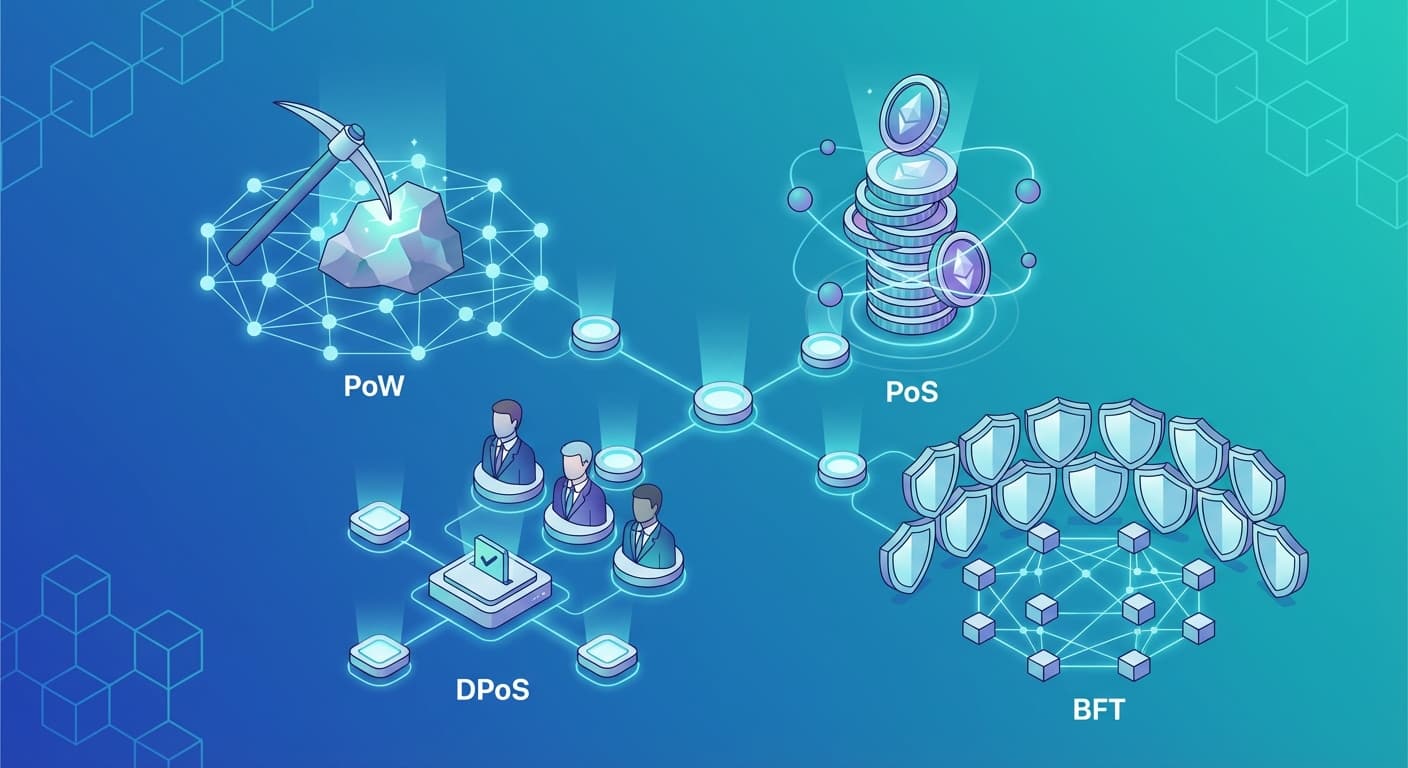
Consensus Algorithms Explained: PoW vs PoS vs DPoS
Learn how blockchain consensus algorithms work — from Proof of Work to Proof of Stake, DPoS, BFT, and PoH. Compare trade-offs, real-world use cases, risks, and what it all means for your gas fees and staking activity.
 GOMTU9 min read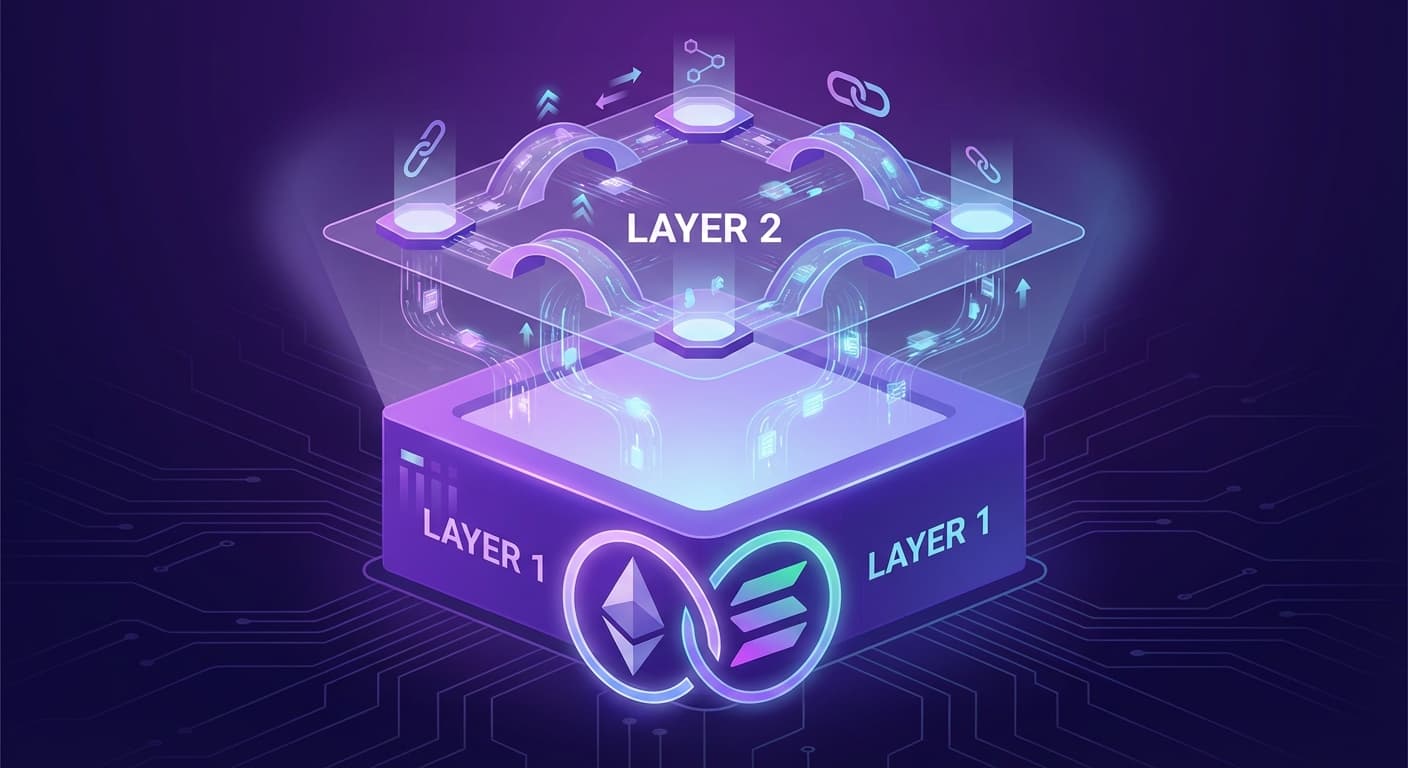
Layer 1 vs Layer 2: Key Differences, When to Use Each, and Top Projects
Not sure whether to use Layer 1 or Layer 2? Compare L1 vs L2 blockchains — rollup types, costs, speed, risks, and which chain fits your use case in 2026.
GOMTU9 min read
Zero-Knowledge Proofs Explained: zk-SNARKs, zk-STARKs & ZK Rollups
Zero-knowledge proofs let you prove something is true without revealing the data. Learn how zk-SNARKs, zk-STARKs, and ZK rollups power privacy and Ethereum scaling.
GOMTU8 min readExplore related topics
Crypto Wallet Security: Your Complete Hub for Keys, Scams & Safe Custody
Everything you need to know about crypto wallet security — seed phrases, smart wallets, bridge risks, and scam prevention. Your gateway to staying safe on-chain.
GOMTU11 min read
Polkadot Halving 2026: DOT Supply Cap, 53.6% Emission Cut Explained
Polkadot undergoes its first-ever tokenomics overhaul on March 14, 2026 — a 2.1B DOT supply cap, 53.6% emission cut, and staking redesign. Here is what the changes actually mean.
GOMTU8 min read