Crypto Airdrop Farming Guide 2026: Qualify Without Gambling Your Wallet
A practical crypto airdrop farming guide for 2026: evaluate campaigns, limit wallet risk, verify claims, keep records, and avoid Sybil abuse.

Last updated

Crypto airdrop farming can look like a checklist with a prize at the end. In reality, it is closer to trying a product before the loyalty program has published its rules: your activity may cost time and gas, yet never create a claim. The sensible goal is not to “game” an unknown snapshot. It is to evaluate a protocol, use it only when the product is useful to you, and keep one bad signature from reaching your main assets.
This guide gives you a repeatable process for doing that. It does not predict which project will launch a token, what its eligibility rules will be, or what any distribution will be worth.
Caution
This article is educational, not financial, legal, or tax advice. An airdrop may be worth nothing, and interacting with unfamiliar contracts can lose more than the reward. Use only funds you can afford to lose and do your own research (DYOR).
What crypto airdrop farming actually means
An airdrop is a token distribution to selected addresses. A project might reward past use, contributors, holders, or participants who meet published campaign conditions. Crypto airdrop farming means deliberately taking eligible actions in the hope of qualifying for a future distribution.
Think of it as collecting receipts before a store decides whether it will run a loyalty promotion. Receipts prove that you visited; they do not promise a coupon. Likewise, swaps, deposits, testnet actions, points, or community work do not guarantee a token unless the issuer's official terms say so.
Common formats include:
- Retroactive distributions: criteria are announced after activity has occurred.
- Published campaigns: the issuer states tasks, dates, exclusions, and claim mechanics.
- Holder distributions: eligibility depends on holding an asset at a defined snapshot.
- Contributor distributions: governance, development, education, or community work may count.
- Points programs: an interface records points, but conversion into tokens may remain discretionary.
The distinction matters. A visible points balance is not automatically a legal right to tokens. Read the campaign's own terms, not an influencer's spreadsheet.
Decide whether a campaign deserves your time
Start with the product, not the rumored payout. A credible candidate should have an official website, documentation, a clear team or governance process, and a product you can independently understand. Then ask four questions.
1. Is the opportunity official?
Trace every announcement back to the project's own domain and independently verified social or governance channels. Search results, sponsored posts, direct messages, and copied Discord announcements are discovery leads—not proof.
2. Are the rules actually published?
Record the source URL, eligible networks, start and end dates, geographic restrictions, prohibited behavior, snapshot language, and claim deadline. If the issuer has not announced a token or campaign, label it unconfirmed in your notes. Do not turn speculation into a fact.
3. Does the action have value without an airdrop?
Paying $40 in fees to chase an unknown reward is not “free.” Treat gas, bridge fees, slippage, deposits, time, and tax-record work as costs. A useful protocol interaction can still teach you something if no reward appears; a meaningless loop cannot.
4. Can you explain the contract risk?
Depositing into a bridge, liquidity pool, vault, or lending market adds smart-contract, asset, and counterparty risks. If you cannot explain how funds leave the contract, do not deposit. Learn the mechanics first through our cross-chain bridge guide and DeFi liquidity-pool guide.
Set up a bounded-risk wallet workflow
Wallet separation is containment, not anonymity. Use a dedicated interaction wallet with a small balance while keeping long-term holdings in a separate wallet that never connects to campaign sites. If the interaction wallet signs something malicious, the separation limits what is exposed.
- Create the wallet from a trusted wallet app. Back up its recovery phrase offline and never paste that phrase into a website.
- Fund a fixed budget. Include gas, slippage, and the amount placed at contract risk. Do not refill automatically.
- Bookmark verified entry points. Navigate from the project's official domain each time rather than from ads or DMs.
- Read every request. Distinguish a login signature from a transaction, token approval, permit, or asset transfer.
- Review permissions afterward. Remove approvals you no longer need, while remembering that revocation itself is an on-chain transaction and costs gas.
- Keep records. Save transaction hashes, dates, fees, token quantities, the campaign terms you relied on, and the value methodology used for tax records.
Wallet separation cannot protect assets that you intentionally bridge or deposit into a vulnerable contract. It also cannot undo a leaked recovery phrase. Our seed phrase security guide covers the custody layer, while token approvals and wallet drainers explains permission risk.
Participate without trying to evade Sybil controls
A Sybil attack uses multiple fake or duplicate identities to gain disproportionate rewards or influence. Programs may use their own rules, analytics, attestations, identity checks, or review process. There is no universal transaction count, wallet age, funding pattern, or score that guarantees acceptance.
Do not create duplicate identities, coordinate circular volume, wash trade, automate fake engagement, or disguise common control of wallets. Those behaviors can violate campaign terms and waste fees even when they are not caught immediately. “How to look human” is the wrong objective; honest compliance with the published rules is the durable one.
Human Passport, for example, describes a combination of credentials and model-based detection for Sybil resistance, while also noting that partner campaigns can use customized scores. That is evidence that criteria vary—not a recommendation that every farmer needs a particular product or score.
If a legitimate program requires identity verification, decide whether its privacy trade-off is acceptable before submitting personal data. Confirm the exact processor, retention policy, supported jurisdiction, and appeal path through official documentation.
Claim an airdrop safely
Claim day combines urgency, copied websites, and valuable wallet permissions. Slow down.
- Open the project's official site from a saved bookmark or independently verified announcement.
- Confirm the full hostname, network, claim contract, deadline, and official support channel.
- Check the transaction simulation and the assets or approvals requested.
- Never enter a recovery phrase or private key. A legitimate claim does not need them.
- Treat an unexpected token or NFT as hostile until verified. Do not follow URLs embedded in its name, image, metadata, or failed-transaction message.
- If the transaction asks for an unrelated unlimited approval, transfer, or operator permission, reject it and investigate.
- Use the dedicated wallet, not the wallet holding long-term assets.
MetaMask's current safety guidance documents a common trap: an unsolicited token fails to trade, then a message directs the holder to a malicious site that requests a recovery phrase or token approval. The safest default is to ignore unknown assets rather than trying to “unlock” them.
Risks and limits
No eligibility or value guarantee
The issuer can change criteria, exclude jurisdictions, delay a launch, cancel a distribution, or allocate nothing to your address. A token can also become illiquid or fall below the fees you spent. Never budget around an expected payout.
Smart-contract and bridge risk
A legitimate campaign can still involve buggy contracts, compromised interfaces, depegging assets, failed bridges, or governance changes. Small balances reduce exposure but do not remove it.
Signature and approval risk
Connecting a wallet alone is different from signing a message or transaction, but a malicious request can authorize token spending or asset transfers. Wallet warnings and simulations help; they are not guarantees.
Privacy and identity risk
On-chain activity is public and linkable. Social accounts, exchange withdrawals, identity attestations, and repeated transaction patterns can connect addresses. Do not submit identity data merely for a rumored reward.
Tax and recordkeeping risk
Tax treatment depends on your jurisdiction, the facts, and when you obtain control of an asset. In the United States, IRS Revenue Ruling 2019-24 specifically addresses cryptocurrency received through an airdrop following a hard fork; the IRS also requires reporting of taxable digital-asset income more broadly. That does not make one rule universal for every campaign or country.
Korean readers should check current National Tax Service guidance and obtain professional advice for their facts. The NTS states that reporting by virtual-asset service providers for individual transactions begins with transactions from January 1, 2027, but that reporting schedule alone does not determine the treatment of every airdrop. Keep contemporaneous records instead of reconstructing them later.
A practical decision checklist
Before an interaction:
- I can verify the campaign through the issuer's official domain.
- I recorded the terms, dates, restrictions, and whether a token is confirmed.
- The action is useful enough to justify its fees without a reward.
- I understand where deposited assets go and how they return.
- I am using a low-balance interaction wallet, not my savings wallet.
- I will not create duplicate identities or violate anti-Sybil rules.
- I know which signature, approval, or transaction the site is requesting.
- I can keep transaction and valuation records for local tax review.
At claim time:
- I reached the claim page from an independently verified official source.
- The hostname, network, contract, and requested permission match the announcement.
- No one has asked for my recovery phrase, private key, or remote access.
- I am willing to walk away if the request cannot be explained.
FAQ
Is airdrop farming free?
No. Even without buying a token, you can pay gas, bridge fees, slippage, tax-compliance costs, and opportunity cost. Deposited assets can also be lost.
How many transactions guarantee eligibility?
None. Criteria are issuer-specific and may be retroactive. Treat any universal transaction-count formula as speculation unless it appears in official terms.
Should I use multiple wallets?
Use separate wallets to contain security risk or separate legitimate purposes, not to impersonate multiple users. Multiple wallets do not create multiple people and may violate a campaign's rules.
Should I interact with a token that appeared unexpectedly?
Not until you independently verify its contract and purpose through official sources. Unknown tokens and NFTs can be phishing lures; hiding or ignoring them is usually safer than following their embedded instructions.
When is an airdrop taxable?
It depends on jurisdiction and facts such as control, receipt, disposal, and the nature of the distribution. Preserve records and ask a qualified local adviser; do not rely on a global one-line rule.
Sources and next step
Primary and authoritative references checked for this update:
- MetaMask: Failed transaction scams
- Human Passport: What is a Sybil?
- Human Passport: Custom Passport dashboards and scores
- IRS Revenue Ruling 2019-24
- IRS: Digital assets
- Korea National Tax Service: Virtual-asset service provider transaction reporting
The durable airdrop strategy is deliberately boring: verify the issuer, read the terms, use a bounded-risk wallet, understand every signature, keep records, and accept that the reward may be zero. This is not financial advice. DYOR, respect campaign rules, and never risk core savings for an unconfirmed distribution.
Keep learning
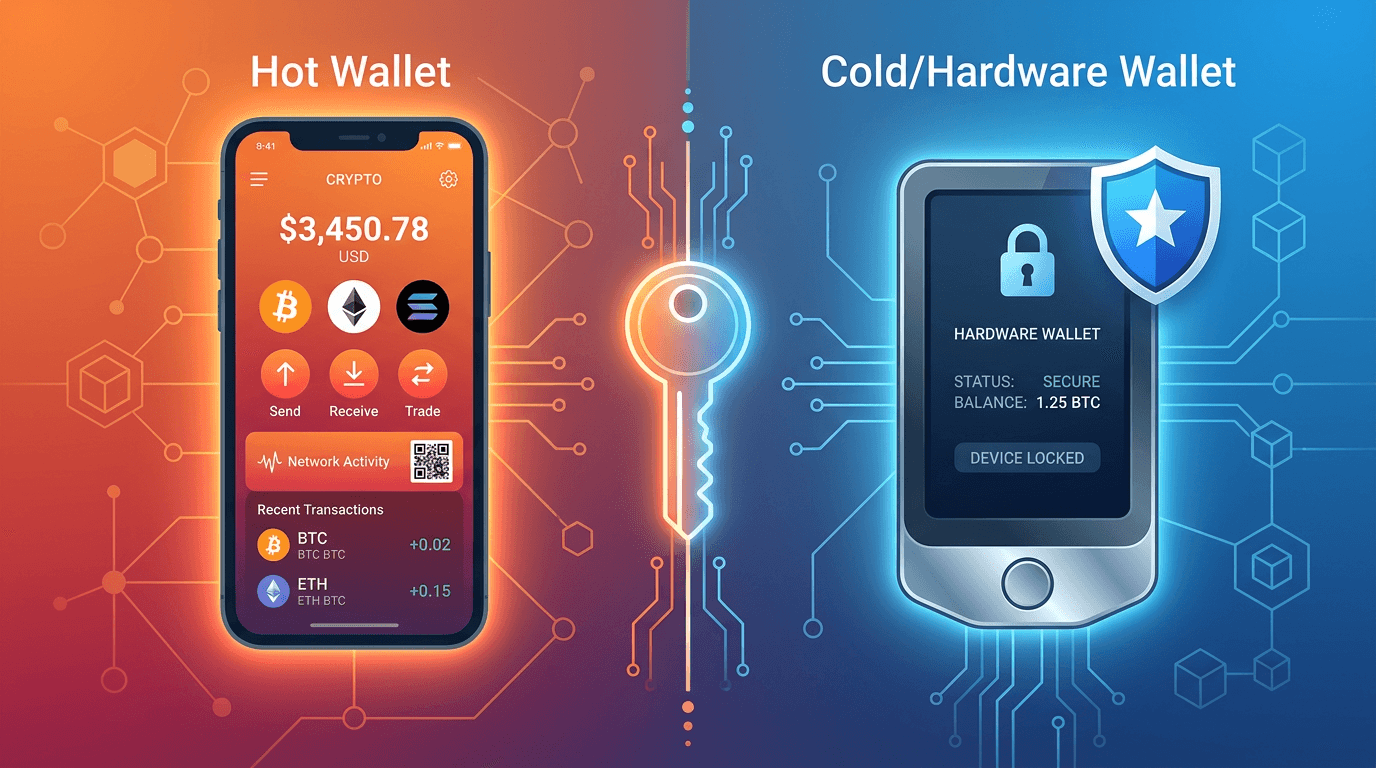
Crypto Wallet Security: Your Complete Hub for Keys, Scams & Safe Custody
Everything you need to know about crypto wallet security — seed phrases, smart wallets, bridge risks, and scam prevention. Your gateway to staying safe on-chain.
 GOMTU11 min read
Crypto Scam Prevention Guide 2026: How to Spot, Avoid, and Respond
Crypto scams drain billions every year — and most victims thought they were careful. This how-to guide covers 10 scam types, step-by-step prevention rules, a security checklist, and what to do if you get hit.
GOMTU11 min read
Seed Phrase Security: How to Protect Your Crypto in 2026
A step-by-step how-to for understanding, storing, and backing up your seed phrase — storage method comparison, 2026 attack tactics, anti-patterns, FAQ, and a security checklist.
GOMTU9 min readExplore related topics
DeFi Explained: Your Complete Hub for Decentralized Finance
Confused by DeFi jargon? This hub maps the whole ecosystem — AMMs, stablecoins, yield farming, perp DEXs, and more — with honest risk breakdowns and safe first steps. NFA.
GOMTU9 min read
What Are Stablecoins? Types, How They Work, and Real Risks
Understand stablecoins from the ground up — fiat-backed, crypto-backed, algorithmic, and yield-bearing types — plus depeg risks, USDT vs USDC, and how to use them in DeFi.
GOMTU7 min read