Crypto Wallet Security: Your Complete Hub for Keys, Scams & Safe Custody
Everything you need to know about crypto wallet security — seed phrases, smart wallets, bridge risks, and scam prevention. Your gateway to staying safe on-chain.

Last updated
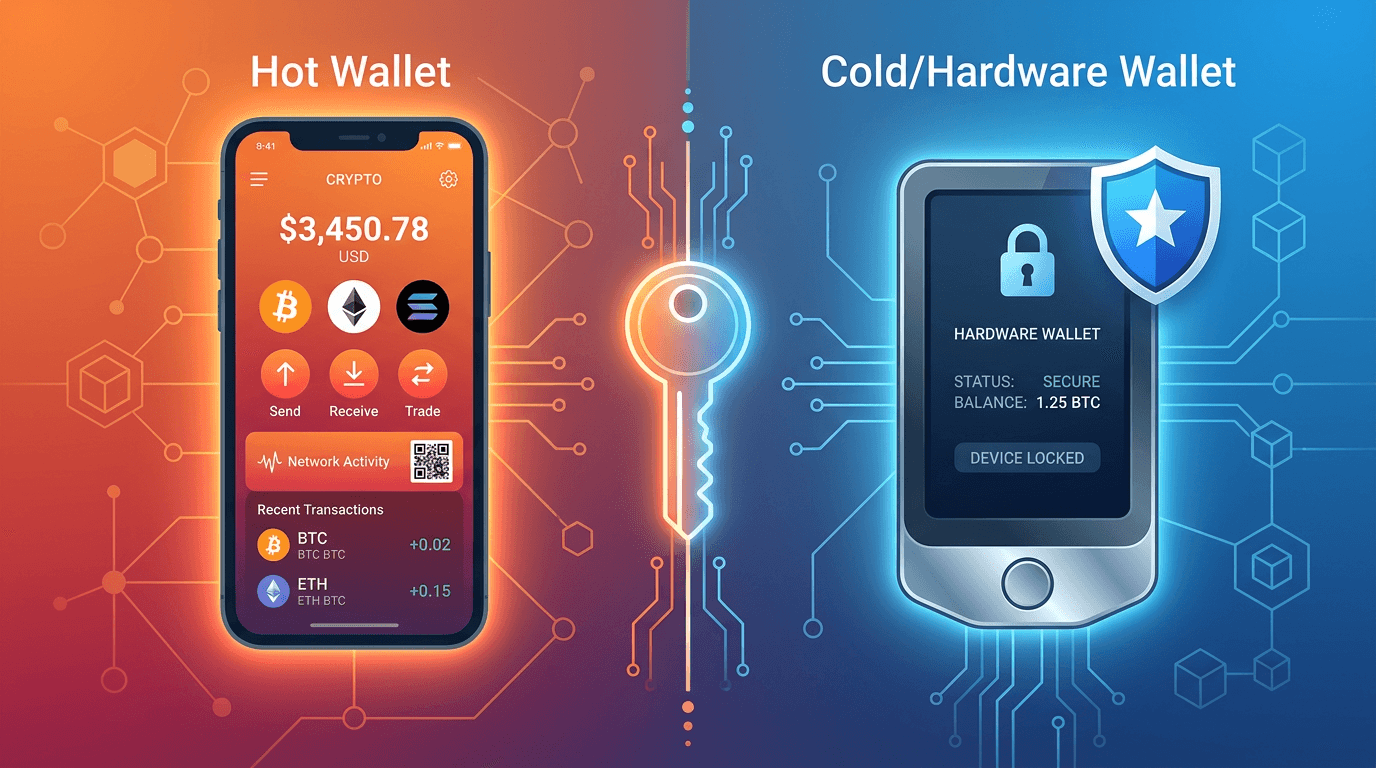
You've probably heard the phrase "not your keys, not your coins." But what does that actually mean when headlines keep reporting hundreds of millions lost to phishing attacks, bridge exploits, and scams that look eerily legitimate?
Crypto security isn't complicated once you understand the fundamentals — but those fundamentals matter enormously. Your wallet isn't a safe where coins sit. It's a set of cryptographic keys that prove ownership. Get those keys wrong, and nothing else you do on-chain will protect you.
This hub maps the full landscape: how wallets actually work, where the real risks hide, and which deep-dive guides to read next based on your situation.
Heads up: This guide is for educational purposes only. Nothing here is financial advice (NFA). Crypto carries significant risk — only use funds you can afford to lose, and always do your own research (DYOR).
How Crypto Wallets Actually Work
Think of a crypto wallet like a keychain, not a vault. Your coins don't live inside the wallet — they live on the blockchain. The wallet holds the private key that proves you're authorized to move them.
Three concepts underpin everything in this cluster:
- Private key: The secret credential that lets you sign transactions. Whoever holds this key can move your funds — no verification, no reversal.
- Public key / address: What you share with others to receive funds. Like a bank account number, but publicly visible by design.
- Seed phrase (recovery phrase): A human-readable backup of your private key, typically 12 or 24 words. Lose your device? The seed phrase restores access. Someone else gets it? They own everything.
Every security decision you make — hot vs. cold wallet, self-custody vs. exchange, MPC vs. multi-sig — flows from this single truth: control the key, control the coins.
Warning
Crypto transactions are irreversible. If an attacker drains your wallet using your private key or seed phrase, there is no support line, no charge-back, and no recovery process. The responsibility sits entirely with the key holder.
Why This Matters More Than You Might Think
Exchange-held accounts (custodial wallets) are convenient but carry counterparty risk — the exchange controls your keys. When FTX collapsed in 2022, users with balances on the platform found their funds frozen. Phishing attacks targeting browser wallets and hardware wallet users continue to drain hundreds of millions per year.
The risks aren't hypothetical. They're ongoing, well-organized, and constantly adapting. Understanding the threat landscape is the most practical thing you can do to protect yourself.
What's Inside This Cluster
This wallets-security cluster covers the full spectrum of on-chain safety. Here's what each guide covers and who should read it first.
Seed Phrase Security: How to Back Up and Protect Your Recovery Words
Your seed phrase is the single most critical string of words you'll ever write down. This guide covers where to store it (and what to absolutely avoid), how to layer protection through physical redundancy, and the real-world attack vectors that specifically target recovery phrases — including fake wallet apps and social-engineering scripts that sound surprisingly convincing.
Start here if you're new to self-custody or have any doubt about your current backup setup.
Crypto Scam Prevention: How to Spot and Avoid the Most Common Attacks
Phishing sites built to look pixel-perfect. Discord messages from fake "admins." Fake airdrops that drain your wallet the moment you connect. The scam ecosystem in crypto is sophisticated, fast-moving, and constantly reinventing its playbook.
This guide breaks down the most prevalent attack types in 2026 — blind-signing exploits, approval phishing, address poisoning, SIM-swap chains — with practical defenses for each.
Read this before connecting to any new protocol or claiming any airdrop.
Account Abstraction & Smart Wallets: Beyond the Seed Phrase
ERC-4337 smart accounts have crossed 40 million deployments. They unlock features traditional EOA wallets can't offer: social recovery (no seed phrase required to restore access), spending limits, session keys for gaming and DeFi, and gas sponsorship for new users. But smart wallets come with their own trust assumptions worth understanding.
Read this if you're exploring alternatives to seed-phrase custody, or curious about how protocols like Safe, Biconomy, and ZeroDev are reshaping the wallet layer.
ERC-4337 Paymasters: How Gas Sponsorship Really Works
Paymasters let an app sponsor a smart wallet's gas or let a user settle fees in a supported token. The guide explains the UserOperation flow, who ultimately bears the cost, why sponsorship can fail, and which signing and allowance checks still matter.
Read this if a wallet offers “gasless” transactions or asks you to pay gas in USDC or another token.
ERC-7715 Advanced Wallet Permissions: Limits, Expiry, and Risks
Draft ERC-7715 lets compatible smart wallets grant a dApp bounded execution authority instead of requesting every action separately. This guide explains spending limits, periodic rules, expiry, revocation, and why a standard permission request is not automatically trustworthy.
Read this before approving recurring, automated, or time-limited access to a smart account.
EIP-8141 Frame Transactions: Native Account Abstraction Explained
EIP-8141 proposes a native transaction format that separates verification, gas payment, and execution into explicit frames. The guide explains atomic batching, flexible signatures, draft status, and the wallet-security questions that remain unresolved.
Read this if you want to understand Ethereum's proposed next step beyond ERC-4337 and EIP-7702 without mistaking a draft for a shipped feature.
EIP-7702 Wallet Delegation: A Practical Security Guide
EIP-7702 lets an existing EOA use smart-account behavior without changing addresses. The security guide explains SetCode authorization, delegation phishing, cross-chain scope, and the checks to make before signing.
Read this before approving a wallet upgrade, delegation, or unfamiliar SetCode request.
ERC-1271 Smart Contract Signatures: How Wallets Verify Authority
Smart accounts do not have one private key at their contract address. ERC-1271 lets a dApp ask the account's code whether a message and proof satisfy its owner, multisig, passkey, or policy rules. This guide explains isValidSignature, compatibility failures, replay risks, and changing validity.
Read this if you use or build smart-account login, off-chain orders, voting, or signature-based permissions.
ERC-6492 Counterfactual Signatures: Verify Smart Wallets Before Deployment
A smart account can have a predictable address before contract code exists there. ERC-6492 wraps the factory call and inner ERC-1271 proof so an app can simulate or prepare the account, then verify its rules in the required order. The guide also covers untrusted factory calls, replay scope, mutable authorization, and why the magic suffix is not a safety stamp.
Read this if you use or build smart-wallet login, orders, or attestations before the account's first deployment transaction.
Clear Signing vs Blind Signing: How to Read Wallet Prompts
Clear signing turns encoded requests into an action, amount, counterparty, network, and scope you can verify. This guide separates EIP-712 from draft ERC-7730 and provides a five-point check for every signature.
Read this before approving a message or transaction you cannot explain in plain language.
EIP-712 Typed Data Signing: What Your Wallet Is Asking You to Approve
EIP-712 gives off-chain authorizations typed fields and domain separation, but it does not make a request trustworthy or add replay protection by itself. This guide explains the digest, eth_signTypedData_v4, nonces, deadlines, and the fields worth checking.
Read this before signing a permit, order, vote, login statement, or other structured message.
EIP-6963 Wallet Discovery: Choosing Between Browser Wallets
Final EIP-6963 lets compatible browser wallets announce distinct EIP-1193 providers so a dapp can present an orderly chooser instead of relying on a window.ethereum race. This guide explains the request-and-announce flow, self-attested metadata, fingerprinting trade-offs, and why correct discovery is not a safety guarantee.
Read this if a dapp opens the wrong extension, you keep several browser wallets installed, or you build wallet connection flows.
EIP-5792 Wallet Call API: Batching, Capabilities, and Atomicity
Final EIP-5792 lets a dapp request an ordered batch of wallet calls, query chain-specific capabilities, and track the batch through a wallet-level identifier. This guide separates batching from atomic execution and explains partial-execution, decoding, status, and privacy risks.
Read this before approving a multi-action wallet request or building a flow that combines approvals, transfers, deposits, or sponsored execution.
Crypto Address Poisoning: Verify the Destination Before You Send
Address poisoning plants a lookalike destination in public transaction history and waits for you to copy it. This guide explains why a valid history entry is not a trusted contact and gives you a full-address, signing-device, and second-channel verification workflow.
Read this before reusing an address from recent activity or sending a meaningful amount to a new destination.
EIP-55 Checksum Addresses: What Mixed-Case Ethereum Addresses Verify
EIP-55 encodes typo-detection bits in an Ethereum address's letter case. This guide shows how the Keccak-based pattern works, how libraries normalize and reject addresses, and why a valid checksum does not prove the recipient, network, or contract is safe.
Read this if you build address inputs or want to understand what a mixed-case wallet address can—and cannot—verify.
Crypto Transaction Simulation: Read the Result Before You Sign
Transaction simulation rehearses an unsigned request against recent chain state and previews likely transfers, approvals, gas, and contract calls. This guide explains what to compare, why state changes and incomplete decoding matter, and why a green result is not a safety guarantee.
Read this before signing an unfamiliar swap, claim, approval, or batched transaction.
Bridge Security: How to Move Assets Across Chains Without Getting Rekt
Cross-chain bridges have lost over $2 billion to exploits — more than any other DeFi hack category. Yet most users treat bridging as a casual workflow step, clicking through without thinking about the smart contract risk underneath.
This guide walks you through how bridges work, what makes them vulnerable, which bridge designs hold up better in 2026, and a practical checklist for safer cross-chain transfers.
Required reading before your first bridge transaction.
Quantum-Resistant Crypto Wallets: What Users Should Know
Quantum computing is a future cryptographic migration problem, not a reason to panic-transfer assets today. This guide explains which wallet signatures could be affected, what Ethereum and standards bodies are preparing, and how to distinguish official migration guidance from “quantum-safe” phishing.
Read this if you want a source-grounded view of post-quantum wallet security without hype or premature product claims.
The Big Security Risks at a Glance
Before diving into the deep-dives, here's a plain-English map of what can go wrong — and where each risk tends to surface:
| Risk Category | What Can Go Wrong | Severity |
|---|---|---|
| Seed phrase exposure | Physical theft, cloud storage, screenshots | Total loss — irreversible |
| Phishing / fake UI | Malicious approvals, blind signing | High — often unrecoverable |
| Bridge exploit | Smart contract bug drains bridge funds | High — entire TVL at risk |
| Approval abuse | Unlimited token approvals used by malicious contracts | Medium to high |
| Exchange custody risk | Exchange insolvency or freeze (FTX-style) | Medium — counterparty risk |
| SIM swap / 2FA bypass | SMS-based 2FA hijacked to access exchange accounts | Medium |
| Smart wallet trust | Compromised guardian in social recovery setup | Medium — depends on config |
One pattern worth noting: the most damaging attacks combine multiple vectors. A phishing site may simultaneously request an unlimited approval and prompt you to blind-sign an unreadable transaction. The core defense is slowing down at decision points — verify URLs before connecting, read what you're signing before approving, and review your active approvals regularly.
Where to Start
If you're new to crypto wallets, follow this sequence:
- Read the seed phrase guide first. Even if you never touch DeFi, your seed phrase is your single largest vulnerability.
- Skim the scam prevention guide before connecting your wallet to any new dApp or protocol.
- Moving assets across chains? Read the bridge guide before your first transfer.
- Interested in moving past seed phrases? The account abstraction guide covers smart wallet options and trade-offs.
Already experienced? Jump straight to whichever guide matches your current risk surface.
Frequently Asked Questions
Q: Should I keep crypto on an exchange or in my own wallet?
Exchange custody (custodial) is convenient, but you're trusting the platform with your keys. Self-custody (non-custodial) removes that counterparty risk — but puts full responsibility for key management on you. Neither is universally "safer" — it depends on your discipline and setup.
Q: What's the safest way to store a seed phrase?
Offline and physical. Write it on paper or stamp it into a metal plate, and keep it somewhere private and fireproof. Avoid photos, cloud storage, email drafts, and internet-connected password managers. The seed phrase security guide covers advanced backup strategies in detail.
Q: Are hardware wallets actually necessary?
Not mandatory — but they add a meaningful security layer by keeping your private key off any internet-connected device. For holdings above a few hundred dollars, most security-conscious users find them worthwhile. They're a one-time cost that can prevent a total loss.
Q: I got a DM from someone offering to help with my wallet. What do I do?
Ignore it and block them. Legitimate protocols, teams, and support channels do not initiate outbound DMs asking you to connect your wallet or share your seed phrase. No exceptions — it is always a scam.
Q: What's "blind signing" and why is it dangerous?
When a wallet can't decode a transaction into human-readable format, it shows raw hex data and asks you to approve it anyway. Blind signing means approving something you literally cannot read — which is how many phishing exploits succeed. If your wallet can't show you what you're signing, decline the transaction.
Security Is a Habit, Not a One-Time Setup
Crypto security isn't something you configure once and forget. The threat landscape evolves — phishing tactics improve, bridge designs change, new wallet technologies introduce new trust assumptions. The most useful habit is slowing down at decision points: verify URLs before connecting, read transaction details before signing, and audit your approvals periodically.
Use the guides in this cluster as reference material you return to, not a one-time checklist.
Not financial advice (NFA). This guide is for educational purposes only. Crypto carries significant risk, including the risk of total loss. Always do your own research (DYOR) and only use funds you can afford to lose.
Everything in this guide

ERC-6492 Counterfactual Signatures: Verify Smart Wallets Before Deployment
ERC-6492 lets apps verify a smart-account signature before its contract is deployed. Learn the wrapper format, verification order, and security risks.
 GOMTU8 min read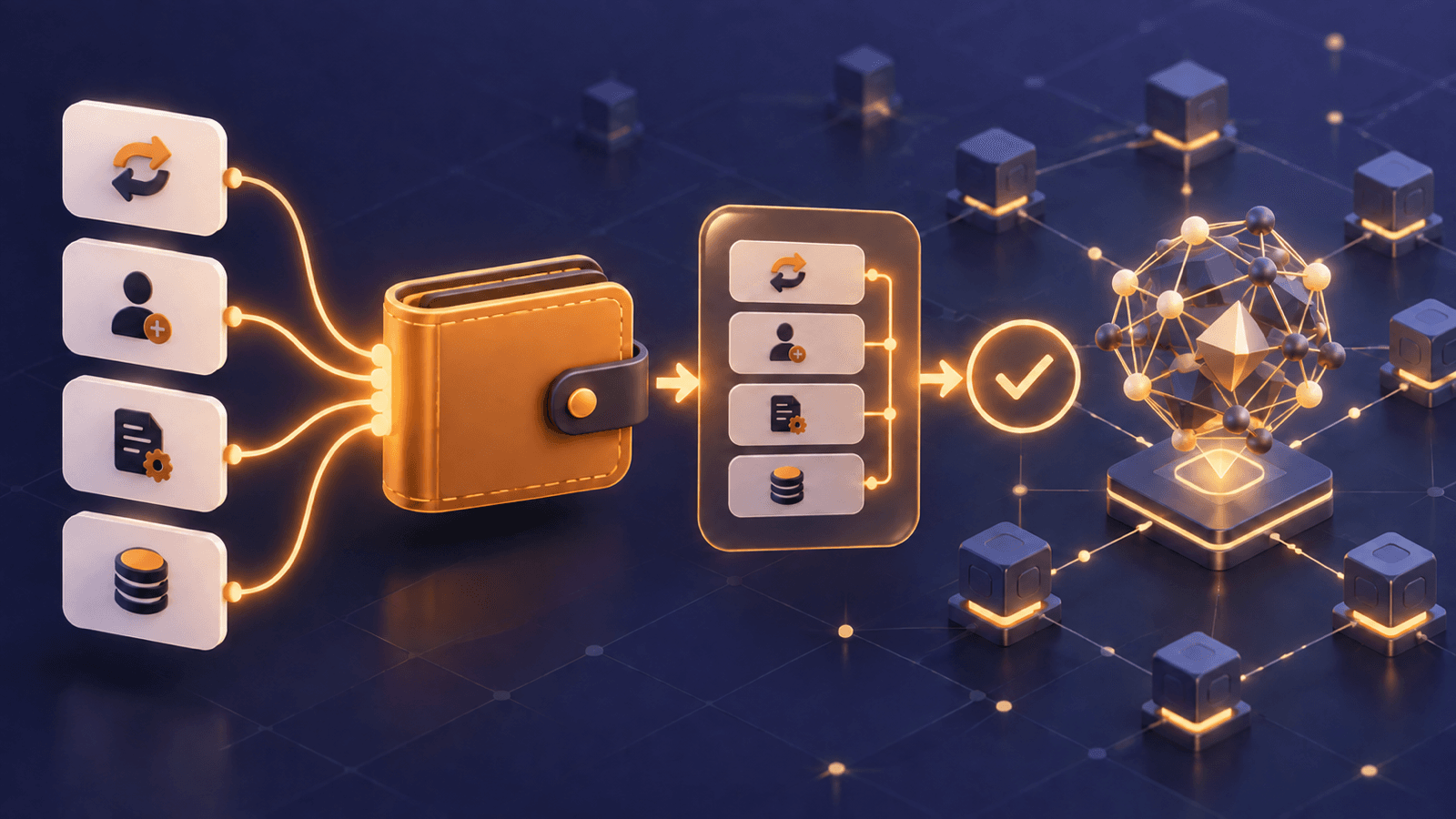
EIP-5792 Wallet Call API: Batching, Capabilities, and Atomicity
EIP-5792 lets dapps request wallet call batches and inspect their status. Learn wallet_sendCalls, capabilities, atomicity, fallbacks, and risks.
GOMTU7 min read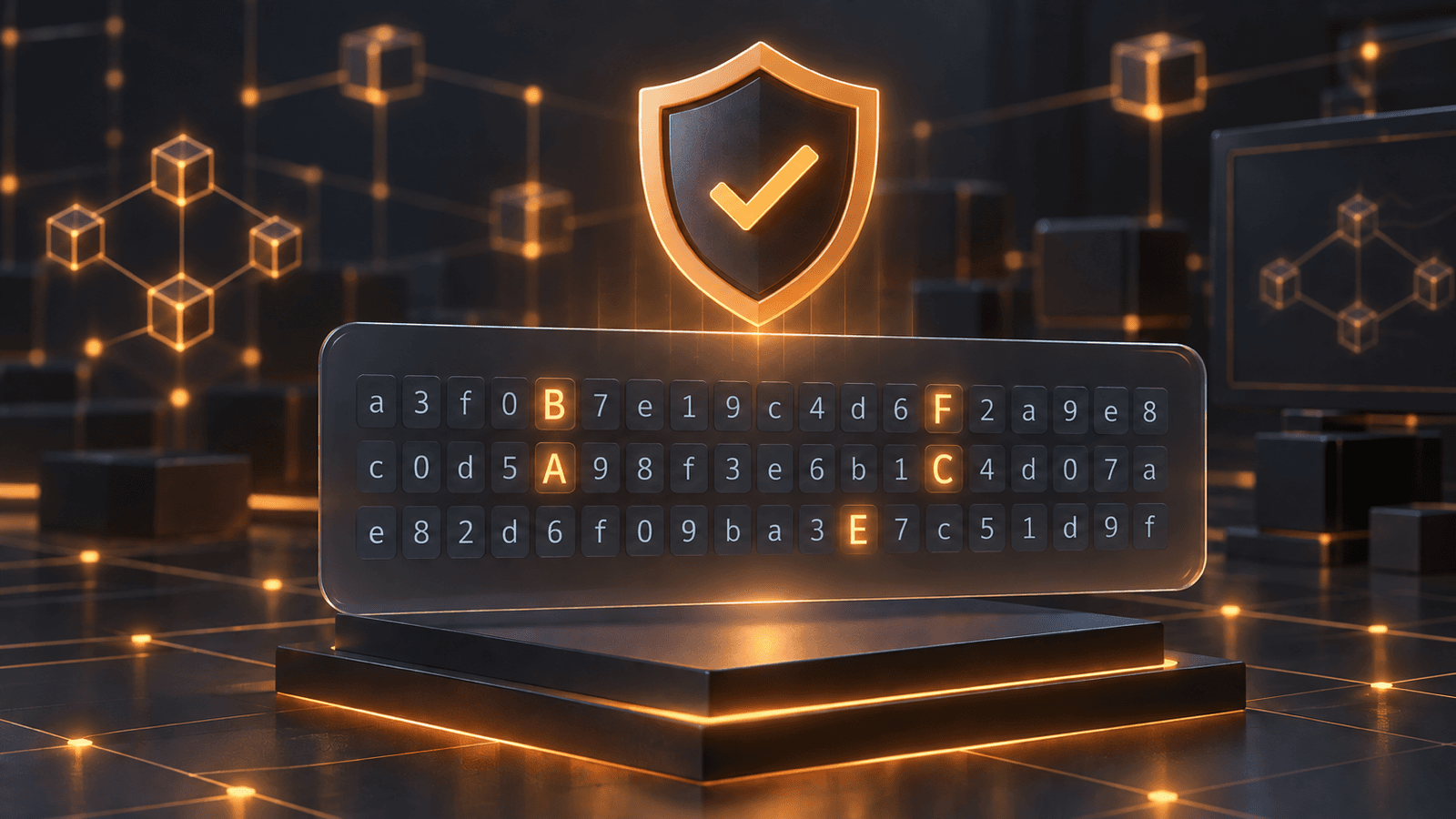
EIP-55 Checksum Addresses: What Mixed-Case Ethereum Addresses Verify
EIP-55 checksum addresses encode typo detection in letter case. Learn the algorithm, validation workflow, limits, and safer sending checks.
GOMTU8 min read
EIP-6963 Explained: How Dapps Discover Multiple Browser Wallets
EIP-6963 lets dapps discover multiple injected browser wallets without a window.ethereum race. Learn the event flow, metadata, limits, and safety checks.
GOMTU7 min read
EIP-712 Typed Data Signing: What Your Wallet Is Asking You to Approve
EIP-712 typed data signing makes off-chain messages structured and readable. Learn domains, replay risks, and what to check before signing.
GOMTU7 min read
Sign-In with Ethereum (SIWE): How Wallet Login Works and What to Verify
Sign-In with Ethereum uses a signed ERC-4361 message instead of a password. Learn the login flow, message fields, privacy limits, and safety checks.
GOMTU8 min readCrypto Address Poisoning: How to Verify Wallet Addresses Before You Send
Crypto address poisoning plants a lookalike address in your transaction history. Learn how it works and follow a safer verification checklist.
GOMTU7 min read
Crypto Transaction Simulation: Read the Result Before You Sign
Crypto transaction simulation previews likely wallet balance, approval, and contract changes before signing. Learn what to check and where it can fail.
GOMTU7 min read
ERC-7715 Advanced Wallet Permissions: Limits, Expiry, and Risks
Learn how draft ERC-7715 lets smart wallets grant scoped dApp permissions, how limits and expiry work, and what users must verify before approval.
GOMTU7 min read
EIP-8141 Frame Transactions: Native Account Abstraction Explained
Learn how draft EIP-8141 frame transactions could bring native account abstraction, batching, flexible signatures, and gas sponsorship to Ethereum.
GOMTU7 min read
ERC-4337 Paymasters Explained: How Gas Sponsorship Works
Learn how ERC-4337 paymasters sponsor gas, support token fee payments, and introduce security and availability trade-offs for smart-wallet users.
GOMTU6 min read
ERC-1271 Smart Contract Signatures: How Wallets Verify Authority
ERC-1271 lets smart contract wallets validate signatures with programmable rules. Learn how isValidSignature works, where compatibility breaks, and key risks.
GOMTU7 min read
ERC-2612 Permit vs Permit2: How Signature-Based Token Approvals Work
ERC-2612 Permit and Uniswap Permit2 can simplify ERC-20 approvals, but signatures still carry risk. Compare their flows, scope, and safety checks.
GOMTU7 min read
Clear Signing vs Blind Signing: How to Read Crypto Wallet Prompts
Clear signing makes wallet prompts readable. Learn how blind signing differs, what EIP-712 and draft ERC-7730 do, and what to verify.
GOMTU7 min read
Passkey Crypto Wallets Explained: Convenience, Recovery, and Real Risks
Passkey crypto wallets replace seed-phrase-first onboarding with device authentication. Learn how they work, what they protect, and where risks remain.
GOMTU8 min read
EIP-7702 Wallet Delegation: A Practical Security Guide
Understand EIP-7702 wallet delegation, its smart-account benefits, phishing risks, warning signs, and a practical safety checklist.
GOMTU6 min read
Quantum-Resistant Crypto Wallets: What Users Should Know in 2026
Learn how quantum computers could affect crypto wallet keys, what Ethereum is changing, and what wallet users should—and should not—do today.
GOMTU7 min read
Multisig vs MPC Wallets: How Shared-Control Crypto Custody Works (2026)
A single seed phrase is one point of failure. Multisig and MPC wallets both fix that — very differently. How each works, who should use which, and the risks.
GOMTU7 min read
Token Approvals and Wallet Drainers: How to Protect Your Crypto (2026)
Wallet drainers don't steal your keys — they trick you into approving them. How token approvals work, how drainers exploit them, and how to revoke access.
GOMTU6 min read
Hot Wallet vs Cold Wallet: Which Crypto Storage Fits You? (2026)
Hot wallet or cold wallet — which should hold your crypto? Compare security, convenience, cost, and use cases, plus how hardware wallets actually work.
GOMTU7 min read
Account Abstraction Explained: How Smart Wallets Work (2026)
Learn how account abstraction and ERC-4337 smart wallets work — seedless recovery, gasless transactions, and passkeys. A 2026 guide to smarter crypto wallets.
GOMTU8 min read
Cross-Chain Bridge Guide: How to Bridge Safely in 2026 (Step-by-Step)
Learn how to use cross-chain bridges safely: what they are, how lock-and-mint and liquidity pool bridges work, a step-by-step tutorial, and how to avoid the hacks that cost DeFi over $2.8B.
GOMTU9 min read
Crypto Scam Prevention Guide 2026: How to Spot, Avoid, and Respond
Crypto scams drain billions every year — and most victims thought they were careful. This how-to guide covers 10 scam types, step-by-step prevention rules, a security checklist, and what to do if you get hit.
GOMTU11 min read
Seed Phrase Security: How to Protect Your Crypto in 2026
A step-by-step how-to for understanding, storing, and backing up your seed phrase — storage method comparison, 2026 attack tactics, anti-patterns, FAQ, and a security checklist.
GOMTU9 min read