Prediction Markets Explained: How Polymarket & Onchain Betting Work (2026)
Prediction markets turn collective belief into tradeable probability. Learn how Polymarket and Kalshi work, why the odds beat expert forecasts, the 2026 CFTC rules, and real risks — including total loss and bans in 30+ countries — before you stake a dollar.

Last updated
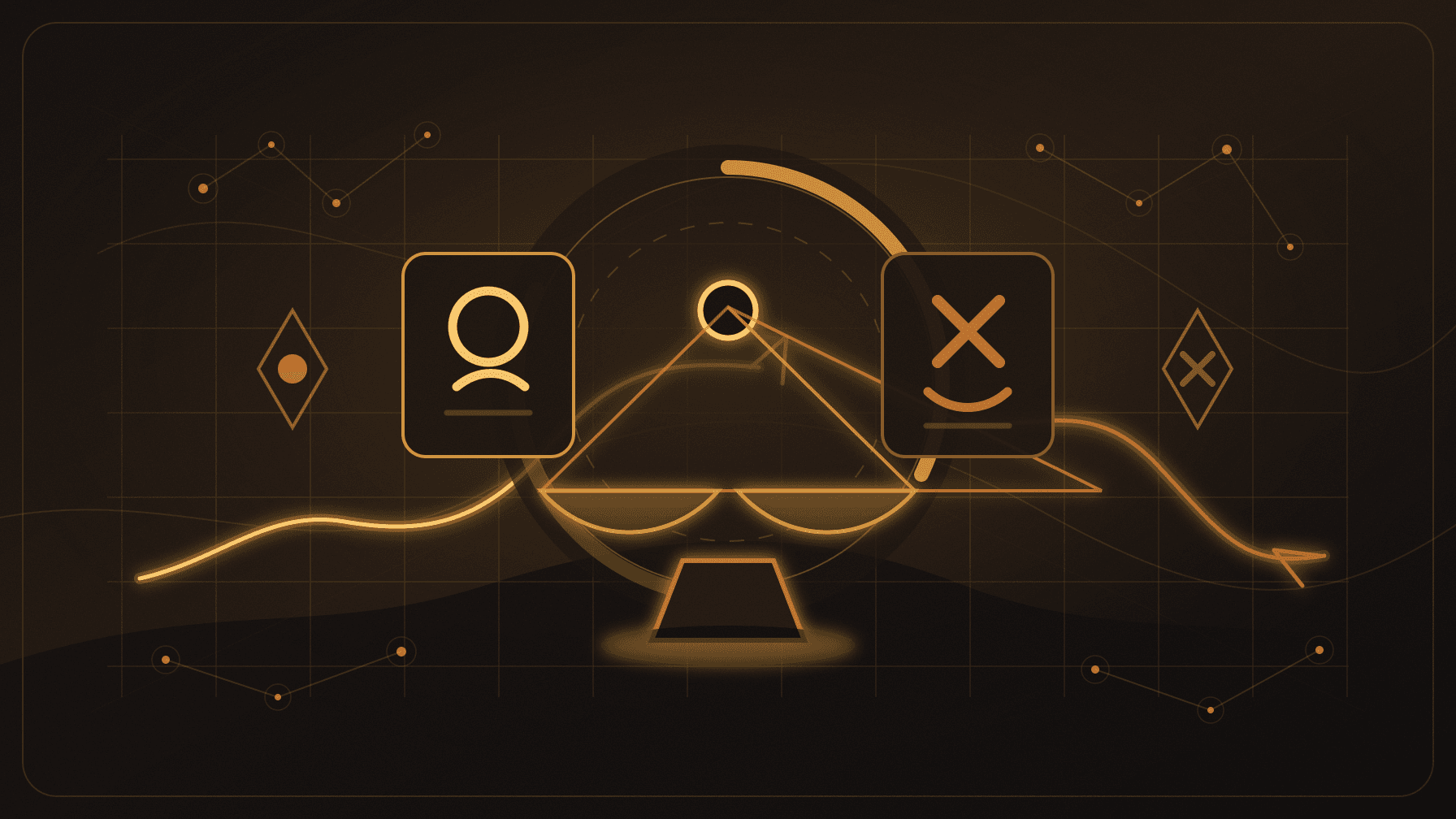
What if you could bet on whether the Fed raises rates next month — and that collective bet turned out to be more accurate than any economist panel? That's no longer a thought experiment. In 2026, prediction markets processed billions in monthly volume, the Federal Reserve cited their forecasting accuracy in published research, and regulators scrambled to decide whether these platforms were financial derivatives or unlicensed gambling. This guide explains what prediction markets are, how they work, which platforms matter, why the odds can be sharper than expert consensus, and what can go wrong before you put a dollar down.
This article is educational, not financial or legal advice. Prediction markets involve real money, a real risk of total loss, and may be restricted or illegal where you live. Never stake more than you can afford to lose. (NFA)
What Is a Prediction Market?
A prediction market is a platform where you trade shares representing the probability of a real-world outcome. Each market frames a yes-or-no question — "Will the Fed cut rates in July?" — and you buy or sell Yes or No shares.
Here's the core mechanic:
- Each share settles at $1 if the outcome it represents is correct, or $0 if it's wrong.
- Prices range from 1¢ to 99¢. A Yes share trading at 70¢ means the market collectively assigns a 70% probability to the event happening.
- You can sell your position any time before resolution at the current market price. You don't have to wait for the outcome.
The key distinction from a sportsbook: the odds aren't set by a house. Prices are determined peer-to-peer by traders — each one putting real money behind their beliefs. You can take either side of any market; buying No is just as valid as buying Yes.
Because capital is on the line, the resulting price aggregates information across many participants into a live probability that updates the instant new information breaks.
How Prediction Markets Work
The mechanics are more straightforward than they sound. Here's the flow using the largest crypto-native platform:
- Connect a wallet and deposit USDC — a dollar-pegged stablecoin — to fund your account.
- Browse active markets: Fed rate decisions, election outcomes, sports events, protocol governance votes, and more.
- Buy Yes or No shares at the live price. If you think an event is more likely than the market implies, you buy Yes; if you think the market is overestimating the probability, you buy No.
- Prices move as order flow shifts collective belief — you can exit early for a profit or cut losses before resolution.
- Resolution: when the event concludes, an oracle reports the result on-chain. Correct shares automatically redeem for $1; wrong shares expire at $0.
An analogy that helps: imagine everyone in a room bets real money on whether tomorrow will rain. How much each person is willing to pay for a "Yes" ticket reveals their confidence level. Aggregate those bids and you get a crowd-sourced probability that updates every time someone revises their view — with money on it. That's sharper than any poll, because the cost of being wrong is immediate.
Resolution is where things get complicated. Polymarket uses an Optimistic Oracle (historically UMA's system, now upgrading to a Managed Optimistic Oracle, MOOV2) backed by a Market Integrity Committee for contested outcomes. Anyone can propose a result; it stands unless challenged, at which point token holders vote to settle the dispute. Ambiguously worded markets occasionally resolve in unexpected ways — a real risk to understand before participating.
Major Platforms and Examples
Polymarket is the dominant player. Built on Polygon and settled by smart contracts, it handled over $20 billion in monthly volume at its 2026 peak. After years restricted to offshore users, Polymarket acquired QCEX — a CFTC-licensed exchange and clearinghouse — in July 2025. The CFTC issued an Amended Order in November 2025, and Polymarket relaunched for US users on December 2, 2025.
Kalshi is the regulated US alternative — a CFTC-licensed exchange partnering with Nasdaq for market data. It offers event contracts on financial outcomes like CPI prints and unemployment figures. Because it operates as a registered derivatives exchange, it can serve US customers in ways that offshore platforms historically could not.
Other platforms include Manifold (play-money markets, useful for forecasting practice without financial risk), Augur (an early decentralized predecessor), and a growing number of DeFi-native implementations across chains.
Real-World Applications
Prediction markets have proven useful beyond pure speculation:
- Macro forecasting: Journalists and traders now cite Polymarket odds alongside traditional surveys for Fed decisions, elections, and geopolitical events — treating them as live probability estimates rather than punditry.
- Corporate and governance events: Markets exist for earnings beats, protocol upgrades, and DAO vote outcomes.
- Research and policy: The Federal Reserve published research finding that prediction markets performed on par with or better than Bloomberg's economist consensus — correctly identifying the most probable Fed rate outcome before every FOMC meeting since 2022.
- Information aggregation: Because prices update as order flow shifts, prediction markets sometimes surface information asymmetry before traditional news cycles catch up.
Why Prediction Market Odds Often Beat Expert Forecasts
The core argument is skin in the game. Analysts and pundits face no direct cost when their forecasts are wrong. Traders putting capital on the line are immediately penalized for being wrong — and that incentive drives prices toward genuinely sharp probability estimates.
That's why policymakers, hedge funds, and journalists now use prediction market odds alongside traditional forecasts. A market at 85¢ for Yes isn't commentary — it represents the collective willingness of many participants to lose money if they're wrong.
That said: treat the price as a probability estimate, not a certainty. An 85% market is still wrong roughly 15% of the time. And those 15% upsets are exactly where the largest payouts occur — and where overconfident traders lose most.
Risks and Limits
Warning
A losing position goes to $0 at resolution — no partial recovery. Never stake money you cannot afford to lose entirely.
Total loss on resolution. This is not like a stock that drops 30%. When a market resolves against your position, you lose 100% of what you staked. There is no stop-loss, no recovery option.
Legal ambiguity and geofencing. Whether prediction markets are regulated financial derivatives or unlicensed gambling remains unresolved in most jurisdictions. As of mid-2026:
- The CFTC published a proposed rule on June 10, 2026 covering Polymarket and Kalshi, opening a 45-day comment period to define their legality under federal law.
- Kalshi faces 19+ federal lawsuits over whether event contracts constitute unlicensed gambling.
- The UK Gambling Commission ruled in February 2026 that public real-money prediction markets are gambling products.
- Australia deemed them illegal online gambling.
- 30+ countries block major platforms (50+ counting broader gambling bans).
Using a VPN to bypass geoblocks can violate both platform terms of service and local law.
Liquidity risk. Thin markets — those with few active traders — can have wide bid-ask spreads and poor execution. You may not find a counterparty at a fair price, especially in niche markets, and exiting early may cost more than expected.
Oracle and resolution disputes. Ambiguously worded market questions can resolve in ways that contradict what you expected. Disputed outcomes may be delayed, reversed by committee vote, or settled on technicalities. Always read the resolution criteria before entering a market.
Smart-contract and custody risk. On-chain settlement adds DeFi attack surface. Bridging USDC to Polygon, interacting with smart contracts, and relying on oracle systems each introduce failure modes beyond price risk.
Insider information asymmetry. One documented case: a $515,000 winning bet was placed 71 minutes before a major news announcement broke publicly. Participants with non-public information have a structural edge — a risk that prediction market regulators now discuss alongside classified-information leak concerns.
Gambling dynamics. The fast-feedback loop, variable payouts, and "one more market" temptation can trigger gambling behavior. If you find yourself chasing losses or spending time you can't afford, treat that as a serious warning sign.
FAQ
Q: Are prediction markets legal in the US? As of mid-2026, the answer depends on the platform and the product. Kalshi operates as a CFTC-regulated exchange for certain event contracts. Polymarket relaunched for US users in December 2025 after acquiring CFTC-licensed infrastructure. The CFTC's June 2026 proposed rule aims to clarify the legal framework — but until that rulemaking concludes, the regulatory picture is still evolving. Consult a legal professional for guidance specific to your situation.
Q: How is Polymarket different from a sportsbook? Traditional sportsbooks set the odds themselves and take a margin on every bet. Polymarket uses a peer-to-peer order book — you trade against other participants, and the price reflects collective belief rather than a bookie's spread. You can take either side of any market, and you can exit before resolution.
Q: What's the POLY token, and should I try to farm the airdrop? Polymarket confirmed plans for a native token (POLY) and airdrop in October 2025. As of mid-2026, no live, tradeable POLY token exists — a token generation event is expected later in 2026. Any "POLY" tokens circulating now should be treated as potential scams. See our crypto scam prevention guide before engaging with any airdrop claim.
Q: Can prediction market prices be manipulated? Yes, in thin markets especially. A single large trade can move prices significantly, and participants with non-public information have an asymmetric edge. This is one reason regulators scrutinize these platforms differently from traditional financial exchanges.
Q: Do I need crypto to use Polymarket? Yes — Polymarket requires a Web3 wallet and USDC on Polygon. If you're new to self-custodied wallets and decentralized finance, read our DeFi beginner guide before depositing real funds. Losing a wallet's seed phrase means losing access permanently.
Closing: What Prediction Markets Are — and Aren't
Prediction markets are a genuine innovation in information aggregation. They convert collective belief into a live, tradeable probability that updates faster — and often more accurately — than expert panels. In 2026, they've moved from niche curiosity to a tool that central banks, journalists, and hedge funds actively reference.
But they carry risks that are easy to underestimate: total loss at resolution, deep legal uncertainty in most jurisdictions (including outright bans in the UK, Australia, and 30+ other countries), thin liquidity in niche markets, insider-information asymmetry, and the psychological pull of gambling dynamics.
Use prediction markets as a powerful information lens — a window into what informed participants collectively believe will happen. Not as a shortcut to profit. Do your own research, verify your local laws, and never stake more than you can afford to lose entirely.
Important
This article is educational and not financial or legal advice. Prediction markets may be regulated as gambling or restricted where you live. Verify your local laws before participating, and never bet more than you can afford to lose. (NFA)
Keep learning
What Are Stablecoins? Types, How They Work, and Real Risks
Understand stablecoins from the ground up — fiat-backed, crypto-backed, algorithmic, and yield-bearing types — plus depeg risks, USDT vs USDC, and how to use them in DeFi.
 GOMTU7 min read
Crypto Scam Prevention Guide 2026: How to Spot, Avoid, and Respond
Crypto scams drain billions every year — and most victims thought they were careful. This how-to guide covers 10 scam types, step-by-step prevention rules, a security checklist, and what to do if you get hit.
GOMTU11 min read
Crypto Transaction Simulation: Read the Result Before You Sign
Crypto transaction simulation previews likely wallet balance, approval, and contract changes before signing. Learn what to check and where it can fail.
GOMTU7 min readExplore related topics

Crypto Airdrop Farming Guide 2026: Qualify Without Gambling Your Wallet
A practical crypto airdrop farming guide for 2026: evaluate campaigns, limit wallet risk, verify claims, keep records, and avoid Sybil abuse.
GOMTU8 min read
Cross-Chain Bridge Guide: How to Bridge Safely in 2026 (Step-by-Step)
Learn how to use cross-chain bridges safely: what they are, how lock-and-mint and liquidity pool bridges work, a step-by-step tutorial, and how to avoid the hacks that cost DeFi over $2.8B.
GOMTU9 min read