EIP-7702 Wallet Delegation: A Practical Security Guide
Understand EIP-7702 wallet delegation, its smart-account benefits, phishing risks, warning signs, and a practical safety checklist.

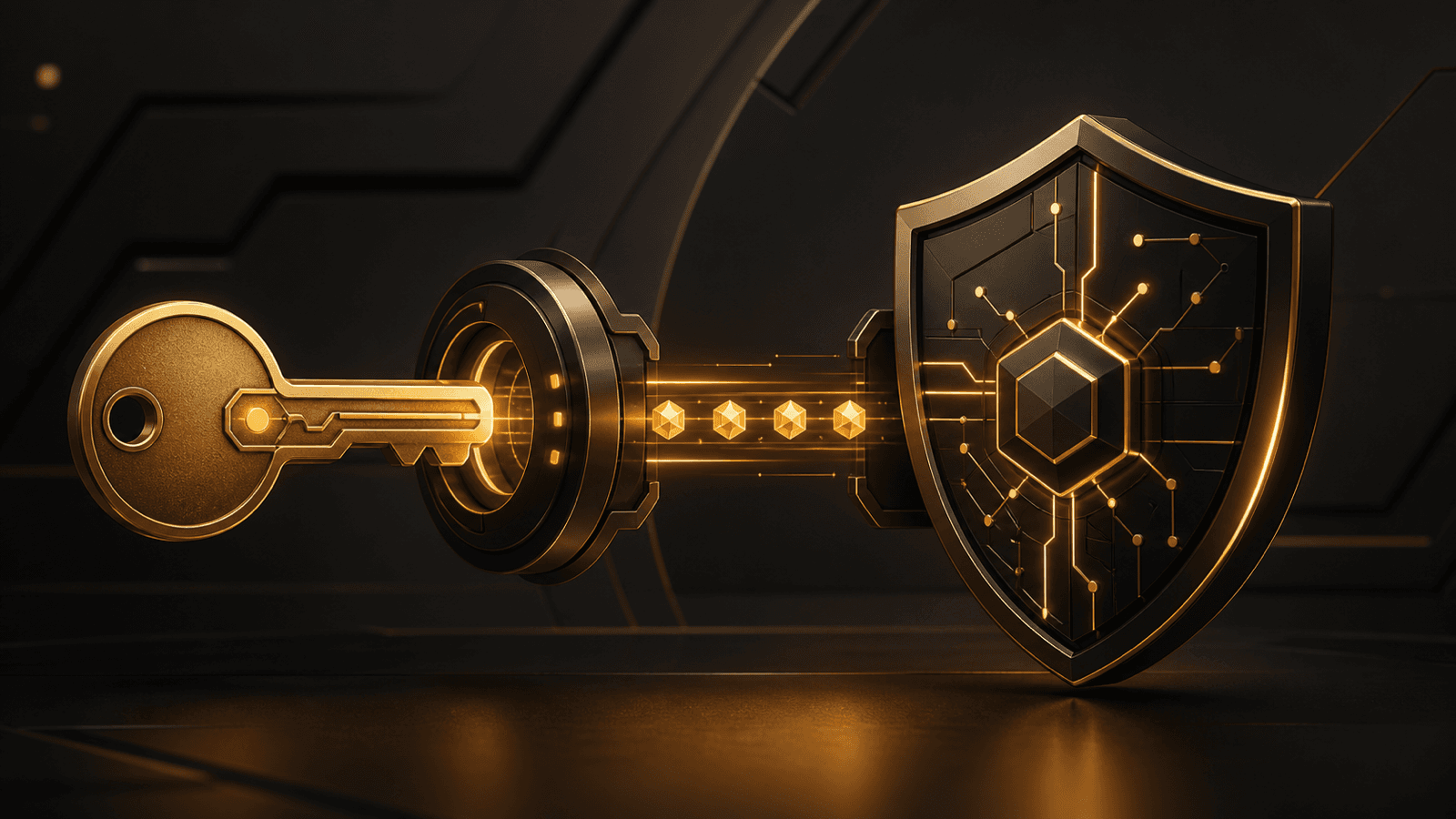
A wallet prompt that says “upgrade,” “enable smart features,” or “pay gas with tokens” can look harmless. Under EIP-7702, however, one approval may change what your existing account can do. That makes delegation useful—and makes understanding the prompt part of basic wallet security. This guide explains the mechanism, the benefits, the attack surface, and the checks to make before you authorize anything.
Important
EIP-7702 is infrastructure, not an investment. This article is educational, not financial advice (NFA), and no checklist can eliminate smart-contract or phishing risk.
What EIP-7702 Wallet Delegation Means
An ordinary Ethereum wallet is an externally owned account (EOA), controlled by a private key. EIP-7702 added a transaction type that lets that EOA point to already-deployed smart-contract code. The account keeps its address and key, while the delegated code can give it smart-account behavior.
Think of your EOA as an apartment whose physical key still belongs to you. Delegation is like installing a programmable access controller on the same door. It can allow useful rules—such as spending limits or several actions in one request—but a malicious controller could also open the door for an attacker. The address did not change; the trust boundary did.
The EIP-7702 specification defines a type 0x04 SetCode transaction containing authorization data. Ethereum.org's 2026 account-model overview explains that the account stores a pointer to deployed code, and that the delegation can later be changed or reset to the null address.
How It Works Without Moving Your Address
At a high level, the flow is:
- Your wallet presents an authorization for a delegation target.
- You sign with the EOA's existing key.
- A SetCode transaction records a delegation indicator on the account.
- Calls to your account execute the target contract's logic in your account's context.
- A later valid authorization can replace or clear that delegation.
This is different from transferring assets to a newly deployed smart wallet. Your tokens and history remain associated with the same address. It is also different from a normal token approval: an ERC-20 approval gives one spender permission over a particular token, while EIP-7702 changes the executable behavior of the account itself.
That distinction matters. The specification warns that poorly implemented delegate code can give an attacker near-complete control over the signer’s EOA. It also notes that changing delegation is security-critical and that storage left by one implementation can conflict with a later implementation.
What Users Gain
When a wallet uses vetted delegate code, EIP-7702 can make familiar addresses behave more like programmable smart wallets:
- Batching: combine actions such as approval and swap into one flow.
- Gas sponsorship: let another party cover fees, or support paying fees through a token flow.
- Limited permissions: use session keys, spending policies, or app-specific permissions when the implementation supports them.
- Recovery-friendly design: integrate account logic that supports stronger recovery patterns.
The Security Alliance EIP-7702 guide describes batching, sponsorship, and privilege de-escalation as core benefits. These are capabilities, not guarantees: the exact behavior depends on the delegate contract and wallet implementation.
The Main Risks
Malicious delegation phishing
A fake site can disguise a delegation authorization as a wallet upgrade or routine signature. If the target is malicious, its code may act with the account's authority. This is broader than the token-approval attack surface, so treating every unfamiliar SetCode request as high risk is sensible.
Cross-chain authorization
An authorization using chain ID 0 can apply across EVM chains. Ethereum.org's Pectra 7702 guidelines warn that the same delegation address must be trustworthy across those chains. A prompt that hides or generalizes the chain scope deserves extra scrutiny.
Buggy or upgradeable code
Delegated code can transfer assets, create approvals, or call applications as your account. Audits reduce risk but do not remove it. Upgradeable implementations add governance and operator risk because code behavior can change after your initial review.
Key compromise still matters
EIP-7702 does not replace the EOA key. Someone who steals the private key can sign another authorization. Continue protecting your seed phrase, device, and signing environment.
A Safe Signing Checklist
Before authorizing a delegation:
- Start inside the wallet's official app, not an email, DM, ad, or unsolicited website.
- Confirm the wallet clearly identifies the action as delegation or SetCode.
- Verify the exact target contract and chain scope through the wallet provider's official documentation.
- Prefer wallet-vetted, audited implementations; do not trust a target merely because a site labels it “verified.”
- Reject unexplained chain ID
0or multi-chain authority. - Use a separate low-value wallet when testing unfamiliar account features.
- Keep your primary holdings away from experimental dApps and signing sessions.
After authorization, check whether the wallet shows an active delegation and provides a documented removal path. Do not paste a private key or seed phrase into a “delegation checker.” Public address inspection should not require either secret.
What to Do If a Delegation Looks Suspicious
Stop signing new requests. Use a clean device and the wallet provider's official support or documentation to inspect the account. If the wallet supports a safe removal flow, clearing delegation means authorizing the null address; Security Alliance documents the zero-address mechanism. But do not assume removal alone fixes a stolen key.
If you suspect key compromise or malicious execution, prioritize moving remaining assets to a newly created wallet whose seed was generated securely. Review token approvals and activity on every relevant chain. Avoid random “revoke” links sent in replies or DMs—recovery scams often target people already under pressure.
Frequently Asked Questions
Does EIP-7702 permanently convert my wallet?
It records delegation on the existing EOA until another valid authorization changes or clears it. Your address remains the same, and the original key remains important.
Is EIP-7702 the same as ERC-4337?
No. ERC-4337 provides smart-account infrastructure based on UserOperations, bundlers, and an EntryPoint contract. EIP-7702 lets an existing EOA delegate behavior to code. Wallets can use the two together.
Is a SetCode signature the same as a token approval?
No. Token approval usually grants a spender rights over one token contract. SetCode delegation changes the account's executable behavior and can therefore have a wider effect.
Can I revoke a delegation?
The protocol permits clearing it by delegating to the zero address. Follow the wallet provider's official process; a malicious site offering a “revoke” button may create another dangerous signature.
Does a hardware wallet make delegation automatically safe?
No. A hardware wallet protects key material, but it cannot make malicious code trustworthy. You still need to verify the action, delegation target, and scope shown on the signing device and companion app.
Wrapping Up
EIP-7702 brings programmable-wallet features to an address you already use. The easiest mental model is simple: you keep the key, but delegated code gains powerful authority at the door. Use only wallet-vetted flows, verify the target and chain scope, and isolate experiments from meaningful holdings.
This guide is educational and not financial advice. Crypto and smart-contract activity can result in irreversible loss; verify current wallet documentation, use only funds you can afford to lose, and do your own research (DYOR).
Keep learning

Account Abstraction Explained: How Smart Wallets Work (2026)
Learn how account abstraction and ERC-4337 smart wallets work — seedless recovery, gasless transactions, and passkeys. A 2026 guide to smarter crypto wallets.
 GOMTU8 min read
Token Approvals and Wallet Drainers: How to Protect Your Crypto (2026)
Wallet drainers don't steal your keys — they trick you into approving them. How token approvals work, how drainers exploit them, and how to revoke access.
GOMTU6 min read
Crypto Scam Prevention Guide 2026: How to Spot, Avoid, and Respond
Crypto scams drain billions every year — and most victims thought they were careful. This how-to guide covers 10 scam types, step-by-step prevention rules, a security checklist, and what to do if you get hit.
GOMTU11 min readExplore related topics

Pending Ethereum Transactions: Diagnose, Speed Up, or Cancel Safely
Learn why an Ethereum transaction stays pending, how nonce order and fees affect it, and when speeding up, canceling, or waiting is the safest response.
GOMTU7 min read
Crypto Airdrop Farming Guide 2026: Qualify Without Gambling Your Wallet
A practical crypto airdrop farming guide for 2026: evaluate campaigns, limit wallet risk, verify claims, keep records, and avoid Sybil abuse.
GOMTU8 min read