Hyperliquid Perp DEX Guide: How HyperCore, HLP, and Fees Work
A practical Hyperliquid perp DEX guide covering HyperCore, current fee tiers, HLP, bridging, liquidations, and leverage risks.

Last updated

On-chain derivatives can now feel almost as responsive as a centralized exchange. That speed does not remove leverage, bridge, or protocol risk. If you have seen Hyperliquid in DeFi discussions and wondered what actually sits behind the trading screen, this guide explains the machinery without price predictions or promises.
What Is a Perp DEX?
A perpetual DEX lets you trade perpetual futures: derivatives that track an asset without an expiry date. You can go long, go short, and use leverage without buying the underlying token. Funding payments between long and short positions help keep the contract near its spot reference price.
Think of a perpetual contract as a running tab with no closing time. It can stay open, but funding, price changes, and margin requirements keep adding to the bill. Leverage makes each movement count more.
The “decentralized” label needs care. On Hyperliquid, orders, cancellations, trades, liquidations, and margin state are handled by its L1 rather than an exchange's private database. You authorize actions with a wallet, but deposited collateral is still exposed to L1, bridge, oracle, and liquidation mechanisms. Our DEX vs CEX comparison explains the broader custody tradeoff.
A Dated Hyperliquid Snapshot
Live metrics are useful only when they carry a date. The following DeFiLlama protocol dashboard figures were consulted on August 8, 2026 and will change:
| Metric | Snapshot |
|---|---|
| Total value locked | About $6.07 billion |
| 30-day perpetual volume | About $193.88 billion |
| Open interest | About $11.17 billion |
| 30-day protocol revenue | About $41.25 million |
These numbers show substantial activity, not safety or future returns. Avoid turning a moving market-share or revenue figure into a permanent claim.
How Hyperliquid Works
HyperCore and HyperBFT
Hyperliquid is a purpose-built Layer 1. HyperCore contains its fully on-chain spot and perpetual order books, margin state, and matching engine. HyperBFT provides consensus.
According to the official HyperCore overview, mainnet supports approximately 200,000 orders per second. For a geographically co-located client, documented end-to-end latency is 0.2 seconds at the median and 0.9 seconds at the 99th percentile. Those are system measurements under stated conditions, not a guarantee for every user's network path.
The On-Chain Order Book
Many DEXs use an automated market maker (AMM), where a pool and formula quote prices. HyperCore instead uses a central limit order book (CLOB): buyers and sellers post orders, and compatible prices match.
| Question | AMM | HyperCore order book |
|---|---|---|
| What sets the executable price? | Pool curve and reserves | Resting bids and asks |
| Common tools | Swaps and liquidity positions | Market, limit, stop-loss, and take-profit orders |
| Main liquidity risk | Pool depth and slippage | Book depth and slippage |
See our AMM and liquidity-pool explainer for the other model.
Leverage is asset- and size-specific, not one universal “up to 50x” feature. Current margin-tier documentation lists up to 40x for smaller BTC positions and 25x for smaller ETH positions, with lower limits for many assets and larger notionals. Check the live market specification before opening a position.
Funding and Liquidation
When a perpetual trades above its spot reference, longs generally pay shorts; below it, shorts generally pay longs. Funding can erode a position even when the price moves sideways.
Liquidation is also more nuanced than “a 2% move at 50x.” Hyperliquid's liquidation documentation says liquidation begins when account equity falls below maintenance margin. It uses a mark price combining external prices and book state, and may close a position partially or fully. Cross margin can expose shared collateral, while isolated margin confines margin to a position.
HLP: A Vault, Not a Savings Account
The Hyperliquidity Provider (HLP) vault runs market-making strategies, performs backstop liquidations, supplies USDC in Earn, and receives a portion of trading fees. Depositors share its profit and loss.
That last word matters: loss. HLP has no fixed APY. The current protocol-vault documentation also specifies a four-day lock after the latest deposit. This differs from some yield-farming strategies, but it is not a bank deposit or guaranteed return.
Current Trading Fees
Old guides often show free spot trading or one fixed perp rate. The current official fee schedule is tiered:
| Base tier | Taker | Maker |
|---|---|---|
| Perpetuals | 0.045% | 0.015% |
| Spot | 0.070% | 0.040% |
Rolling 14-day weighted volume, staked HYPE, maker activity, quote-asset alignment, and some HIP-3 settings can change the effective rate. Maker rebates exist at qualifying activity levels. Always check the live schedule rather than copying a rate from an old article.
Getting Funds In and Out
The native bridge connects Arbitrum and Hyperliquid. The official onboarding guide says a native USDC deposit requires USDC plus ETH for Arbitrum gas. A withdrawal does not require the user to supply Arbitrum gas, but carries a 1 USDC fee.
The bridge is not just a button. Deposits and withdrawals depend on stake-weighted validator signatures. Withdrawals include a dispute period. Confirm the destination network, contract, and address with a small test transfer when practical; an incorrect transfer can be irreversible.
Risks and Limitations
Leverage and Execution Risk
- Higher leverage leaves less room before maintenance margin is breached.
- Stop-loss orders can reduce risk but may fill away from the trigger during fast markets.
- Funding and fees accumulate, and thin books can create slippage.
- Cross margin can put more collateral at risk than an isolated position.
Warning
Leverage can erase your entire trading balance quickly. Only use money you can afford to lose completely. Skipping leverage is a valid choice.
Protocol, Bridge, and Oracle Risk
Hyperliquid's own risk disclosure says its L1 has not received the same testing and scrutiny as Ethereum and may experience consensus-related downtime. It also identifies Arbitrum bridge smart-contract risk, market-liquidity risk, and validator-maintained oracle risk. A compromised oracle could affect mark prices and liquidations. HLP depositors additionally absorb market-making and backstop-liquidation PnL.
Regulatory and Access Risk
Leveraged derivatives are regulated differently across jurisdictions. Technical access does not establish that a product is permitted where you live. Check current local rules and platform terms yourself; this article is neither legal nor investment advice.
Practical Checklist
- Confirm that the product is permitted in your jurisdiction.
- Read the current fee, margin, and liquidation pages for the exact market.
- Verify the official app URL and bridge network.
- Use a small transfer and position first if you proceed.
- Understand cross versus isolated margin before selecting either.
- Treat HLP as an active trading vault with loss risk and a withdrawal lock.
- Record funding, fees, and liquidation levels instead of watching PnL alone.
FAQ
Is Hyperliquid non-custodial?
You authorize actions through your wallet, and HyperCore executes on-chain. However, collateral deposited to the system remains exposed to protocol, validator, bridge, oracle, and liquidation risks. “Non-custodial” does not mean risk-free.
Is spot trading free?
No. The published base tier currently charges both spot maker and taker fees, with discounts or rebates depending on activity and other conditions.
What is the maximum leverage?
It depends on the asset and position size. The published tiers currently allow higher leverage for smaller BTC and ETH positions than for many altcoins, and reduce limits at larger notionals.
Can HLP lose money?
Yes. Depositors share the vault's PnL from market-making and liquidation strategies. Historical performance is not a guaranteed APY.
Closing
Hyperliquid shows how responsive a fully on-chain order book can be. Its architecture is worth understanding even if you never open a leveraged position.
The correct mental model is not “a DEX with CEX speed, therefore safe.” It is a specialized trading L1 with explicit margin, bridge, oracle, and vault assumptions. Verify current figures and rules, understand the loss path, and do your own research before committing funds.
This article is for information only and is not investment or legal advice. Crypto derivatives are volatile and can result in total loss. NFA / DYOR.
Keep learning

AMM and Liquidity Pools Explained: How DEX Trading Really Works
Understand how automated market makers (AMMs) and liquidity pools power decentralized trading. Covers the x*y=k formula, impermanent loss, LP returns, and Uniswap v4 hooks — your 2026 DeFi guide.
 GOMTU8 min read
Impermanent Loss Explained: The Hidden Cost of DeFi Liquidity
Understand impermanent loss in plain language — what it is, when it hurts most, how to reduce it, and the risks every DeFi LP should know before depositing.
GOMTU8 min read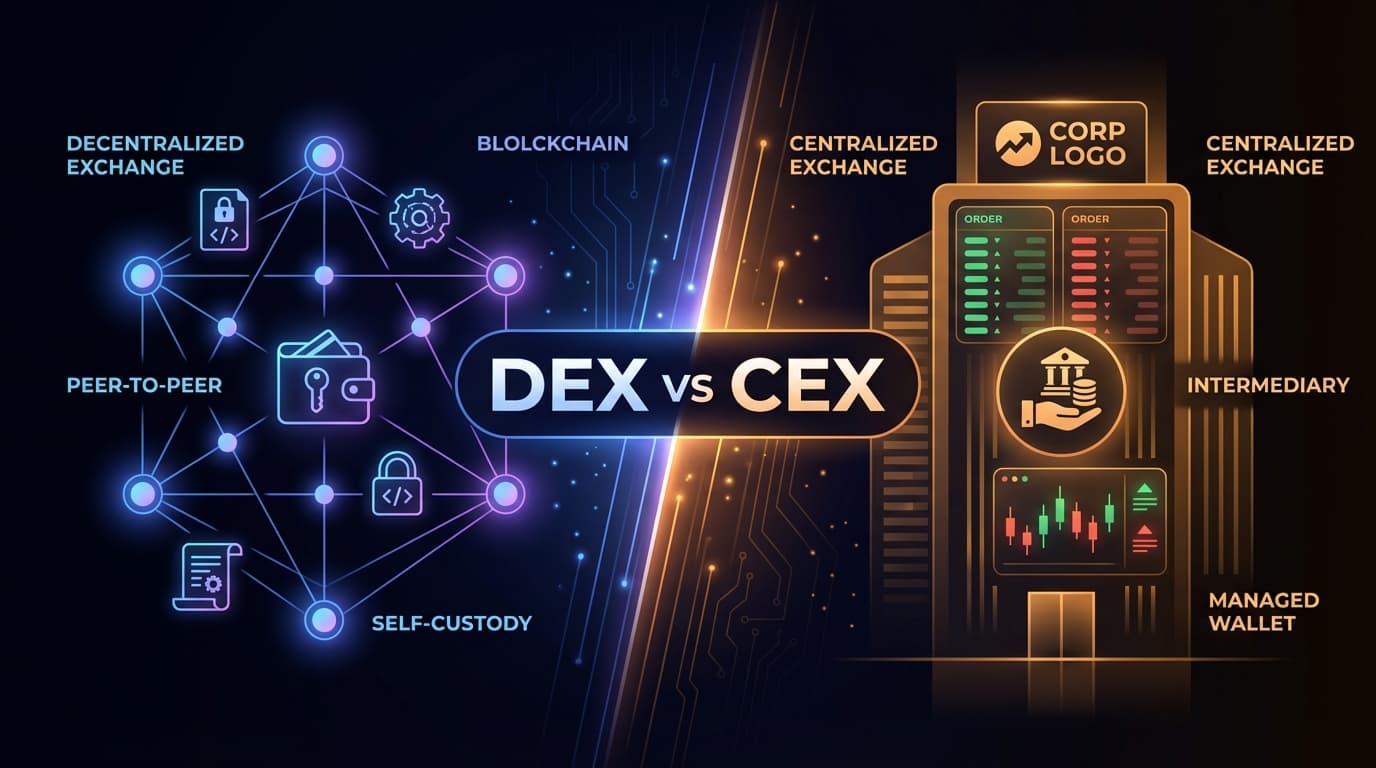
DEX vs CEX: A Practical Comparison for Crypto Users
Centralized or decentralized exchange — which one fits you? Compare security, fees, custody, and use cases to find out what actually matters for your situation.
GOMTU7 min readExplore related topics

Polkadot Halving 2026: DOT Supply Cap, 53.6% Emission Cut Explained
Polkadot undergoes its first-ever tokenomics overhaul on March 14, 2026 — a 2.1B DOT supply cap, 53.6% emission cut, and staking redesign. Here is what the changes actually mean.
GOMTU8 min read
Crypto Scam Prevention Guide 2026: How to Spot, Avoid, and Respond
Crypto scams drain billions every year — and most victims thought they were careful. This how-to guide covers 10 scam types, step-by-step prevention rules, a security checklist, and what to do if you get hit.
GOMTU11 min read